
Florida winters may not bring snow-covered lawns or icy roads, but that doesn’t mean your HVAC system gets a free pass. In fact, Winter HVAC Maintenance is just as important here in Ocala and across Central Florida as it is in colder states—just in a different way.
Did you know that even during Florida’s mild winters, average humidity levels hover around 74% and overnight temperatures can dip into the low 50s? Cool nights combined with lingering humidity can lead to problems such as frozen heat pump coils, mold in the ductwork, and thermostat malfunctions.
Have you ever turned on your heat during the first chilly night of the season only to smell something odd—or worse, find it doesn’t work at all? Many Ocala homeowners face this each year because minor issues often go unnoticed until the system is under heavy stress. Just last November, several homes in Marion County experienced sudden heat pump failures during the first cold front, causing families to call for emergency service.
As we head into November’s first cool snaps, now is the perfect time to prepare. In this checklist, we’ll walk through the smartest steps you can take to keep your system running smoothly, highlight the most common winter HVAC problems Florida homeowners face, and show you when it’s best to call in a professional. Because the last thing you want is a broken system when temperatures drop unexpectedly.
Why Winter HVAC Maintenance Matters in Florida
Florida’s winter weather is different from what homeowners experience in colder states.
You may need heating early in the morning, cooling later in the afternoon, and little or no HVAC operation during certain parts of the day. This changing demand makes a properly maintained HVAC system especially important.
Many Florida homes use heat pumps, which provide both heating and cooling from the same system. When heating mode is selected, the heat pump reverses its refrigeration cycle to move heat from outside into the home.
Because heat pumps operate differently from traditional furnaces, homeowners should pay attention to unusual noises, poor airflow, temperature fluctuations, persistent ice buildup, or a system that repeatedly turns on and off.
Humidity is another important consideration. The Florida Department of Health recommends keeping indoor relative humidity below 60%, ideally 30-50% to help control conditions that support mold growth.
That makes HVAC maintenance important not only for temperature control, but also for indoor air quality and moisture management.
Winter HVAC Maintenance Checklist for Florida Homeowners
1. Check and Replace Your HVAC Air Filter
Your HVAC filter helps capture dust, pollen, pet dander, and other airborne particles before they circulate through your system.
A dirty filter can restrict airflow and make your HVAC system work harder.
Check your filter regularly and replace it according to the filter manufacturer’s recommendations. Homes with pets, allergies, construction activity, or higher dust levels may need more frequent filter changes.
Watch for:
- Reduced airflow from vents
- Increased dust around the home
- A visibly dirty filter
- Longer HVAC run times
- Uneven temperatures
A clean filter is one of the simplest steps you can take to support proper HVAC airflow.
2. Test Your Thermostat Before the First Cold Snap
Don’t wait until the first unusually cold morning to discover that your heating system isn’t working.
Switch your thermostat to heating mode and allow the system to run for several minutes.
Check that:
- Warm air is coming from the vents
- The thermostat responds correctly
- The system starts and stops normally
- The indoor temperature reaches the setting
- There are no unusual sounds or odors
If your thermostat appears inaccurate, frequently loses its settings, or doesn’t communicate properly with your HVAC system, have it inspected.
A programmable or smart thermostat may also help homeowners manage temperature settings more efficiently.
3. Inspect Your Heat Pump
For many Florida homes, the heat pump is the heart of the heating system.
Before winter, make sure the outdoor unit is accessible and free from leaves, grass, branches, and other debris.
Keep several feet of clearance around the outdoor equipment whenever possible so air can move freely.
During heating operation, you may occasionally see frost or ice form on a heat pump’s outdoor coil. A properly functioning heat pump can enter a defrost cycle to remove temporary frost.
However, persistent or excessive ice buildup can indicate a problem.
Call an HVAC professional if you notice:
- Heavy ice that doesn’t clear
- Weak or cool airflow when heating
- Unusual noises
- Frequent short cycling
- Poor heating performance
- Repeated system shutdowns
4. Clean Around the Outdoor HVAC Unit
Florida landscaping can quickly leave leaves, grass clippings, dirt, and other debris around an outdoor HVAC unit.
Before winter, inspect the area surrounding your condenser or heat pump.
Remove loose debris from around the unit and keep plants and vegetation from blocking airflow.
Turn off power to the equipment before performing any cleaning that requires getting close to electrical components, and don’t bend or damage the outdoor coil fins.
If the outdoor coil is heavily dirty, professional cleaning may be the safer option.
5. Inspect Your Ductwork for Air Leaks
Your HVAC system can only perform as well as the ductwork distributing conditioned air throughout your home.
According to ENERGY STAR, typical duct systems can lose approximately 20% to 30% of the air moving through them because of leaks, holes, and poorly connected ducts.
Leaky ducts can contribute to:
- Uneven temperatures
- Poor airflow
- Higher energy bills
- Rooms that are difficult to heat or cool
- Excessive HVAC run time
- Stuffy or uncomfortable rooms
Pay particular attention to ducts located in attics, garages, and crawlspaces.
If you consistently have hot or cold spots throughout your home, professional duct inspection and sealing may help improve comfort and system performance.
6. Check the Condensate Drain and Drain Pan
Your HVAC system produces condensation during cooling operation. A clogged drain line can cause water to back up into the drain pan or surrounding areas.
Even though winter heating may reduce condensation compared with summer cooling, the drain system should still be inspected as part of routine HVAC maintenance.
Look for:
- Standing water
- Water around the indoor air handler
- Algae or debris
- Water stains
- A clogged drain line
- Overflow from the condensate pan
Because drain systems vary by equipment and installation, follow your manufacturer’s maintenance recommendations rather than automatically pouring chemicals into the drain line.
If you see recurring water buildup, have an HVAC professional identify the cause.
7. Check Indoor Humidity
Florida’s humidity doesn’t disappear when temperatures cool down.
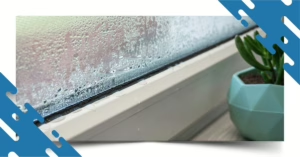
Excess indoor moisture can contribute to condensation and create conditions favorable for mold growth. The Florida Department of Health recommends maintaining indoor relative humidity below 60%; lower levels may provide additional protection against mold and dust mites.
Consider using a simple digital hygrometer to monitor indoor humidity.
Signs of excessive moisture may include:
- Condensation on windows
- Musty odors
- Damp areas
- Visible mold
- Persistent stuffiness
- Water around HVAC equipment
If humidity remains high even when your HVAC system is operating normally, a professional should evaluate the system and the home’s moisture sources.
8. Inspect Electrical Connections and HVAC Safety Components
Electrical connections are an important part of professional HVAC maintenance.
Loose, damaged, or corroded electrical components can affect system reliability and may create safety concerns.
Homeowners should not attempt to open electrical panels or repair HVAC wiring themselves.
During professional maintenance, a qualified HVAC technician can inspect appropriate electrical components, system controls, capacitors, connections, and safety controls based on the equipment manufacturer’s specifications.
9. Check Refrigerant Performance on Heat Pumps
Refrigerant isn’t just important for summer air conditioning.
Heat pumps use the refrigeration cycle for both heating and cooling. If refrigerant levels are incorrect or the system has a leak, heating and cooling performance can suffer.
Potential warning signs include:
- Poor heating performance
- Poor cooling performance
- Ice buildup
- Longer run times
- Inconsistent temperatures
- Unusual system behavior
Refrigerant work should be performed by a qualified HVAC professional. Homeowners should never attempt to add or remove refrigerant themselves.
10. Check for Drafts and Air Leaks
Your HVAC system isn’t the only factor affecting winter comfort.
Air leaks around doors and windows can allow conditioned air to escape and outdoor air to enter.
Check:
- Exterior doors
- Window frames
- Weatherstripping
- Door sweeps
- Attic access areas
- Plumbing and electrical penetrations
Sealing obvious drafts can complement HVAC maintenance and help your heating system maintain a more consistent indoor temperature.
11. Schedule Professional Winter HVAC Maintenance
A homeowner checklist is helpful, but it doesn’t replace professional HVAC maintenance.
A professional tune-up can identify problems that aren’t obvious from outside the equipment.
Depending on your system, maintenance may include inspection of:
- Heat pump operation
- Heating and cooling performance
- Electrical components
- Refrigerant-related performance
- Airflow
- Blower components
- Coils
- Condensate system
- Thermostat operation
- Safety controls
- Ductwork
- Overall system condition
Scheduling maintenance in late October or early November is a smart decision. Technicians are less busy compared to the summer rush, and you’ll catch small issues before holiday gatherings or the first big cold front.
Common Winter HVAC Problems in Florida
You might think Florida homes don’t face many HVAC issues in the winter—but that’s not the case. While Ocala doesn’t face snowstorms or frozen pipes, residents still deal with challenges from mild temperatures, high humidity, and heavy heat pump use. Here are some of the most common winter HVAC problems Florida homeowners run into (and how to spot them early).
1. Musty Odors & Mold in Ductwork
High humidity is a year-round issue in Central Florida. Even in December, Ocala’s average humidity hovers around 74%, creating ideal conditions for mold and mildew to grow inside ductwork. According to the Florida Department of Health, excess indoor moisture is a leading cause of mold-related complaints across the state. If you smell mustiness when switching on your heat, that’s a sign your system needs cleaning and possibly duct inspection.
2. Heat Pump Freezing or Short Cycling
Widely used in Florida homes, heat pumps deliver high efficiency, but it is sensitive and require careful maintenance. When overnight lows dip into the 40s or 50s, it’s common for outdoor coils to freeze up. Although the defrost cycle often resolves this issue, a dirty coil or low refrigerant can make the unit short-cycle—turning on and off rapidly, which increases energy bills and accelerates wear on components.
3. Thermostat Misfires
Have you ever woken up in the middle of a “chilly” Florida night because your heater didn’t kick in? Sometimes, thermostats aren’t calibrated correctly or are still set to “cool” from summer. A thermostat that’s just 2–3 degrees off can make your home feel uncomfortable and force your HVAC system to run inefficiently.
4. Refrigerant Leaks
Even small refrigerant leaks can throw your whole system off balance. Instead of steady warm air, you’ll notice weak airflow or inconsistent temperatures. Refrigerant leaks can reduce your comfort and harm the environment, so it’s important to contact a licensed technician if you suspect a leak.
5. Sudden System Failure During First Cold Snap
Last November, when temperatures suddenly dropped into the 40s overnight, several homeowners reported complete system shutdowns. The cause? Dust buildup on heating elements that hadn’t been tested beforehand. What could have been fixed with a simple pre-season check turned into an urgent (and more expensive) repair.
Frequently Asked Questions About Winter HVAC Maintenance
Most homeowners should have their HVAC system professionally inspected according to the manufacturer’s recommendations and their system’s needs. Because Florida HVAC systems often operate for much of the year, regular maintenance can be especially important.
If your system provides both heating and cooling, seasonal inspections can help identify problems before periods of heavy use.
Yes. Florida may have relatively mild winters, but heat pumps still need to operate correctly when temperatures drop.
A heating problem that goes unnoticed during warmer months can become an emergency when the first cold front arrives.
Generally, no.
Heat pumps are designed for year-round outdoor operation. Covering an operating heat pump can interfere with airflow and may create other problems.
Instead, keep the area around the outdoor unit clear of debris and vegetation.
A light layer of frost can occur during heating operation, and the system should periodically enter a defrost cycle.
Heavy or persistent ice that does not clear normally is not something to ignore. It may indicate an airflow, refrigerant, defrost, or mechanical problem.
There is no single temperature that works for every household.
Choose a comfortable setting while avoiding unnecessarily large temperature changes. A programmable or smart thermostat can help manage heating and cooling schedules based on when your home is occupied.
Yes. A heavily restricted filter can reduce airflow and make your HVAC system work harder.
Checking the filter regularly is one of the easiest HVAC maintenance tasks homeowners can perform.
Proper maintenance can help your HVAC system operate as intended, but savings vary depending on the equipment, system condition, home efficiency, thermostat settings, ductwork, insulation, and other factors.
The U.S. Department of Energy notes that combining equipment maintenance and upgrades with insulation, air sealing, and appropriate thermostat settings can reduce heating and cooling energy use substantially.
High indoor humidity can make a home feel uncomfortable and can contribute to moisture and mold problems.
The Florida Department of Health recommends keeping indoor relative humidity below 60% to help control conditions that support mold growth.
If your home remains excessively humid despite normal HVAC operation, have the system and potential moisture sources evaluated.
Homeowners can safely perform basic tasks such as replacing an air filter and keeping the outdoor unit clear of debris.
Electrical repairs, refrigerant work, refrigerant leak diagnosis, complex heat pump repairs, and other HVAC service should be handled by a qualified professional.
Contact an HVAC professional if you notice:
- No heat
- Persistent ice buildup
- Unusual noises
- Burning or electrical odors
- Frequent short cycling
- Poor airflow
- Water leaking around the HVAC system
- Significant temperature differences between rooms
- Persistent musty odors
- Unexpected increases in HVAC run time
Getting the problem checked early may help prevent a larger and more expensive repair.
Keep Your Florida Home Cozy and Safe This Winter
Winter in Florida may be mild, but it still puts stress on your HVAC system—and skipping maintenance can lead to unexpected breakdowns, higher energy bills, and even indoor air quality issues. By following a smart Winter HVAC Maintenance checklist, you’re not just protecting your comfort—you’re extending the life of your system, preventing costly repairs, and keeping your family safe from mold, poor airflow, and other common winter problems.
At Iron Shield Heating and Air, we understand the unique challenges Florida homeowners face. Our skilled technicians in Ocala and the surrounding areas offer reliable, affordable maintenance to keep your system running smoothly year-round. Whether it’s a quick inspection, filter replacement, or a full winter tune-up, we’re here to help—humbly serving our neighbors so your home stays comfortable no matter what the Florida weather brings.
Don’t wait for the first cold snap to discover a problem. Schedule your Winter HVAC Maintenance with us today and enjoy peace of mind all winter long. Your comfort is our priority, and we’re just a call away.
Related Blog Posts
Read more articles and expert advice related to this service.