
Florida’s warm climate means pollen and other airborne allergens can affect indoor air quality throughout much of the year. As tree, grass, and weed pollen levels change, homeowners in Ocala and surrounding Central Florida communities may notice more sneezing, congestion, itchy eyes, coughing, or other allergy-related discomfort.
But pollen isn’t the only concern inside your home. Dust, pet dander, mold spores, dust mites, and other indoor pollutants can also affect indoor air quality. Because your HVAC system continuously circulates indoor air, proper filtration, humidity control, cleaning, and HVAC maintenance can play an important role in keeping your home more comfortable.
Understanding Pollen Seasons in Florida
Florida doesn’t have just one allergy season. Different plants release pollen at different times of the year, so allergy triggers can vary from season to season.
Generally:
- Spring: Tree pollen can become a major outdoor allergen.
- Summer: Grass pollen may contribute to allergy symptoms.
- Late summer and fall: Weed pollen, including ragweed in some areas, can become more noticeable.
- Year-round: Indoor allergens such as dust, pet dander, mold, and dust mites can continue to affect indoor air quality.
Pollen can enter your home through open doors and windows, clothing, shoes, and pets. Once indoors, particles can settle on furniture, floors, bedding, and other surfaces or become airborne again as people move around.
That makes indoor air quality in Florida especially important for homeowners who want to reduce exposure to common allergens.
6 Indoor Air & Allergy Tips for a Healthier Home
1. Keep Your HVAC System and Air Filter in Good Condition
Your heating and air conditioning system can do more than keep your home comfortable. With the right filtration and proper maintenance, your HVAC system can also help reduce airborne particles circulating through your home.
Start by checking your HVAC filter regularly. A dirty or overloaded filter can restrict airflow and reduce filtration performance.
The EPA currently recommends choosing an HVAC filter rated MERV 13 or the highest-rated filter your system can accommodate. However, not every HVAC system is designed to handle a high-efficiency filter, so check your equipment specifications or ask an HVAC professional before upgrading.
For better indoor air quality:
- Check your filter regularly.
- Replace it according to the manufacturer’s recommendations or sooner if it becomes dirty.
- Make sure the filter fits properly and does not leave gaps around the edges.
- Schedule routine HVAC maintenance.
- Keep return-air vents and supply vents unobstructed.
- Have your HVAC system inspected if you notice excessive dust or airflow problems.
HVAC filters only filter air while the HVAC system fan is operating. Running the fan longer can increase filtration, but in Florida’s humid climate, your system also needs to manage moisture properly.
2. Keep Indoor Humidity Between 30% and 50%
Florida’s humidity can make indoor moisture control especially important.
Excess humidity can encourage mold and other biological contaminants, while poor moisture control can contribute to an uncomfortable indoor environment. The EPA recommends keeping indoor relative humidity ideally between 30% and 50% and below 60%.
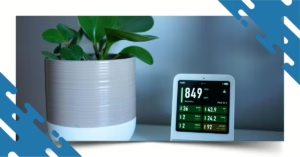
You can monitor humidity with an inexpensive hygrometer or humidity monitor.
To help control indoor moisture:
- Use your air conditioner properly.
- Consider a dehumidifier when additional moisture control is needed.
- Run bathroom exhaust fans while showering.
- Use kitchen exhaust fans when cooking.
- Fix plumbing or roof leaks promptly.
- Address condensation or damp areas quickly.
- Keep bathrooms and other moisture-prone areas dry.
If your home consistently feels damp even when the AC is running, an HVAC professional can evaluate whether your system is properly sized and controlling humidity effectively.
3. Reduce Dust, Pet Dander, and Other Indoor Allergens
Regular cleaning is one of the simplest ways to reduce indoor allergens.
Dust, pet dander, pollen, and other particles can accumulate on floors, furniture, bedding, blinds, and other surfaces.
Try these habits:
- Vacuum regularly, preferably with a vacuum equipped with a HEPA filter.
- Dust using a damp cloth rather than simply moving dust into the air.
- Wash bedding regularly.
- Clean curtains, rugs, and upholstery according to their care instructions.
- Clean ceiling fans and air vents.
- Keep pets groomed and clean their bedding regularly.
- Remove shoes at the door when practical.
- Wipe down pets after outdoor activities during high-pollen periods.
The EPA specifically recommends HEPA-filter vacuums as one way to reduce dust buildup and recommends washing bedding in hot water weekly to help reduce dust and other indoor particulate matter.
4. Keep Outdoor Pollen From Coming Inside
You can’t control the pollen outside, but you can reduce how much enters your home.
During periods of high pollen:
- Keep windows and doors closed when practical.
- Check local pollen and air-quality conditions before spending extended time outdoors.
- Change clothes after spending significant time outside.
- Shower before going to bed if you’ve been exposed to heavy outdoor pollen.
- Keep outdoor shoes near the entryway.
- Clean window sills and door thresholds regularly.
- Keep pets clean after they spend time outdoors.
One important distinction: opening windows isn’t always the best indoor-air strategy during high-pollen periods. EPA guidance recommends ventilating with outdoor air when outdoor air quality and conditions permit, but avoiding outdoor-air ventilation when pollen or outdoor pollution is high.
5. Consider Air Purifiers, Filtration, and Other Indoor Air Quality Solutions
If regular cleaning and HVAC filtration aren’t enough, additional air-cleaning equipment may help.
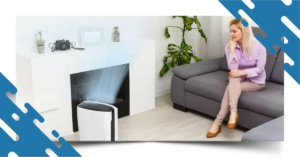
Portable air cleaners can be useful for individual rooms, particularly bedrooms or other areas where your family spends significant time. EPA recommends selecting a unit appropriately sized for the room and choosing an air cleaner that does not intentionally emit ozone.
HEPA filtration can also help capture airborne particles. EPA notes that a true HEPA filter is designed to remove at least 99.97% of particles at 0.3 microns under the specified test conditions, including dust, pollen, mold, and bacteria.
Depending on your home and HVAC system, other indoor air quality solutions may include:
- High-efficiency HVAC filtration
- Whole-home air filtration
- Portable air cleaners
- UV air treatment
- Humidity control
- Improved ventilation
- Ductwork inspection and maintenance
Keep in mind that no single air-cleaning product removes every indoor pollutant. EPA recommends a broader approach that combines source control, ventilation, and filtration/air cleaning.
6. Monitor Pollen and Adjust Your Routine
Knowing when outdoor pollen levels are elevated can help you make smarter decisions about outdoor activities.
On high-pollen days, consider:
- Scheduling outdoor activities when pollen exposure is lower.
- Keeping windows closed when pollen levels are high.
- Wearing sunglasses outdoors to reduce eye exposure.
- Changing clothes after outdoor activities.
- Showering before bed after prolonged outdoor exposure.
- Cleaning pets after they come inside.
- Keeping lawn-care equipment and outdoor gear from bringing unnecessary dirt and pollen indoors.
These simple steps won’t eliminate pollen exposure, but they can help reduce the amount of outdoor allergens entering your home.
Don't Forget About Mold and Moisture
Pollen gets a lot of attention during allergy season, but moisture-related problems can also affect indoor air quality.
Mold can grow when moisture problems are left unresolved. According to the EPA, water leaks, wet materials, standing water, and excessive indoor humidity can contribute to biological contaminant growth. Wet materials should be dried promptly, ideally within 24–48 hours.
Watch for warning signs such as:
- Musty odors
- Visible mold
- Water stains
- Condensation
- Persistent dampness
- Wet insulation or drywall
- Unexplained moisture around your HVAC equipment
If you discover a moisture problem, fixing the source is essential. Simply cleaning visible mold without addressing the underlying moisture issue may not solve the problem.
Frequently Asked Questions About Indoor Air and Allergies
The EPA recommends maintaining indoor relative humidity ideally between 30% and 50% and below 60%. Keeping humidity within this range can help control moisture-related problems and reduce conditions that support mold and dust mites.
The EPA recommends using a MERV 13 filter or the highest-rated filter your HVAC system can accommodate. However, higher filtration isn’t automatically better for every system because the equipment must be able to handle the filter without creating airflow problems. Consult your HVAC manufacturer or a qualified HVAC professional before upgrading.
Follow the filter and HVAC manufacturer’s recommendations. EPA notes that manufacturers commonly recommend replacement approximately every 60–90 days, but filters may need to be replaced more frequently when they become dirty or when conditions in the home increase particle loading.
Yes. Proper HVAC filtration can help reduce airborne particles, including pollen and other particulate matter, when the system is operating. However, an HVAC system is only one part of an indoor air quality strategy. Source control, cleaning, humidity management, and appropriate air cleaning can also be important.
Yes. HEPA filters are designed to capture very small airborne particles, including pollen. EPA states that a HEPA filter can theoretically remove at least 99.97% of particles at 0.3 microns under the specified testing conditions.
However, a HEPA filter isn’t necessarily appropriate for every central HVAC system. The system must be designed to handle the filter’s airflow resistance.
Yes. Excessive indoor humidity can encourage mold and other biological contaminants. The EPA recommends keeping indoor relative humidity ideally between 30% and 50%.
It depends on outdoor conditions. Opening windows can provide ventilation when outdoor air quality and weather conditions are favorable, but the EPA recommends avoiding outdoor-air ventilation when pollen or outdoor pollution levels are high.
No. Air purifiers can help reduce airborne particles, but they don’t eliminate every indoor pollutant or address the source of contamination. A comprehensive indoor air quality strategy should also address moisture, cleaning, filtration, ventilation, and sources of pollutants.
Start with the basics: maintain your HVAC system, replace dirty filters, control indoor humidity, clean regularly, reduce the amount of pollen entering your home, and address moisture problems promptly. If you still have indoor air quality concerns, an HVAC professional can evaluate your filtration, airflow, humidity control, and other potential issues.
Protect Your Home with Indoor Air and Allergy Tips
Managing indoor air quality doesn’t have to feel overwhelming. Combining these practical habits with advanced solutions such as air purifiers and professional filtration, you can significantly reduce allergens in your home. Each small step contributes to a healthier, more comfortable living environment for you and your family.
At Iron Shield Heating & Air, we know that clean and safe indoor air is essential for Florida homeowners. Serving Ocala and nearby areas, our team is dedicated to providing reliable HVAC maintenance, expert air filtration solutions, and personalized guidance to help you tackle allergy triggers head-on.
Take the first step toward better indoor air today—contact us and let us help you breathe easier this season. Your home deserves clean, healthy air, and we’re here to make that happen.
Related Blog Posts
Read more articles and expert advice related to this service.