Your home may look clean, but does the air you’re breathing tell a different story? If dust keeps collecting, allergies won’t go away, or your HVAC system seems less efficient, your air filter could be the reason.
When comparing regular vs. electrostatic air filters, many homeowners ask:
- Which HVAC filter provides better indoor air quality?
- Which filter is better for allergies?
- Are washable electrostatic filters worth it?
- Does a higher MERV rating improve air filtration?
- Which air filter is better for an AC system?
- Which option costs less over time?
The answer depends on your HVAC system, indoor air quality needs, household conditions, and how consistently you maintain the filter.
In this guide, we’ll compare disposable and electrostatic air filters, explain MERV ratings, discuss the advantages and disadvantages of each option, and help you determine which HVAC filter may be right for your home.
What Is a Regular HVAC Air Filter?
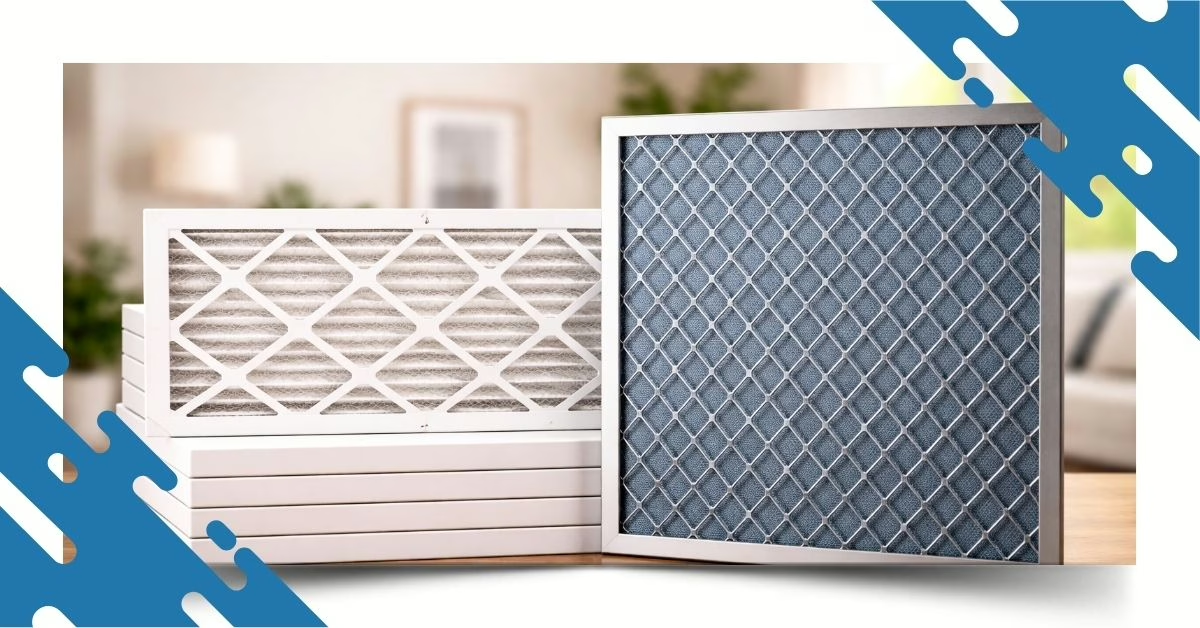
Regular air filters— also called disposable air filters – are the most common type of filter used in residential heating and cooling systems.
These filters use mechanical filtration to capture airborne particles as air passes through the filter material. Depending on the filter’s design and efficiency rating, they can capture particles such as:
- Dust
- Dirt
- Pollen
- Pet dander
- Lint
- Mold spores
- Other airborne particles
Disposable HVAC filters are commonly made from fiberglass, pleated synthetic fibers, or other filter media.
Most disposable filters are made from fiberglass or pleated synthetic materials. Their effectiveness is measured using a MERV (Minimum Efficiency Reporting Value) rating, which indicates how well the filter captures particles of different sizes. If you’d like to understand how MERV ratings are determined and what each rating means, the U.S. Environmental Protection Agency provides an easy-to-understand guide.
For most homes, filters rated between MERV 8 and MERV 13 offer an excellent balance between air quality and HVAC performance.
Because these filters gradually become clogged with debris, they should typically be replaced every 30 to 90 days, depending on indoor air quality, pets, and household activity.
How Do Disposable Air Filters Work?
As your HVAC system operates, return air passes through the filter before entering the equipment. The filter captures particles from the air stream, helping keep contaminants from circulating through your home and accumulating inside the HVAC system.
The effectiveness of a filter depends largely on its MERV rating.
What Is a MERV Rating?
MERV stands for Minimum Efficiency Reporting Value.
It is a standardized rating used to compare how effectively an HVAC filter captures particles of different sizes. Generally, a higher MERV rating means the filter can capture smaller particles more effectively.
The EPA currently recommends choosing a MERV 13 filter or the highest-rated filter your HVAC system’s fan and filter slot can accommodate. Not every HVAC system should automatically be upgraded to the highest possible MERV rating, because filter efficiency can affect airflow and system pressure.
Does a Higher MERV Rating Mean Better Filtration?
Generally, yes—but higher isn’t automatically better for every HVAC system.
A very restrictive filter can increase pressure drop and reduce airflow if the HVAC equipment isn’t designed to handle it. That’s why it’s important to consider both filtration efficiency and the requirements of your specific HVAC system.
Before upgrading to a significantly higher MERV rating, check your equipment manufacturer’s recommendations or have an HVAC professional evaluate the system.
What Are Electrostatic Air Filters?
You’ve probably heard of electrostatic air filters, but what makes them different from the regular filters you replace every few months?
Electrostatic air filters use electrically charged filter media to attract and capture airborne particles.
Unlike a standard disposable filter that relies primarily on mechanical filtration, an electrostatic filter uses an electrostatic charge to improve the collection of certain particles as air passes through the filter.
Electrostatic filters may be:
- Washable and reusable
- Disposable
- Permanently installed in some HVAC systems
- Available in different designs and efficiency ratings
Washable electrostatic filters are often marketed as a reusable alternative to disposable HVAC filters.
What Do Electrostatic Filters Capture?
Depending on the specific filter design and efficiency, electrostatic filters can capture airborne particles such as:
- Dust
- Pollen
- Pet dander
- Lint
- Other larger airborne particles
However, performance varies significantly between products. Not all electrostatic filters provide the same level of filtration, so homeowners should look at the manufacturer’s specifications rather than assuming that an electrostatic filter is automatically more effective than a disposable filter.
Regular vs Electrostatic Air Filters – Side-by-Side Comparison
Still wondering which filter really keeps your home’s air cleaner? Let’s break it down with a simple comparison of regular vs electrostatic air filters so you can see the differences at a glance:
Feature | Disposable HVAC Filters | Electrostatic Air Filters |
| How they work | Primarily capture particles through mechanical filtration | Use charged filter media to attract and capture particles |
| Common materials | Fiberglass or synthetic pleated media | Electrically charged filter media |
| MERV rating | Available in a wide range of MERV ratings | Depends on the specific product |
| Maintenance | Replace when dirty or according to manufacturer guidance | Wash/clean reusable models or replace disposable models |
| Upfront cost | Usually lower | Usually higher for reusable models |
| Long-term cost | Recurring replacement expense | Potentially lower replacement costs for reusable models |
| Airflow | Depends on filter thickness, design, MERV rating, and condition | Depends on filter design and condition |
| Best for | Homeowners wanting simple maintenance and a wide range of filtration options | Homeowners who prefer reusable filtration and are willing to clean the filter regularly |
| Environmental impact | Creates disposable filter waste | Reusable models can reduce replacement waste |
Looking at this, you might be thinking: “Which one fits my home best?”
Important: Airflow performance should not be judged by filter type alone. A dirty filter or an overly restrictive filter can reduce airflow regardless of whether it is disposable or electrostatic.
Pros & Cons of Regular vs Electrostatic Air Filters
Choosing between regular vs electrostatic air filters isn’t just about technology—it’s about what fits your lifestyle, home, and air quality needs. Let’s break down the pros and cons of each so you can make an informed decision.
Filter Type | Pros | Cons |
Regular Filters | ✅ Easy to replace — just swap every 1–3 months ✅ Inexpensive upfront ✅ High-MERV options available for better allergy control | ❌ Creates recurring costs with replacements ❌ Contributes to landfill waste ❌ Less effective for tiny airborne particles unless using high MERV |
Electrostatic Air Filters | ✅ Washable & reusable → saves money over time ✅ Lower airflow resistance → less strain on HVAC ✅ Captures medium particles like dust, pollen, pet dander efficiently | ❌ Must be cleaned regularly (monthly or as recommended) ❌ May not capture the tiniest allergens as well as high-MERV disposables ❌ Higher upfront cost than regular filters |
Do you want a “set it and forget it” solution with regular filters, or a reusable, eco-friendly option that just needs a little maintenance? Your answer will often point directly to the filter type that suits your home best.
Which Air Filter Is Better for Allergies?
If allergies or indoor air quality are a major concern, filtration efficiency is more important than simply choosing between “regular” and “electrostatic.”
A high-efficiency HVAC filter can capture smaller airborne particles more effectively than lower-efficiency filters. The EPA recommends MERV 13 or the highest filter rating your HVAC system can accommodate for improved particle filtration.
However, HVAC filtration is only one part of improving indoor air quality.
Many allergens, including dust and pet allergens, settle on floors, furniture, bedding, and other surfaces. HVAC filtration can help remove particles while they are airborne, but it cannot eliminate every source of indoor air pollution.
If allergies are your priority:
Consider:
- A properly sized high-efficiency HVAC filter
- MERV 13 if your system can safely accommodate it
- Regular filter inspection and replacement
- Professional HVAC maintenance
- Regular cleaning and dust control
- Additional indoor air quality solutions when appropriate
Are Washable Electrostatic Filters Better for Your AC?
Not necessarily.
A washable electrostatic filter can be a convenient reusable option, but the best filter for your AC system depends on the specific filter and the HVAC equipment.
A filter should:
- Fit properly
- Be compatible with your HVAC system
- Provide appropriate filtration
- Allow adequate airflow
- Be cleaned or replaced on schedule
If you’re considering switching from a disposable filter to a washable electrostatic filter, it’s a good idea to verify compatibility first.
Which HVAC Filter Saves More Money?
This depends on how you use and maintain your HVAC system.
Disposable filters
Disposable filters typically have a lower upfront cost, but you must purchase replacements regularly.
Reusable electrostatic filters
A washable electrostatic filter typically costs more initially but can be reused for an extended period when properly maintained.
However, don’t choose a filter based solely on purchase price. A properly functioning HVAC system, adequate airflow, and appropriate filtration are more important than simply minimizing filter costs.
A filter that is not maintained can reduce airflow and contribute to HVAC performance problems.
How to Choose the Best HVAC Air Filter
The right filter depends on your home’s unique needs.
A regular disposable filter may be the best option if you:
- Want the highest filtration performance
- Need better protection from allergens
- Prefer quick and easy maintenance
- Don’t mind replacing filters every few months
An electrostatic air filter could be a better fit if you:
- Prefer reusable household products
- Want to reduce long-term filter costs
- Are comfortable with routine cleaning
- Want a more environmentally friendly option
No matter which filter you choose, replacing or cleaning it on schedule is essential for maintaining healthy indoor air and protecting your HVAC system.
How Often Should You Change Your HVAC Air Filter?
There is no single replacement schedule that works for every home.
ENERGY STAR recommends checking central HVAC filters monthly and changing them at least every three months or whenever they become dirty. Homes with pets, heavy dust, or other indoor air quality concerns may require more frequent attention.
Check your filter more frequently if you have:
- Multiple pets
- High household activity
- Excessive indoor dust
- Construction or remodeling nearby
- Smokers in the home
- Allergy concerns
- A system that operates frequently
For washable electrostatic filters, follow the manufacturer’s cleaning instructions and inspect the filter regularly.
Need Help Choosing the Right Air Filter?
Selecting the best HVAC air filter doesn’t have to be confusing. Every home has different air quality needs, and the right filter depends on your equipment, lifestyle, and indoor environment.
At Iron Shield Heating & Air, our experienced technicians can recommend the ideal filter for your HVAC system, improve your indoor air quality, and help your heating and cooling equipment operate more efficiently.
Call Iron Shield Heating & Air today to schedule HVAC maintenance or speak with one of our experts about the best air filter solution for your home.
Frequently Asked Questions About HVAC Air Filters
Not automatically. Electrostatic filters use charged media to attract particles, but performance varies by product. A high-efficiency disposable filter may provide better filtration of smaller particles. Compare the actual efficiency rating and make sure the filter is compatible with your HVAC system.
There isn’t one MERV rating that’s ideal for every HVAC system. The EPA recommends MERV 13 or the highest-rated filter your system can accommodate.
Not necessarily. Many HVAC systems can accommodate MERV 13, but compatibility depends on the equipment, filter size, design, and airflow requirements. Before upgrading, check your manufacturer’s specifications or consult an HVAC professional.
They can help capture airborne particles, but not all washable electrostatic filters have the same filtration efficiency. If allergy-related filtration is your priority, compare the filter’s actual performance rating and consider whether your HVAC system can accommodate a higher-efficiency filter.
Check your filter every month. ENERGY STAR recommends changing it at least every three months or sooner if it becomes dirty. Homes with pets, heavy dust, or other indoor air quality concerns may require more frequent changes.
Yes. A dirty filter can restrict airflow, which can affect HVAC performance and increase operating costs. Regular filter inspection and maintenance can help maintain proper airflow.
Yes, HVAC filtration can help reduce airborne particles, but it is only one part of a complete indoor air quality strategy. EPA recommends combining filtration with source control and appropriate ventilation.
No. The filter must be compatible with the HVAC system. A higher-efficiency filter can create additional pressure drop, potentially affecting airflow. Check the manufacturer’s specifications or have an HVAC professional determine the appropriate filter.
No filter eliminates all dust. Electrostatic filters can capture certain airborne particles, but dust can also settle on furniture, floors, and other surfaces. Regular cleaning and proper HVAC filtration work together to help manage indoor dust.
They can be, especially for homeowners who don’t mind regular cleaning. However, the decision should also consider filtration performance, airflow, maintenance requirements, and compatibility with your HVAC system.
Related Blog Posts
Read more articles and expert advice related to this service.