If one room in your home always feels too hot while another stays comfortable, your central HVAC system may not be the best solution for every space. A ductless mini split system can provide targeted heating and cooling without requiring traditional ductwork.
Ductless mini splits are especially useful for older homes, room additions, garages, home offices, sunrooms, converted spaces, and rooms with persistent hot or cold spots. They can also be an efficient way to add heating and cooling to areas that are difficult or expensive to connect to an existing HVAC system.
For homeowners in Ocala, The Villages, Belleview, Summerfield, Lady Lake, and surrounding Central Florida communities, a ductless mini split can provide flexible comfort where traditional HVAC systems may have limitations.
What Is a Ductless Mini Split System?
A ductless mini split, also called a ductless HVAC system, mini split AC, or ductless heat pump, is a heating and cooling system that does not require traditional air ducts.
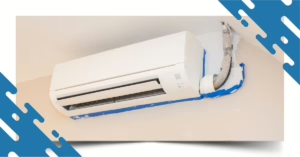
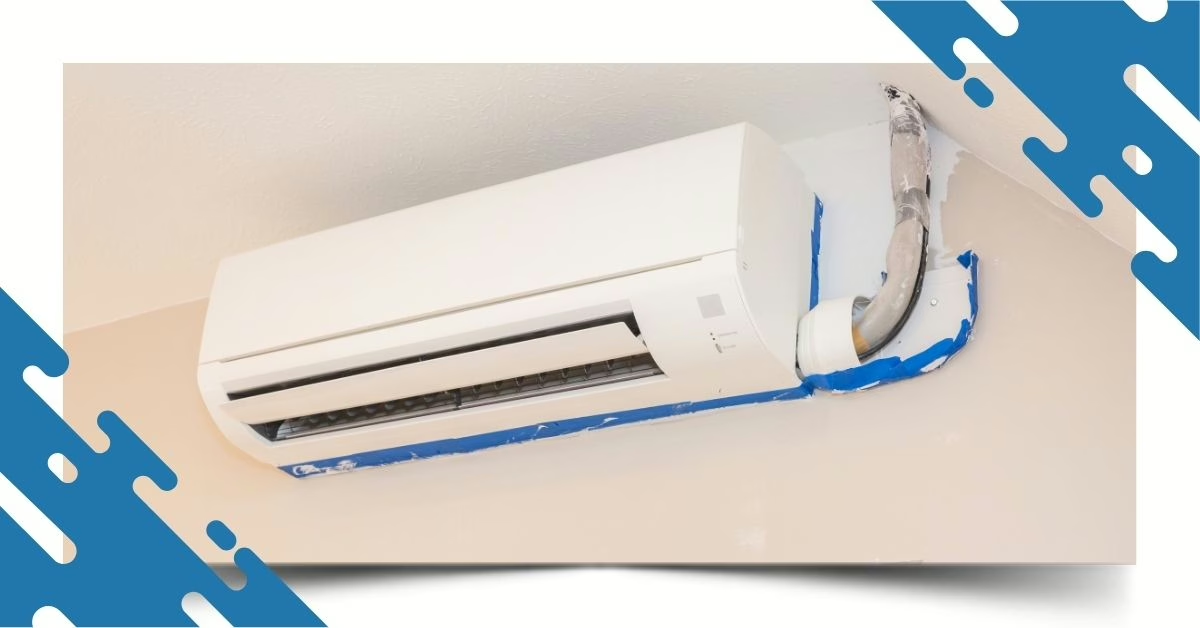
Instead of distributing conditioned air through a network of ducts, a mini split delivers heating or cooling directly into the room through one or more indoor air-handling units.
A typical ductless mini split has two main components:
- Outdoor unit: Contains the compressor and outdoor coil and transfers heat between your home and the outdoors.
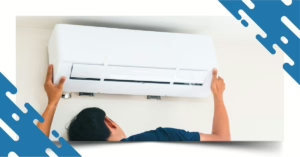
- Indoor air handler: Mounted on a wall, ceiling, or other approved location, delivering conditioned air directly into the room.
The indoor and outdoor units are connected via a small line set that includes refrigerant piping, electrical wiring, and a condensate drain. This eliminates the need to install large duct runs throughout walls, ceilings, or floors.
What Is a Ductless Mini Split System?
A ductless mini split, also called a ductless HVAC system, mini split AC, or ductless heat pump, is a heating and cooling system that does not require traditional air ducts.
Instead of distributing conditioned air through a network of ducts, a mini split delivers heating or cooling directly into the room through one or more indoor air-handling units.
A typical ductless mini split has two main components:
- Outdoor unit: Contains the compressor and outdoor coil and transfers heat between your home and the outdoors.
- Indoor air handler: Mounted on a wall, ceiling, or other approved location, delivering conditioned air directly into the room.
The indoor and outdoor units are connected via a small line set that includes refrigerant piping, electrical wiring, and a condensate drain. This eliminates the need to install large duct runs throughout walls, ceilings, or floors.
How Does a Ductless Mini Split Work?
During cooling mode, the system removes heat from indoor air and transfers it outside. During heating mode, a ductless heat pump reverses the process and moves heat from outdoors into the home.
Many modern systems use variable-speed inverter technology, allowing the compressor to adjust its output instead of simply cycling on and off at full capacity. This can help maintain more consistent temperatures and improve energy efficiency.
Proper system sizing and installation are critical. ENERGY STAR recommends that HVAC professionals properly size mini-split systems for the space rather than simply choosing equipment based on square footage alone.
8 Benefits of Installing a Ductless Mini Split
If you’ve ever struggled with hot spots, high energy bills, or rooms that just won’t cool properly, a ductless mini split might be the solution you didn’t know you needed. These systems aren’t just for new construction—they can transform older homes, additions, or tricky spaces where traditional HVAC falls short.
So, why are more homeowners choosing ductless mini splits?
1. Higher Energy Efficiency and Lower Utility Bills
One of the biggest reasons homeowners consider a ductless mini split system is energy efficiency.
Because mini splits deliver conditioned air directly into the space, they do not require traditional ductwork to distribute air throughout the home. This can be particularly beneficial when adding comfort to a room that is difficult to serve with an existing ducted HVAC system.
Many ductless systems also use inverter-driven compressors that adjust capacity according to the heating or cooling demand.
ENERGY STAR-certified ductless heat pumps can provide significant energy savings compared with standard electric resistance heating, while providing both heating and cooling from one system.
Potential benefits include:
- More efficient heating and cooling
- Reduced energy waste in spaces that do not need to be conditioned
- More consistent room temperatures
- Variable-speed operation
- Heating and cooling from one system
Actual energy savings depend on the equipment, installation, home construction, insulation, thermostat settings, climate, and how the system is operated.
2. Great for Homes Without Existing Ductwork
Do you own an older home without central ductwork?
Installing a traditional central HVAC system in a home without ducts can require extensive construction. A ductless HVAC system can provide another option.
Mini splits are designed specifically for spaces where installing or extending ductwork may be difficult or impractical.
They can be a good fit for:
- Older homes without ductwork
- Room additions
- Home offices
- Sunrooms
- Converted garages
- Finished basements
- Workshops
- Guest rooms
- Bonus rooms
- Detached or supplemental spaces
Instead of building a network of ducts throughout the home, the system uses a compact connection between the indoor and outdoor equipment.
That can make ductless mini split installation less disruptive than installing an entirely new duct system, depending on the layout and electrical requirements of the property.
3. Enjoy Zoned Temperature Control
One of the biggest advantages of a ductless mini split AC system is the ability to create individual comfort zones.
A single-zone system can condition one specific room or area. A multi-zone system can connect multiple indoor units to a single outdoor unit, depending on the equipment and manufacturer’s design.
This allows you to manage comfort in different areas based on how you use them.
For example:
- Keep a bedroom comfortable overnight.
- Cool a home office while you’re working.
- Add cooling to a sunroom without changing the temperature throughout the house.
- Condition a guest room when it is occupied.
- Provide heating and cooling to a room that does not receive enough conditioned air from the central system.
Zoning can also help reduce the need to condition areas that are not being used.
4. Less Invasive Than Adding Extensive Ductwork
Adding ductwork to an existing home can involve accessing walls, ceilings, attics, or other difficult areas.
A ductless mini split does not require a traditional duct network. Instead, the indoor unit connects to the outdoor unit through a relatively small line-set opening.
That can make installation a practical option when homeowners want to improve comfort without undertaking major ductwork renovations.
However, installation still requires professional planning. The location of the indoor unit, outdoor condenser, refrigerant lines, condensate drainage, electrical requirements, and equipment capacity all need to be evaluated.
Professional mini split installation helps ensure the system is properly sized, installed, tested, and commissioned.
5. Better Flexibility for Difficult-to-Cool Rooms
Does one room in your home always seem warmer than the rest?
A central HVAC system may struggle to provide even comfort to certain spaces because of distance from the air handler, insulation, windows, room orientation, duct design, or other factors.
A ductless mini split can provide dedicated heating and cooling directly to the problem area.
This makes mini splits particularly useful for:
Home Additions
A newly added room may not have enough existing duct capacity. A ductless system can provide dedicated comfort without necessarily redesigning the home’s entire duct system.
Garages and Workshops
If you use your garage or workshop as a regular living or working space, a ductless system can provide heating and cooling without extending your home’s existing ductwork.
Home Offices
A home office may need to stay comfortable during the workday even when the rest of the house does not need additional cooling.
Sunrooms
Large windows can create significant heat gain. A properly sized mini split can provide dedicated cooling and heating for the space.
Bonus Rooms
Rooms located above garages or far away from the main HVAC system can sometimes benefit from a dedicated ductless system.
ENERGY STAR specifically identifies additions, outbuildings, older homes without ductwork, and rooms with hot or cold spots as common applications for mini-split heat pumps.
6. Quiet, Comfortable Operation
Noise is another reason homeowners choose ductless mini splits.
The indoor air handler is designed to operate quietly while distributing conditioned air directly into the room. Variable-speed technology can also allow the system to operate at lower speeds when less heating or cooling is required.
This can make ductless systems a good option for:
- Bedrooms
- Home offices
- Living spaces
- Guest rooms
- Media rooms
- Study areas
Actual sound levels vary by model, installation, fan speed, and operating conditions, so homeowners should compare manufacturer specifications when selecting equipment.
7. Heating and Cooling in One System
Many ductless mini splits are heat pumps, meaning they can provide both air conditioning and heating.
Instead of installing separate equipment for cooling and supplemental heating, a ductless heat pump can handle both functions.
During Florida’s hot summer months, the system operates as an air conditioner by removing heat from the indoor space.
During cooler weather, it reverses operation and transfers heat into the room.
This makes a ductless mini split heat pump particularly useful for spaces that need year-round comfort.
ENERGY STAR notes that ductless heat pumps can provide both heating and cooling from the same system and can be used as either a primary system or a supplement to an existing HVAC system.
8. Flexible Option for Supplemental HVAC
You don’t necessarily have to replace your entire central HVAC system to benefit from a ductless mini split.
A mini split can supplement an existing HVAC system when a particular room or zone needs additional heating or cooling.
For example, you may have a central air conditioner that adequately conditions most of your home but struggles with:
- A distant bedroom
- A converted garage
- A new addition
- A home office
- A sunroom
- A bonus room
- A finished space above a garage
Instead of replacing a properly functioning central HVAC system, a properly designed ductless system may provide a targeted solution.
Ductless Mini Split Installation in Ocala, FL
Florida homes have unique cooling requirements. Long periods of hot weather mean your air conditioning system needs to provide dependable cooling while also managing indoor humidity.
For homeowners in Ocala and surrounding Marion County communities, a ductless mini split can be an excellent option for rooms that need dedicated heating and cooling.
At Iron Shield Heating & Air, we can evaluate your space and determine whether a ductless mini split, central HVAC system, heat pump, or another solution makes the most sense for your home.
Our HVAC professionals can evaluate factors such as:
- Room size
- Insulation
- Windows and sun exposure
- Existing HVAC capacity
- Electrical requirements
- Indoor unit placement
- Outdoor unit location
- Number of zones needed
- Heating and cooling requirements
Proper sizing is especially important. An oversized or undersized system may not provide the comfort, humidity control, or efficiency you expect.
Are Ductless Mini Splits Good for Florida?
Yes, ductless mini splits can be an excellent option for many Florida applications, particularly when you need to condition a specific room or area without extending ductwork.
They can be useful for additions, garages, sunrooms, home offices, older homes, and areas with persistent comfort problems.
However, a mini split is not automatically the best choice for every home. If your existing central HVAC system and ductwork are functioning properly, extending or replacing the existing system may sometimes be the better solution.
The right choice depends on your home’s layout, comfort needs, existing HVAC system, budget, and installation requirements.
At Iron Shield Heating & Air, we understand how frustrating it can be when parts of your home feel uncomfortable. That’s why our licensed HVAC experts guide you through the process—from system selection to professional installation—so you get reliable, efficient comfort in every room.
If you’re ready to finally enjoy consistent temperatures and lower energy bills, schedule a consultation with us, and we’ll help you find the perfect ductless mini split solution for your home.
Ductless Mini Split FAQs
The cost of ductless mini split installation varies depending on the system capacity, number of indoor units, electrical requirements, installation location, line-set length, accessibility, and other project-specific factors.
The best way to determine the cost is to have an HVAC professional evaluate the space and provide a customized estimate.
The lifespan of a ductless mini split depends on equipment quality, installation, usage, maintenance, environmental conditions, and other factors.
Regular professional maintenance and keeping the indoor filters clean can help support reliable operation and efficiency.
Yes. A multi-zone mini split system can connect multiple indoor units to one outdoor unit when the equipment is designed for that configuration.
Each indoor unit can serve a separate zone, allowing greater control over comfort throughout the home.
Sometimes. Ductless systems can provide whole-home heating and cooling when properly designed with enough indoor units and capacity.
However, they can also be used as supplemental HVAC for individual rooms or zones.
An HVAC professional should evaluate your home’s layout and heating and cooling requirements before determining whether ductless or central HVAC is the better option.
Many ductless mini splits are heat pumps and provide both heating and cooling.
When shopping for a system, verify that the specific model is designed for heating as well as cooling and that its heating capacity is appropriate for your application.
A ductless system eliminates the need for ductwork, but it should not automatically be marketed as an indoor air quality solution.
EPA notes that standard mini-split filters generally protect the equipment from larger particles such as dust, pet hair, and lint but typically do not remove fine particles. Systems with higher-efficiency filtration should be evaluated based on their actual filter specifications.
Good indoor air quality also depends on ventilation, filtration, humidity control, source control, and other factors.
Yes. Like other HVAC systems, ductless mini splits benefit from regular maintenance.
Maintenance can include:
- Cleaning or replacing filters as recommended
- Inspecting indoor and outdoor coils
- Checking refrigerant-related components
- Inspecting electrical connections
- Checking condensate drainage
- Cleaning indoor blower components when necessary
- Verifying system operation
Your manufacturer’s maintenance recommendations should always be followed.
Many modern ductless mini splits are highly efficient, particularly models using inverter-driven technology and those certified by ENERGY STAR.
Actual efficiency depends on the equipment, installation, operating conditions, and how the system is used. ENERGY STAR provides certified product information and recommends proper sizing and professional installation.
For the right application, they can be.
A ductless mini split may be worth considering if you have a room that is difficult to cool, an addition without ductwork, an older home without central ducts, or a space that needs independent temperature control.
The best system depends on your home’s specific needs.
Related Blog Posts
Read more articles and expert advice related to this service.