
Is your AC not reaching the set temperature, even though it’s running all day? Many homeowners in Belleview, FL, experience this issue during Florida’s hottest months. When your air conditioner struggles to keep up, it can leave your home uncomfortable and send energy bills soaring.
Do certain rooms feel warmer than others? Is your AC constantly running without shutting off? Have your utility costs increased recently? These are all signs that something may be preventing your HVAC system from cooling efficiently.
Let’s explore the most common reasons your AC isn’t reaching the set temperature—and what you can do about it.
Why Is My AC Not Reaching the Set Temperature?
An air conditioner should maintain a comfortable indoor temperature, even during hot Florida summers. When it can’t, there is usually an underlying issue affecting airflow, cooling capacity, or system efficiency.
1. A Dirty Air Filter Is Restricting Airflow
When was the last time you changed your air filter?
A clogged air filter is one of the most common reasons an AC struggles to cool. Dust, pet dander, pollen, and debris block airflow, making it harder for cooled air to circulate throughout your home.
Common signs include:
- Weak airflow from vents
- Longer cooling cycles
- Uneven temperatures
- Higher energy bills
- Poor indoor air quality
- An AC that runs constantly
According to ENERGY STAR, homeowners should inspect filters monthly and replace them at least every three months—or more frequently during heavy-use seasons. A dirty filter forces your system to work harder, increasing energy consumption and wear on components.
2. Low Refrigerant or Refrigerant Leaks
Refrigerant is what allows your AC to remove heat from your home.
If refrigerant levels are low due to a leak, your system may:
- Run continuously
- Blow lukewarm air
- Struggle to reach the thermostat setting
- Develop ice on the evaporator coil
Have you noticed your AC running longer than normal? Low refrigerant is often the culprit.
Because refrigerant systems require specialized tools and EPA-certified handling, this repair should always be performed by a licensed HVAC technician.
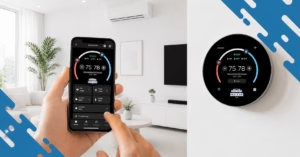
3. Your Thermostat May Be the Problem
Sometimes the issue isn’t your air conditioner—it’s the thermostat.
Ask yourself:
- Is the thermostat in direct sunlight?
- Is it located near a lamp, television, or kitchen?
- Has it been calibrated recently?
An incorrectly placed or malfunctioning thermostat can cause inaccurate temperature readings, making your AC run inefficiently.
Florida energy experts recommend placing thermostats on interior walls away from direct sunlight, drafts, windows, and heat-producing appliances for accurate performance.
4. Your AC May Be Too Small for Your Home
If your air conditioner has always struggled to keep up—or your home has been expanded or remodeled—the system may not have enough cooling capacity.
An undersized air conditioner may run for long periods during hot Florida afternoons without reaching the desired temperature.
Common signs include:
- Constant AC operation
- Hot rooms or uneven cooling
- Poor comfort during the hottest part of the day
- High energy consumption
- Difficulty maintaining the thermostat setting
Proper HVAC sizing is important when installing or replacing an air conditioning system.
A system that is too small may struggle to keep up. However, installing a system that is too large can also create problems, including short cycling and poor humidity control.
5. Your AC System May Be Aging
How old is your air conditioner?
Older HVAC systems can gradually lose efficiency as components wear out and repairs become more frequent.
If your AC is more than 10–15 years old and you’re experiencing repeated cooling problems, it may be worth comparing the cost of continued repairs with the benefits of AC replacement.
An aging system may show signs such as:
- Frequent breakdowns
- Increasing repair costs
- Rising energy bills
- Uneven cooling
- Longer cooling cycles
- Difficulty reaching the thermostat setting
A professional HVAC technician can evaluate your system and help determine whether repair or replacement makes more sense.
6. The Outdoor Condenser Unit Is Dirty or Blocked
Your outdoor AC condenser needs adequate airflow to release the heat removed from your home.
Take a look at the area surrounding your outdoor unit.
Is it covered or surrounded by:
- Leaves
- Grass clippings
- Dirt
- Mulch
- Weeds
- Other debris
Restricted airflow can make it harder for your air conditioner to reject heat, reducing cooling performance.
Help maintain airflow around your condenser by:
- Keeping vegetation trimmed away from the unit
- Removing leaves and debris from the surrounding area
- Keeping objects away from the condenser
- Scheduling professional AC maintenance and coil cleaning
If the outdoor coil is heavily dirty, professional cleaning may be needed.
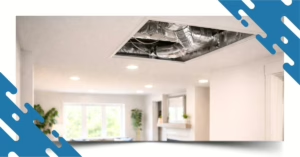
7. Your Ductwork May Be Leaking or Damaged
Your ductwork is responsible for distributing conditioned air throughout your home.
If ducts are leaking, disconnected, crushed, poorly insulated, or obstructed, some of that cooled air may never reach your living spaces.
Instead, conditioned air can escape into an attic, crawlspace, wall cavity, or other area.
Possible signs of ductwork problems include:
- Hot and cold spots
- Weak airflow from certain vents
- Rooms that never seem to cool
- Higher utility bills
- Excessive dust
- An AC that runs longer than normal
A professional duct inspection can identify leaks, disconnected ducts, insulation problems, and airflow restrictions.
8. Your Evaporator Coil May Be Frozen or Dirty
The indoor evaporator coil absorbs heat from your home’s air. If the coil becomes excessively dirty or freezes, your AC may lose cooling capacity.
A frozen evaporator coil can occur because of issues such as:
- Restricted airflow
- A dirty filter
- Low refrigerant
- Mechanical problems
You may notice ice on the indoor unit or refrigerant lines, weak airflow, or warm air coming from your vents.
If you see ice on your AC system, turn the system off and contact an HVAC professional rather than continuing to operate it.
9. Your AC May Need Professional Maintenance
Regular AC maintenance helps identify developing problems before they turn into major breakdowns.
During a professional tune-up, an HVAC technician can inspect important components, check electrical connections, evaluate airflow, clean components, and look for potential performance issues.
This is especially important in Belleview and throughout Central Florida, where air conditioners may operate for long periods during the cooling season.
Routine maintenance can help your system:
- Operate more efficiently
- Maintain more consistent temperatures
- Reduce unnecessary strain
- Improve airflow
- Identify problems earlier
- Support longer equipment life
Why Florida Heat and Humidity Can Make AC Problems Worse
Florida homeowners face a unique challenge: heat and humidity.
Did you know your AC removes both heat and moisture from the air?
According to the U.S. Department of Energy, air conditioners play a major role in dehumidification. During periods of high humidity, your system must work harder because it is cooling and removing moisture simultaneously.
When outdoor temperatures climb into the 90s for days at a time, even a small issue can become a major comfort problem.
You may notice:
- Sticky indoor air
- AC running longer than usual
- Higher energy bills
- Uneven cooling
Florida energy experts also note that systems with poor humidity control often cause homeowners to lower thermostat settings, increasing cooling costs significantly.
If your home feels cool but still uncomfortable, humidity may be part of the problem.
What Temperature Should I Set My AC To in Florida?
Many homeowners think lowering the thermostat dramatically will make the AC cool the house faster.
It won’t.
Setting your thermostat from 78°F to 68°F does not make your air conditioner cool faster. It simply gives the system a lower temperature target to reach.
For many Florida homes, a thermostat setting around 74°F–78°F can provide a reasonable balance between comfort and energy use, depending on personal preference, humidity, insulation, and the home’s cooling load.
If your AC cannot maintain your normal thermostat setting, however, the issue may not be the temperature setting itself.
It may be time to have your HVAC system inspected.
When Should You Call an HVAC Professional?
If you’ve replaced the filter, checked the thermostat, and cleared airflow obstructions but your AC still won’t reach the set temperature, it’s time for expert help.
Professional HVAC technicians can identify issues such as:
- Refrigerant leaks
- Electrical failures
- Compressor problems
- Frozen evaporator coils
- Duct leakage
- Airflow restrictions
Waiting too long can turn a minor repair into a major system failure. Don’t spend another day battling hot rooms, high humidity, and rising energy bills.
At Iron Shield Heating & Air, we help Belleview homeowners quickly diagnose and resolve AC performance issues. Whether you need a tune-up, refrigerant repair, duct inspection, or a complete system evaluation, our experienced technicians are ready to help.
Contact us now, and we’ll restore your comfort and help your system run at peak efficiency all summer long.
Frequently Asked Questions About an AC Not Reaching the Set Temperature
An AC that runs continuously but cannot reach the thermostat setting may have restricted airflow, low refrigerant, dirty coils, ductwork problems, thermostat issues, or insufficient cooling capacity. A professional HVAC inspection can identify the exact cause.
Long AC cycles can be normal during extremely hot weather. However, if your system runs constantly and still cannot reach the set temperature, there may be an underlying problem with airflow, refrigerant, ductwork, system capacity, or another component.
If the air coming from the vents feels cool but the home temperature isn’t dropping, the problem could involve insufficient airflow, leaking ductwork, an undersized system, poor insulation, excessive heat gain, or a system that isn’t producing enough cooling capacity.
Uneven temperatures can be caused by duct leaks, inadequate airflow, blocked vents, insulation problems, room location, windows, or an HVAC system that isn’t distributing conditioned air evenly.
Yes. A severely clogged air filter can restrict airflow and reduce your system’s ability to cool your home efficiently. Replacing the filter is a good first step, but persistent cooling problems should be professionally diagnosed.
Yes. A refrigerant leak or insufficient refrigerant can reduce cooling performance and cause longer or continuous AC operation. Refrigerant problems require professional HVAC diagnosis and repair.
There isn’t one exact timeframe for every home. Outdoor temperature, humidity, home size, insulation, system capacity, thermostat setting, and equipment condition all affect cooling time. If your AC runs for hours without reaching the setting, it should be inspected.
Lowering the thermostat significantly usually won’t make the AC cool faster. If your system cannot reach your normal temperature setting, the better solution is to determine why the system isn’t keeping up.
AC replacement may make sense when a system is older, requires frequent repairs, has declining efficiency, or has a major component failure. An HVAC professional can evaluate the equipment and help you compare repair and replacement options.
If you need AC repair in Belleview, FL, Iron Shield Heating & Air can help diagnose problems such as poor cooling, weak airflow, refrigerant issues, thermostat problems, frozen coils, and other HVAC performance issues.
Related Blog Posts
Read more articles and expert advice related to this service.