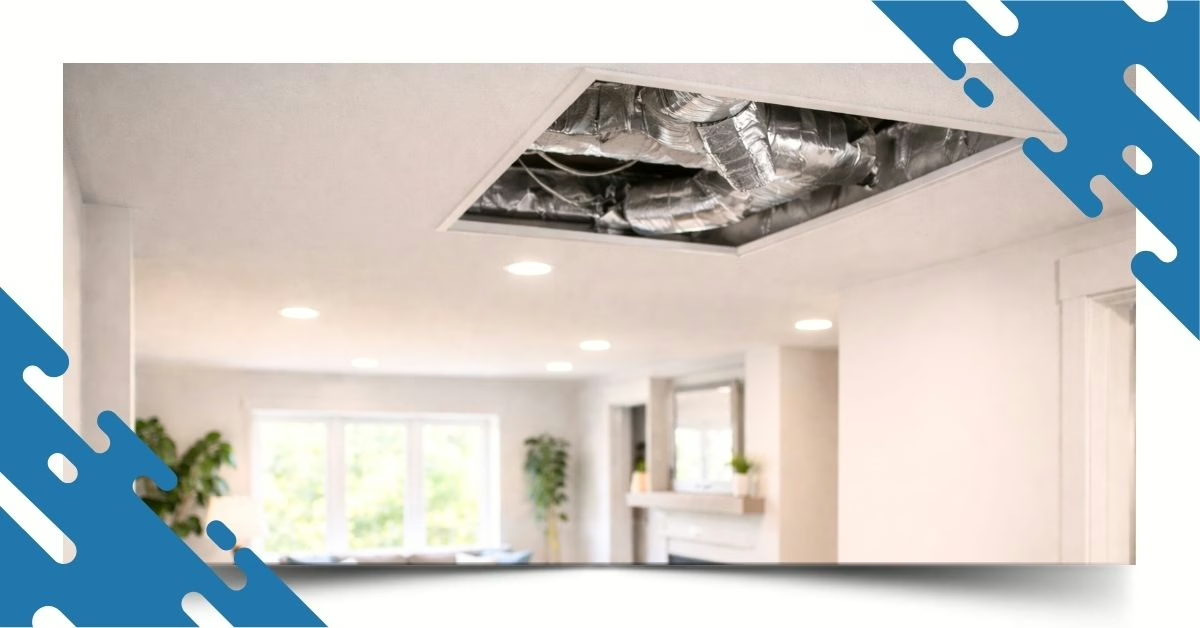
Do some rooms in your home feel too hot while others stay too cold? Are certain vents producing weak airflow, or does your air conditioner seem to run constantly without keeping the house comfortable?
These are common signs of an HVAC airflow problem.
Proper airflow is essential for maintaining consistent indoor temperatures, efficient heating and cooling, and reliable HVAC performance. Problems with your air ducts, air filter, blower motor, vents, return air, or HVAC system design can restrict airflow and make your system work harder than necessary.
For homeowners in Ocala, The Villages, Belleview, Summerfield, Lady Lake, and surrounding Marion County communities, understanding the most common causes of poor HVAC airflow can help you identify problems early and know when professional service is needed.
Why Proper HVAC Airflow Matters
Your HVAC system depends on balanced airflow to move conditioned air throughout your home.
During cooling season, your air conditioner removes heat and humidity from indoor air before distributing cooler air through the supply vents. During heating season, your heating system warms the air and distributes it throughout the home.
When airflow is restricted or unbalanced, your HVAC system may struggle to maintain the temperature you set on your thermostat.
Poor airflow can contribute to:
- Uneven temperatures between rooms
- Weak airflow from vents
- Longer HVAC run times
- Higher energy consumption
- Increased strain on HVAC components
- Reduced heating and cooling performance
- Hot and cold spots throughout the home
- Excessive humidity or comfort problems
- Premature wear on HVAC equipment
Your ductwork is especially important. The U.S. Department of Energy estimates that about 20–30% of the air moving through a typical duct system can be lost because of leaks, holes, and poorly connected ducts.
That means an HVAC system can be operating properly while your home still experiences poor comfort because conditioned air is not reaching the rooms where it is needed.
7 Common HVAC Airflow Issues in Homes
HVAC airflow issues can have simple causes, such as a dirty filter or blocked vent, or more complicated causes involving ductwork, blower components, or system design.
Here are seven common problems to watch for.
1. Leaky or Damaged Air Ducts
Leaking ductwork is one of the most common causes of HVAC airflow problems.
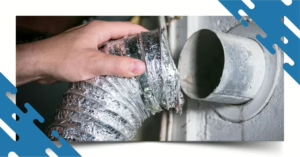
Ducts carry conditioned air from your HVAC system to individual rooms. Cracks, holes, disconnected sections, damaged insulation, and poorly sealed connections can allow conditioned air to escape before it reaches your living spaces.
The result can be:
- Weak airflow from supply vents
- Hot and cold rooms
- Uneven temperatures
- Longer HVAC run times
- Higher energy use
- Reduced heating and cooling performance
How to Fix Leaky Ducts
A professional HVAC technician can inspect accessible ductwork, identify leaks, and recommend appropriate duct sealing, duct repair, insulation, or replacement.
Depending on the system and location of the leaks, professional duct-sealing methods may also be available.
2. Dirty or Clogged HVAC Air Filters
A dirty HVAC filter can restrict the amount of air moving through your system.
As dust, pet hair, and other particles accumulate on the filter, the system may have to work harder to move air through the restricted filter.
Common signs include:
- Weak airflow from vents
- Longer heating or cooling cycles
- Poor temperature control
- Reduced HVAC performance
- A visibly dirty filter
How Often Should You Change Your HVAC Filter?
There is no single replacement schedule that works for every home. EPA guidance recommends following the manufacturer’s instructions; manufacturers commonly recommend replacing filters approximately every 60–90 days, while homes with higher dust levels or other factors may require more frequent replacement.
Check your filter regularly rather than waiting until airflow becomes noticeably weak.
Also, avoid automatically choosing the highest-MERV filter available. EPA recommends using MERV 13 or the highest-rated filter your HVAC system can accommodate, so consult your equipment documentation or an HVAC professional before upgrading to a more restrictive filter.
3. Blocked, Closed, or Obstructed Air Vents
Your supply vents need to remain open and unobstructed so conditioned air can circulate properly.
Furniture, rugs, curtains, storage items, and other objects can block vents and reduce effective airflow into a room.
Closing vents in unused rooms may also seem like an easy way to save energy, but central HVAC systems are designed around specific airflow requirements. Closing multiple vents can alter pressure and airflow throughout the duct system.
Signs of Blocked HVAC Vents
You may notice:
- One room is much warmer or colder than another
- Weak airflow from a particular vent
- Furniture covering floor registers
- A room that never reaches the thermostat setting
What You Can Do
Make sure supply and return vents are open and free from obstructions.
If a room continues to have poor airflow even after removing obstructions, the problem may involve the ductwork, return-air system, blower, or overall HVAC design.
4. Poorly Designed, Undersized, or Improperly Installed Ductwork
Not every airflow problem is caused by maintenance.
Sometimes the issue is with the ductwork design or installation itself.
Ducts that are improperly sized, excessively long, poorly routed, sharply bent, or inadequately connected can create airflow restrictions and pressure problems.
This may result in:
- Persistent hot and cold spots
- Weak airflow in certain rooms
- Long HVAC run times
- Uneven heating and cooling
- Poor comfort despite a properly set thermostat
How Is Poor Duct Design Fixed?
A professional HVAC contractor can evaluate the duct system and determine whether the problem is related to duct sizing, layout, restrictions, insulation, or airflow balance.
Depending on the situation, the solution may involve duct repair, resizing, rerouting, sealing, insulation, or replacement.
5. Dirty Evaporator Coil or Blower Components
Your HVAC system contains components that must remain reasonably clean to move and condition air effectively.
Dust and debris can accumulate on the evaporator coil, blower wheel, and other internal components. This buildup can reduce system performance and restrict airflow.
A dirty blower wheel, for example, may prevent the blower from moving air as efficiently as it should.
Signs Your HVAC Components May Need Cleaning
Watch for:
- Weak airflow despite having a clean filter
- Reduced cooling or heating performance
- Longer system run times
- Unusual blower noises
- Increasing difficulty maintaining the thermostat setting
Because accessing internal HVAC components can require disassembly and electrical precautions, professional inspection and cleaning are recommended when buildup is suspected.
6. A Weak, Failing, or Incorrectly Sized Blower
The blower motor and blower assembly are responsible for moving conditioned air through your HVAC system and ductwork.
If the blower motor is failing, the blower wheel is damaged or dirty, or the blower is not operating correctly, airflow can become weak throughout the home.
Possible warning signs include:
- Weak airflow from multiple or all vents
- Unusual buzzing, squealing, or grinding sounds
- HVAC system running longer than normal
- Difficulty reaching the thermostat setting
- Reduced heating or cooling performance
A technician can test the blower motor, electrical components, airflow, and system operation to determine whether repair or replacement is necessary.
7. Poor Return Airflow
Many homeowners focus on their supply vents and forget about another critical part of the HVAC airflow system: return air.
Return vents pull air from your home and send it back to the HVAC system to be conditioned again.
If return vents are blocked, undersized, poorly located, or insufficient for the system, the HVAC equipment may not receive enough air to operate properly.
Signs of a Return Airflow Problem
You may notice:
- Weak airflow from supply vents
- Uneven temperatures
- Rooms that remain uncomfortable
- Whistling or unusual airflow noises
- Doors that are difficult to open or close while the HVAC system is operating
- Excessively long heating or cooling cycles
A professional HVAC inspection can determine whether the problem is caused by blocked returns, inadequate return capacity, duct restrictions, or another airflow issue.
Frequently Asked Questions About HVAC Airflow
Weak AC airflow can be caused by a dirty air filter, blocked vents, leaking or restricted ductwork, a dirty blower or evaporator coil, blower motor problems, or inadequate return air. If changing the filter and clearing the vents does not solve the problem, professional HVAC diagnostics can identify the cause.
Uneven temperatures can result from duct leaks, poorly designed or undersized ductwork, blocked vents, inadequate return air, insulation issues, solar heat gain, or HVAC system sizing and performance problems.
Start by checking that your HVAC filter is clean and that supply and return vents are open and unobstructed. If airflow remains weak, the system may have a duct, blower, return-air, or equipment problem that requires professional inspection.
Yes. A heavily loaded filter can restrict airflow through the HVAC system. EPA recommends replacing filters according to manufacturer instructions, with many manufacturers recommending replacement approximately every 60–90 days. Filters may need to be replaced more frequently when they become heavily soiled.
Closing multiple supply vents is generally not a recommended way to save energy. Your HVAC system is designed to operate with a specific airflow and pressure balance. If unused rooms are consistently uncomfortable or you are trying to improve energy efficiency, have an HVAC professional evaluate the system instead.
Yes. Leaking or poorly connected ducts can allow conditioned air to escape before it reaches the intended rooms. The U.S. Department of Energy estimates that approximately 20–30% of air moving through typical duct systems can be lost through duct leaks, holes, and poorly connected ducts.
Persistent airflow problems can place additional strain on HVAC equipment and reduce system performance. Restricted airflow can affect operating conditions and may contribute to premature wear if the underlying problem is not addressed.
The appropriate maintenance schedule depends on the equipment, age, usage, and manufacturer’s recommendations. Regular professional maintenance can help identify airflow restrictions, dirty components, electrical issues, refrigerant-related problems, and other concerns before they become larger repairs.
Airflow, filtration, ventilation, and indoor air quality are related, but they are not the same thing. HVAC filters can help remove particles from air that passes through the system, while source control and appropriate ventilation are also important parts of maintaining indoor air quality.
Are Your HVAC Airflow Issues Affecting Your Comfort?
Proper airflow is the heartbeat of a comfortable, efficient home. If you’ve noticed uneven temperatures, weak vents, or rising energy bills, it’s not just frustrating—it’s a sign your HVAC system may need attention. Ignoring these problems can lead to higher costs, more wear on your equipment, and even lower indoor air quality.
At Iron Shield Heating & Air, we understand how stressful HVAC issues can be. Our experienced technicians can diagnose airflow problems, clean and repair ducts, and ensure your system runs smoothly. Don’t let poor airflow compromise your comfort—schedule a professional inspection today and enjoy consistent, efficient heating and cooling throughout your home.
Related Blog Posts
Read more articles and expert advice related to this service.