Florida summers are hot, humid, and demanding on your air conditioner. If you live in Wildwood, Florida, finding the right thermostat setting can make a noticeable difference in your home’s comfort, energy use, and AC performance.
When outdoor temperatures climb into the 90s and humidity remains high, your air conditioner has to work harder to keep your home cool. Setting the thermostat too low can increase energy consumption, while setting it too high may leave your family uncomfortable.
So, what is the best thermostat setting for summer in Wildwood?
For most homeowners, a thermostat setting between 76°F and 78°F while you’re home offers a practical balance between comfort and energy efficiency. The U.S. Department of Energy has also identified 78°F as a commonly recommended summer energy-saving setting when you’re home and active.
But your thermostat setting is only one part of the equation. Airflow, insulation, humidity, maintenance, windows, and the condition of your AC system can all affect how comfortable your home feels.
What's the Ideal Thermostat Setting in Summer?
For many Wildwood homeowners, 76°F to 78°F is a good starting point for a summer thermostat setting when you’re home.
A setting of 78°F can help reduce cooling demand and energy consumption while still providing reasonable comfort. If 78°F feels too warm, try gradually lowering the temperature to 77°F or 76°F instead of making a dramatic adjustment.
Recommended Summer Thermostat Settings
Situation | Recommended Thermostat Setting |
| Home during the day | 76°F–78°F |
| Sleeping | 74°F–78°F |
| Away for several hours | 82°F–85°F |
| Extended vacation | Around 85°F |
These are general guidelines. Your ideal thermostat setting may vary depending on your home’s insulation, AC system, humidity level, personal comfort preferences, and indoor air quality.
Why You Shouldn't Set the Thermostat Too Low
If it’s 95°F outside, you might be tempted to set your thermostat to 68°F or 70°F to cool your home faster.
However, setting the thermostat much lower doesn’t necessarily make your AC cool the house faster. Instead, it can make the system run longer and increase energy consumption.
For example, choosing 76°F instead of 70°F on a hot Florida afternoon can reduce the temperature difference your AC needs to maintain. That can help reduce system strain and potentially lower cooling costs.
If your AC runs almost nonstop even when your thermostat is set around 76°F–78°F, the problem may not be the thermostat. Dirty filters, restricted airflow, refrigerant issues, duct leaks, poor insulation, or an aging AC system could be contributing to the problem.
Benefits of Smart Thermostat Use
Have you ever left the house and suddenly thought, “Did I forget to turn the AC up?” Or maybe you’ve come home to a stuffy, sweltering space because you didn’t want to waste energy while you were gone? If so, it might be time to consider upgrading to a smart thermostat.
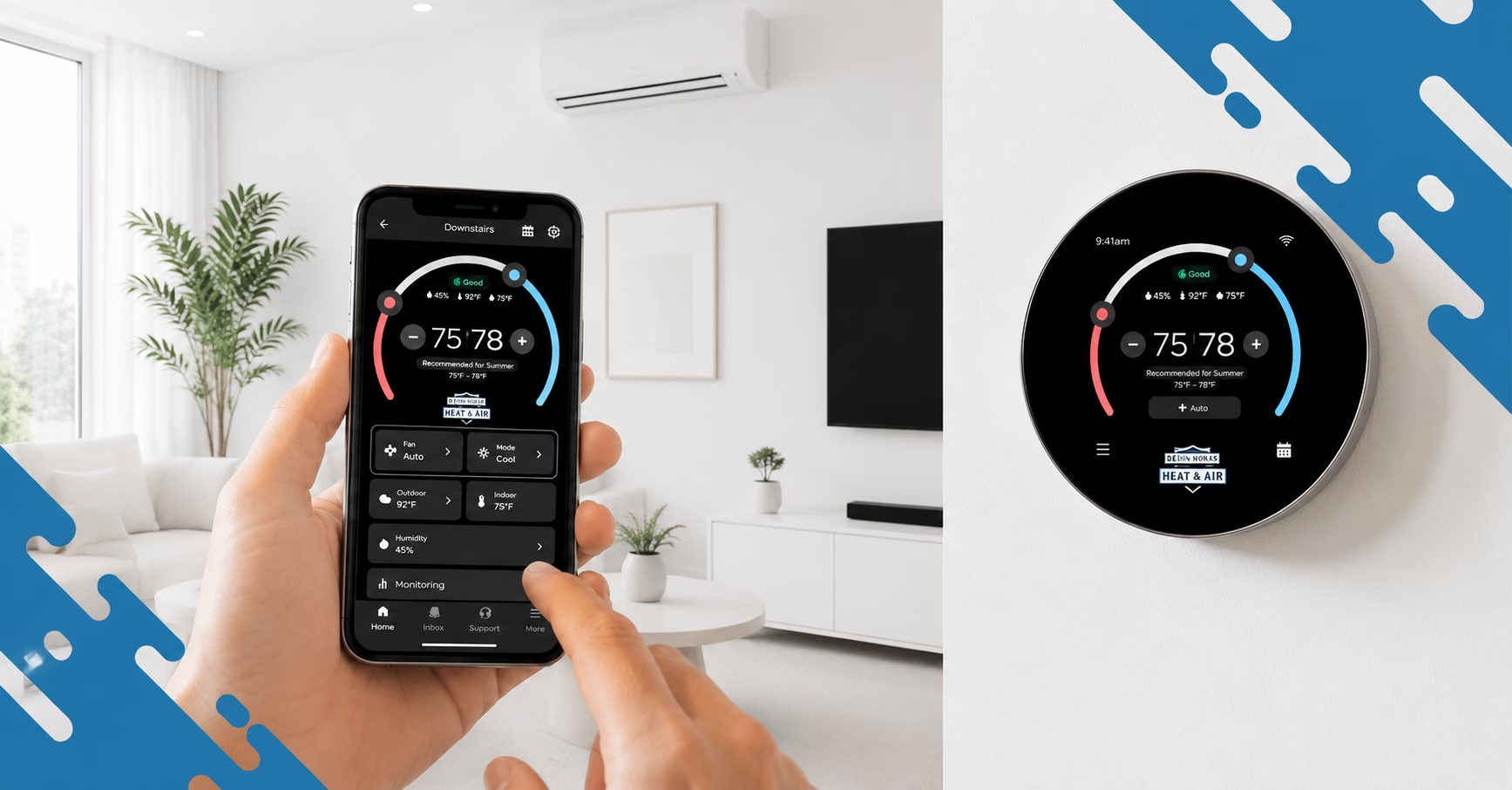
Smart thermostats are more than just a techy gadget; they’re like having a personal assistant for your home’s comfort. These devices learn your schedule, adapt to your habits, and automatically adjust the temperature to keep you comfortable while saving energy. Pretty clever, right?
Let’s say you leave for work every morning at 8 AM — a smart thermostat will start raising the temperature once you’re out the door and then cool things back down before you walk in at 5 PM. No more fiddling with buttons or wasting energy when no one’s home. Some models even use your phone’s location to know when you’re away or returning.
And if you’re the kind of person who loves checking things from your phone (who isn’t these days?), most smart thermostats come with easy-to-use apps. You can change your home’s temperature settings at the grocery store, the office, or even while you’re lying in bed.
But the best part? Many smart thermostats offer energy reports that show you exactly how much you’re saving and where you can make improvements — making it easier than ever to manage both comfort and cost.
Still on the fence? Ask yourself:
Would I benefit from a thermostat that adjusts itself based on my lifestyle?
Do I want to save on my energy bills without sacrificing comfort?
If the answer is yes, a smart thermostat might be one of the smartest home upgrades you can make this summer in Wildwood.
Tips for Maximizing Comfort and Efficiency
Have you found the ideal thermostat setting for your home? Whether you keep it at 76°F, 77°F, or 78°F, your thermostat setting is only part of the equation. Small habits and simple adjustments can help your AC cool your home more effectively while keeping energy costs under control.
Here are a few practical ways to get the most out of your cooling system this summer:
1. Use Ceiling Fans to Feel Cooler
Ever notice how a room feels more comfortable when a ceiling fan is running? That’s because fans create a wind-chill effect that helps your body feel cooler, even though they don’t actually lower the room temperature.
This extra comfort allows many homeowners to raise their thermostat setting by a few degrees without sacrificing comfort. Just be sure to turn fans off when you leave the room since they cool people, not spaces.
2. Keep Blinds and Curtains Closed
Does your living room feel noticeably warmer in the afternoon? Sunlight pouring through windows can add a surprising amount of heat to your home, forcing your AC to work harder.
During the hottest part of the day, keep blinds, shades, or curtains closed—especially on west- and south-facing windows. This simple step can help maintain a more consistent indoor temperature and reduce cooling demand.
3. Seal Air Leaks Around Your Home
Imagine paying to cool your home only to let that conditioned air escape through small gaps and cracks. Air leaks around windows, doors, attic entrances, and other openings can make it harder for your AC to keep up.
Take a few minutes to check for drafts. Applying weatherstripping or caulk where needed can improve comfort and help your system operate more efficiently.
4. Create a Thermostat Schedule That Matches Your Routine
Why cool an empty house all day?
If your thermostat has programmable features, set temperatures based on when you’re home, asleep, or away. For example, you can keep the house slightly warmer during work hours and have it cool down before you return. A consistent schedule helps reduce unnecessary energy use without compromising comfort.
5. Keep Up with Regular AC Maintenance
Has your AC been serviced recently? Even the best thermostat settings can’t make up for a system that’s struggling with dirty filters, clogged coils, or other maintenance issues.
Routine maintenance helps your air conditioner run more efficiently, cool more effectively, and last longer. Seasonal tune-ups can also catch small problems before they turn into costly repairs. At Iron Shield Heating & Air, we help homeowners keep their systems running at peak performance all summer long.
Common Thermostat Mistakes to Avoid
- Setting the temperature too low wastes energy and doesn’t cool your home any faster.
- Changing the temperature too often makes your system work harder and less efficiently.
- Leaving the AC on full blast while away can unnecessarily increase energy costs.
- Placing heat-producing devices near the thermostat causes inaccurate temperature readings.
- Using winter settings in the summer can cause your system to run inefficiently.
- Forgetting to replace thermostat batteries can lead to system failures.
- Skipping smart thermostat updates may result in poor performance or the loss of energy-saving features.
Stay Cool, Stay Confident: Your Comfort Starts at Home
Still feeling warm spots in certain rooms or noticing your system working harder than usual? That’s usually a sign that something needs a closer look. Small adjustments in settings, airflow, or maintenance can make a big difference in how your home feels day to day.
Comfort isn’t just about temperature on a screen. It’s about sleeping better at night, walking into a cool home after a long day, and not worrying every time the AC kicks on. Isn’t that the kind of summer you want?
If something feels off or you just want to make sure your system is running at its best, Iron Shield Heating and Air is here to help. Our team can fine-tune your setup so your home stays consistently cool without the stress.
Let our team help you take control of your comfort, optimize your system, and enjoy every moment of summer the way it should be — cool, calm, and worry-free.
Call us today or book your summer tune-up online. We’re here for Wildwood — and we’re here for you.
Frequently Asked Questions About Summer Thermostat Settings
For most homes, 76°F–78°F while you’re home is a practical summer thermostat setting. You can raise the temperature to approximately 82°F–85°F when you’re away for several hours.
Yes. 78°F is a common energy-saving summer thermostat setting and can provide a good balance between comfort and energy efficiency. If 78°F feels uncomfortable, try using ceiling fans or lowering the temperature gradually.
You can, but a lower thermostat setting generally means your AC must run longer to maintain the lower indoor temperature. For many homeowners, 76°F–78°F is a more energy-conscious starting point.
Not necessarily. During a hot and humid Florida summer, completely shutting off your AC can allow indoor temperatures and humidity to rise substantially. Raising the thermostat while you’re away is often a better approach.
For a typical extended absence, many homeowners can raise the thermostat to around 85°F, while still considering humidity control and the needs of pets, plants, or other sensitive items in the home.
Temperature isn’t the only factor that determines comfort. High humidity, poor airflow, inadequate insulation, duct leaks, direct sunlight, and an underperforming AC system can all make your home feel warmer.
A smart thermostat can help reduce unnecessary cooling by automatically adjusting temperature settings based on your schedule and preferences. Actual savings depend on your HVAC system, home, climate, thermostat settings, and how you use the system.
Regular AC maintenance helps keep your cooling system operating efficiently and can identify developing problems before they become major repairs. Many homeowners schedule professional HVAC maintenance at least once a year, with additional attention before periods of heavy use.
Extended AC runtime can be normal during extremely hot weather, but persistent operation without reaching the desired temperature may indicate an airflow restriction, dirty components, refrigerant issue, duct problem, insulation problem, thermostat issue, or another HVAC concern.
Related Blog Posts
Read more articles and expert advice related to this service.