
If you’re comparing AC coil vs new system options for your Summerfield, FL, home, you’re probably dealing with an important question: Should you replace the damaged AC coil, or is it time to install a new air conditioning system?
Florida’s heat and humidity put your air conditioner to work for much of the year. When an evaporator coil starts leaking, freezes, or stops working properly, repairing it may seem like the obvious choice. However, if your AC system is older, inefficient, or experiencing multiple problems, putting money into a major repair may only delay the need for replacement.
So, how do you know which option makes more financial and practical sense?
The answer depends on several factors, including your AC unit’s age, repair history, energy efficiency, overall condition, refrigerant type, warranty coverage, and the cost of the repair compared with a new system.
At Iron Shield Heating & Air, we help homeowners throughout Summerfield and surrounding Central Florida communities make informed HVAC decisions. In this guide, we’ll compare AC coil replacement vs. new AC system installation to help you determine the best option for your home, comfort, and budget.
AC Coil vs New System: Repair or Replace?
Before deciding between an AC coil repair and a complete system replacement, it helps to understand what the coil does and why coil problems can affect your entire air conditioner.
What Does an AC Coil Do?
Your air conditioner has two primary coils:
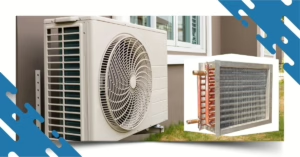
- Evaporator coil: Located inside the indoor air handler or furnace, it absorbs heat from the air inside your home.
- Condenser coil: Located in the outdoor AC unit, it releases the absorbed heat outside.
The evaporator coil plays a major role in the cooling process. Refrigerant flows through the coil and absorbs heat from the indoor air as air passes over it. The cooled air is then circulated throughout your home.
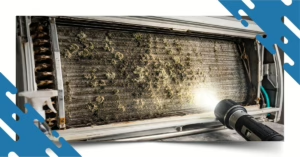
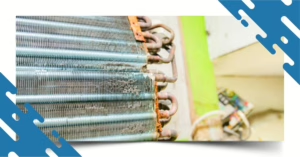
When the coil becomes dirty, damaged, corroded, or develops a refrigerant leak, your AC system may struggle to cool your home efficiently.
A failing coil can lead to:
- Warm or insufficiently cool air
- Longer cooling cycles
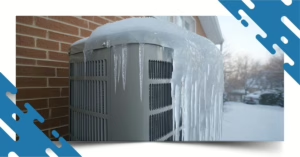
- Ice forming on the coil or refrigerant lines
- Higher energy bills
- Refrigerant leaks
- Reduced cooling performance
- Compressor strain
- Frequent AC repairs
- Poor overall system efficiency
Because several other components depend on the system operating correctly, a coil problem shouldn’t be ignored.
Learn More: Everything You Need to Know About AC Coils
Signs Your AC Coil May Need Repair or Replacement
Not every cooling problem means you need to replace your evaporator coil. However, certain warning signs should prompt an inspection by a qualified HVAC technician.
1. Your AC Is Blowing Warm Air
If your air conditioner is running but the air coming from the vents isn’t getting cold, several issues could be responsible, including a refrigerant leak, restricted airflow, a dirty coil, or another system problem.
2. Ice Is Building Up on the Coil
Ice on the evaporator coil or refrigerant line can indicate low refrigerant, restricted airflow, a dirty filter, or another problem. Continuing to run the system while it’s frozen can cause additional damage.
3. You Hear Hissing or Bubbling
Hissing or bubbling sounds can sometimes indicate a refrigerant leak. If the evaporator coil is leaking, simply adding refrigerant may not solve the underlying problem.
4. Your Energy Bills Are Increasing
A failing or inefficient AC system may need to run longer to maintain your desired indoor temperature. This can increase electricity consumption and cooling costs.
5. Your Home Isn't Cooling Evenly
Rooms that stay warmer than others may indicate airflow problems, ductwork issues, inadequate system performance, or a problem with the evaporator coil.
6. Your AC Requires Frequent Repairs
One repair doesn’t necessarily mean your system needs to be replaced. But if you’re repeatedly paying for repairs, it’s worth comparing the cost of continued maintenance with the investment in a new HVAC system.
When Is AC Coil Replacement a Smart Choice?
Replacing the AC coil can make sense when the rest of your air conditioning system is still in good condition.
Consider AC Coil Repair or Replacement If:
- Your system is relatively young.
- The coil is the primary problem.
- The compressor and other major components are operating properly.
- Your system has been reliable.
- Repair costs are reasonable compared with replacement.
- Your AC system still provides acceptable energy efficiency.
- The coil or system is covered by a manufacturer’s warranty.
- You expect to remain in your home for several more years.
For example, if your AC system is only several years old and an inspection confirms that the evaporator coil has failed while the compressor, condenser, blower motor, electrical components, and other major parts are in good condition, replacing the coil may be more practical than replacing the entire system.
However, the age of the system isn’t the only consideration.
When Should You Replace the Entire AC System?
A coil replacement may not be the best investment if the rest of your air conditioner is approaching the end of its useful life.
A new AC system installation may make more sense when you have an older system, repeated breakdowns, or several failing components.
Signs It May Be Time for a New AC System
- Your AC System Is Older: As an air conditioner gets older, the likelihood of additional repairs generally increases. If your system is already aging and the coil fails, consider what other components may require attention in the near future.
- You Keep Paying for Repairs: A series of smaller repairs can eventually add up to a significant amount of money. If you’re repeatedly calling for AC repair, compare your expected repair costs with the cost of installing a new system.
- Multiple Components Are Failing: If the evaporator coil isn’t the only component experiencing problems, a coil replacement may simply postpone a larger system failure.
- Your Cooling Bills Keep Rising: Older HVAC systems may not provide the same efficiency as newer equipment. A properly sized and professionally installed replacement system may reduce energy consumption and improve cooling performance.
- Your AC Can’t Keep Up With Summer Heat: If your system runs constantly but struggles to maintain a comfortable temperature, an HVAC professional should determine whether the problem is repairable or whether the system is no longer meeting your home’s cooling needs.
- Your Refrigerant System Is Becoming Difficult or Expensive to Service: The refrigerant and equipment used by your system can affect repair options and long-term costs. An HVAC professional can evaluate your specific system and explain whether repair or replacement makes more sense.
AC Coil vs New System: Cost Comparison
One of the biggest questions homeowners ask is, “Is it cheaper to replace an AC coil or buy a new system?”
The answer depends on your equipment, the type of coil, labor requirements, refrigerant, accessibility, warranty coverage, and the condition of the rest of the HVAC system.
AC Coil Replacement Cost
The cost of an evaporator coil replacement can vary significantly from one system to another.
Your total cost may depend on:
- Coil type and size
- HVAC system configuration
- Labor required to access the coil
- Refrigerant requirements
- Refrigerant recovery and recharge
- Warranty coverage
- Additional repairs needed
- Age and condition of the system
A coil replacement is typically less expensive upfront than installing an entirely new HVAC system.
However, the cheapest immediate repair isn’t always the cheapest long-term solution.
If an older system needs a coil today and a compressor, blower motor, capacitor, or electrical component later, continued repairs can become increasingly expensive.
New AC System Cost
A complete AC replacement requires a larger upfront investment, but it can provide benefits that a coil repair cannot.
A new HVAC system may offer:
- Improved energy efficiency
- More consistent cooling
- New equipment warranties
- Fewer age-related repairs
- Improved humidity management
- Modern refrigerant technology
- Better compatibility with smart thermostats and other HVAC accessories
- Greater long-term reliability
Instead of looking only at the initial price, consider the total cost of ownership.
AC Coil vs New System: 5 Factors to Consider
When comparing an AC coil vs new system, don’t make the decision based on price alone.
1. Age of Your AC System
The older your air conditioner is, the more important the system’s overall condition becomes.
A newer system with a failed coil may be a good candidate for coil replacement. An older system with multiple problems may justify replacement.
2. Overall System Condition
Ask your HVAC technician to evaluate more than the coil.
Important components include:
- Compressor
- Condenser coil
- Evaporator coil
- Blower motor
- Capacitors
- Contactors
- Electrical components
- Air handler
- Thermostat
- Ductwork
- Drain system
- Refrigerant circuit
3. Repair History
If your system has required several repairs recently, another major repair may not provide the long-term reliability you’re looking for.
4. Energy Efficiency
A new, properly sized system can provide improved efficiency compared with an older unit. Ask your HVAC contractor to explain the expected efficiency and operating costs of your replacement options.
5. Your Long-Term Plans
If you plan to stay in your Summerfield home for many years, investing in a new HVAC system may provide greater long-term value.
If you’re planning to move soon and the existing system is otherwise reliable, a coil repair may be worth considering.
Why Professional AC Diagnosis Matters
A coil problem doesn’t automatically mean you need a new air conditioner.
Likewise, replacing the coil isn’t always the best solution.
Before making a decision, have a qualified HVAC professional inspect the entire system. A proper evaluation should determine:
- What caused the coil to fail?
- Is the coil leaking refrigerant?
- Is the system properly charged?
- Is airflow adequate?
- How old is the equipment?
- What condition is the compressor in?
- Are other major components showing signs of failure?
- What would the coil repair cost?
- What would a new system cost?
- Which option provides the better long-term value?
Getting answers to these questions can help you avoid spending money on a repair that only delays an inevitable replacement.
How to Decide Between an AC Coil and a New System
Here’s a simple way to think about the decision:
| Situation | Consider |
| Newer AC with isolated coil problem |
AC coil replacement
|
| Coil covered by warranty |
AC coil replacement
|
| Older AC with one major repair |
Compare repair vs. replacement
|
| Frequent breakdowns | New AC system |
| Multiple failing components | New AC system |
| Rising energy costs |
Consider replacement
|
| System struggles to cool your home |
Professional evaluation
|
| Repair cost is a large portion of replacement cost |
Compare both options
|
There’s no universal answer to AC coil vs new system. The best choice depends on the condition and age of your specific HVAC system.
AC Coil vs New System: Make the Smart Choice for Your Summerfield Home
Choosing between an AC coil vs new system doesn’t have to be a guessing game.
If your system is relatively new and the coil is the only major problem, repairing or replacing the coil may be the most practical option. But if your air conditioner is older, inefficient, frequently breaking down, or experiencing multiple component failures, investing in a new HVAC system may offer better long-term value.
The best way to know is to have the entire system evaluated—not just the failed component.
Need AC repair or considering a new AC system in Summerfield, FL? Contact Iron Shield Heating & Air today. Our experienced HVAC professionals can inspect your system, explain your options, and help you choose a solution that makes sense for your home and budget.
Repair it, replace it, or maintain it—we’ll help you make the right call.
Frequently Asked Questions About AC Coil vs New System
It depends on the age and overall condition of the HVAC system. If the system is relatively new and the coil is the primary problem, coil replacement may be a good option. If the system is older and has multiple problems, a new AC system may provide better long-term value.
An AC coil can last for many years, but its lifespan depends on factors such as equipment quality, installation, maintenance, indoor air quality, humidity, corrosion, and operating conditions.
In some situations, a technician may be able to repair a leak. However, replacement may be recommended depending on the location and severity of the leak, the condition of the coil, and the long-term reliability of the repair.
Common causes can include corrosion, refrigerant leaks, dirt and debris, restricted airflow, improper installation, age, and other operating conditions.
Not necessarily. A failed evaporator coil doesn’t automatically mean the entire AC system needs replacement. A professional should evaluate the age, efficiency, repair history, compressor, electrical components, and overall condition of the system before recommending replacement.
Age alone shouldn’t determine the decision. However, an older system with frequent breakdowns, declining efficiency, major component failures, or expensive repairs may be a good candidate for replacement.
A properly sized and installed high-efficiency system may use less energy than an older, inefficient system. Actual savings depend on equipment efficiency, home size, insulation, ductwork, thermostat settings, usage, and other factors.
Regular professional AC maintenance can help identify developing problems, keep components clean, maintain airflow, and support efficient operation. Because Florida air conditioners often operate heavily throughout the year, routine maintenance is particularly important.
Maintenance cannot prevent every coil failure, but it can help identify dirt, restricted airflow, drainage issues, refrigerant-related concerns, and other problems before they become more serious.
Yes. Comparing the expected repair cost with the cost and benefits of a new HVAC system can make the decision much easier. A professional inspection can also identify whether additional repairs may be needed soon.
Related Blog Posts
Read more articles and expert advice related to this service.