
Have you ever thought about what’s actually circulating in the air inside your home? When allergies flare up, random colds keep happening, or that stuffy smell just won’t go away, poor indoor air quality might be to blame—and it’s more common than you think. With UV light installation, you can help eliminate airborne bacteria and improve the air you breathe every day.
What if there was a simple, effective way to kill germs, mold, and allergens right at the source—inside your HVAC system? It’s UV light technology. But how exactly does it work, and is it the right choice for your Wildwood home?
What Is UV Light Installation in HVAC Systems?
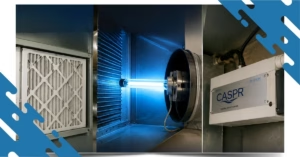
UV light installation in HVAC systems refers to placing ultraviolet lamps inside your heating and cooling unit to help sterilize the air. These UV lights are designed to kill bacteria, mold, and viruses as air passes through the system, improving indoor air quality. With proper UV light installation, HVAC systems can become more efficient by keeping internal components clean and reducing allergens circulating throughout your home or building.
According to the EPA’s guide on indoor air quality, the air inside our homes can be more polluted than the air outside, especially in tightly sealed homes.
UV light, or ultraviolet light, is a type of invisible light that has the power to kill bacteria, viruses, mold spores, and other tiny invaders floating around in your indoor air. When installed inside your HVAC system, UV lights work by zapping these harmful microorganisms as air passes through, helping to keep your home’s air cleaner and healthier.
Think of it as a built-in germ-fighting superhero for your HVAC system. These lights target the surfaces where germs tend to gather—like the coils and ducts—preventing mold and mildew buildup that can reduce your system’s efficiency and cause musty odors.
There are a couple of common types of UV lights used in HVAC systems:
- UV-C Lights: The most powerful, often referred to as the “germicidal” light, it destroys the DNA of microorganisms, preventing them from reproducing.
- UV-A and UV-B Lights: Although less commonly used in HVAC systems, these lights also possess antibacterial properties.
UV light installation gives your system a thorough, ongoing cleaning—without the need for harsh chemicals or extra effort on your part. Curious how this benefits your home? Let’s check out the key advantages next.
UV-C vs. UV-A and UV-B
Not all ultraviolet light is the same.
UV-C is the type most commonly associated with germicidal HVAC applications because it has strong antimicrobial properties.
UV-A and UV-B are also forms of ultraviolet radiation, but they are not typically the primary choice for residential HVAC air purification applications.
For an HVAC system, the right UV-C equipment, placement, exposure time, and intensity all matter. Professional installation helps ensure the system is selected and positioned appropriately.
How Does an HVAC UV Light Work?
Think of an HVAC UV-C light as an additional layer of protection inside your air conditioning system.
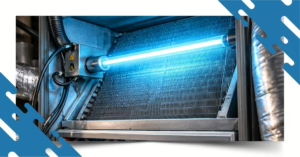
When the UV-C lamp is installed near an appropriate HVAC component, it continuously exposes the targeted area to ultraviolet energy while the system operates. Depending on the installation, the UV-C light may be used to help control microbial growth on surfaces such as the evaporator coil and surrounding areas.
A UV light can also be part of a broader indoor air quality strategy designed to address multiple sources of indoor pollutants.
Why UV-C Placement Matters
UV-C effectiveness depends on several factors, including:
- UV-C intensity
- Distance from the target
- Exposure time
- Air velocity
- Type of microorganism
- Lamp condition and age
- Installation location
That’s why simply placing a UV bulb somewhere inside an HVAC system does not guarantee the same results as a professionally designed installation.
At Iron Shield Heating and Air, we can evaluate your HVAC equipment and recommend an appropriate UV light solution based on your system and indoor air quality goals.
Top Benefits of UV Light Installation for Your Wildwood HVAC System
Adding UV-C technology to your HVAC system can provide several potential benefits when properly selected and installed.
1. Helps Control Mold and Microbial Growth
The evaporator coil and other areas inside an air conditioning system can remain damp during cooling operation. This moisture can contribute to microbial growth.
A properly installed HVAC UV-C light can help control susceptible microorganisms on treated surfaces, helping keep the inside of your HVAC system cleaner.
2. Supports Better Indoor Air Quality
Your indoor air quality depends on more than temperature. Dust, particles, odors, moisture, and microorganisms can all affect the environment inside your home.
UV-C technology can provide an additional layer of indoor air quality protection by helping control certain microorganisms within the HVAC system.
For the best results, UV light should be combined with appropriate filtration, regular HVAC maintenance, and humidity control.
3. Helps Keep the Evaporator Coil Cleaner
The evaporator coil is a critical component of your air conditioning system. Dirt and microbial buildup can interfere with proper system operation.
UV-C lights installed near the coil can help discourage microbial growth on treated surfaces. Keeping the coil cleaner can support proper airflow and heat transfer.
4. May Help Reduce Musty HVAC Odors
A musty smell coming from an air conditioner can sometimes be associated with moisture and microbial growth inside the HVAC system.
UV-C installation can help control microorganisms that contribute to these conditions. However, persistent odors should always be investigated by an HVAC professional because the underlying cause could involve moisture problems, drainage issues, dirty components, ductwork, or other sources.
5. Provides Continuous Treatment
Unlike a one-time cleaning, an HVAC UV-C light is designed to provide ongoing treatment while installed and operating.
Once professionally installed, the system works quietly in the background without requiring daily attention from homeowners.
6. Can Complement Your HVAC Maintenance Plan
UV-C technology works best as part of a complete HVAC maintenance and indoor air quality strategy.
Regular tune-ups, filter replacement, coil cleaning, proper humidity levels, and professional inspections remain important for keeping your heating and cooling system operating properly.
UV Light Installation Process
Are you worried that installing a UV light sounds complicated or disruptive? Good news—it’s a quick and straightforward process when handled by HVAC pros like our team at Iron Shield.
Here’s what you can expect:
1. HVAC System Inspection
We first inspect your existing HVAC system, including the air handler, evaporator coil, available installation space, and electrical requirements.
This helps determine whether a UV-C system is appropriate and where it should be installed.
2. UV Light Recommendation
Every HVAC system is different. Based on the equipment and your indoor air quality concerns, we can recommend an appropriate UV-C solution.
The goal is to select equipment that fits your system rather than using a one-size-fits-all approach.
3. Professional Installation
The UV light is securely installed in the appropriate location inside the HVAC equipment.
Depending on the system, this may include installation near the evaporator coil or another location where UV-C treatment can be effective.
4. Electrical and Safety Check
UV-C lamps should be installed safely inside the HVAC system and connected according to the equipment manufacturer’s requirements and applicable electrical standards.
Because direct exposure to UV-C radiation can be harmful to skin and eyes, residential HVAC UV-C systems should be installed so that occupants are not exposed during normal operation.
5. System Testing
After installation, the technician checks the UV-C system and HVAC equipment to make sure everything is operating correctly.
We can also explain basic maintenance requirements, including when the UV-C lamp should be inspected or replaced.
Is UV Light Installation Right for Your Home?
UV lights offer significant benefits—but are they the right fit for your home? Ask yourself the following:
- Do you or your family suffer from allergies, asthma, or frequent colds?
- Does your HVAC system struggle with musty odors or mold?
- Is your home sealed tightly for energy efficiency?
- Do you want to protect your HVAC investment?
If you answered yes to any of these, UV light installation is worth considering. It helps kill germs, mold, and allergens in your system, improving air quality and reducing health risks. It’s beneficial in energy-efficient homes where air can get trapped and stale. UV lights also keep your HVAC components clean, helping your system run more efficiently and last longer. At Iron Shield Heating and Air, we recommend the best solution tailored to your home and needs.
Breathe Better, Live Better: The Power of UV Light Installation

Your home should be a place of comfort, safety, and peace of mind—especially when it comes to the air your family breathes. If you’ve been struggling with allergies or recurring colds or want to take a proactive step toward a healthier home, UV light installation could be the change you’ve been looking for.
At Iron Shield Heating and Air, we understand the importance you place on your family’s well-being. That’s why we’re here, not just to install equipment—but to offer solutions that make a real difference in your everyday life. Clean air isn’t a luxury. It’s something every home deserves.
Let us help you create a cleaner, safer, and more comfortable space with a custom UV light solution tailored to your HVAC system. Reach out to Iron Shield Heating and Air today for a free consultation—and take the first step toward breathing easier, living healthier, and protecting what matters most.
Your air matters. Let's make it better—together.
Frequently Asked Questions About UV Light Installation
UV-C light can help control certain mold and fungal growth when microorganisms receive sufficient UV-C exposure. However, it should not be considered a complete mold-remediation solution. If you have significant mold growth or a moisture problem, the underlying issue needs to be professionally addressed.
It can contribute to improved indoor air quality by helping control certain microorganisms within the HVAC system. UV-C works best when combined with proper filtration, humidity control, ventilation, and regular HVAC maintenance.
UV-C lights do not eliminate allergies and do not directly remove allergens such as dust or pollen from the air. They may help control certain microorganisms, including mold and bacteria, but an effective indoor air quality strategy should also address airborne particles through proper filtration and cleaning.
Professionally installed HVAC UV-C systems are designed to operate inside the HVAC equipment rather than expose occupants directly to UV-C radiation. Because UV-C can damage skin and eyes with direct exposure, the equipment should be properly installed and enclosed according to manufacturer requirements.
The recommended replacement interval varies by manufacturer and model. Many residential UV-C lamps are replaced approximately every 1–2 years, but always follow the specific manufacturer’s instructions.
A UV light is not an energy-efficiency device by itself. However, by helping control microbial buildup on treated HVAC components, it may help support cleaner equipment and proper system operation. Regular maintenance, clean filters, correct airflow, and properly functioning equipment are much more important factors in HVAC efficiency.
No. UV-C lights are not designed to capture dust, dirt, pollen, or other particles. An HVAC air filter or appropriate air purification system is better suited for particle removal.
While some products are marketed for DIY installation, professional installation is recommended. Proper placement, electrical connections, equipment compatibility, and UV-C safety are important considerations.
The cost depends on the type of UV-C system, HVAC equipment, installation requirements, and the specific indoor air quality solution selected. The best way to determine your cost is to have an HVAC professional evaluate your system and provide a recommendation.
Related Blog Posts
Read more articles and expert advice related to this service.