
If your Ocala home feels humid with the AC running, you may be wondering why your air conditioner isn’t doing its job. The thermostat says 72°F or 75°F, the AC is running, but your home still feels sticky, muggy, or damp.
You’re not alone. High indoor humidity is a common problem for homeowners in Ocala and throughout Central Florida.
Florida’s hot, humid climate puts extra demand on air conditioning systems. While your AC does remove some moisture from the air as it cools your home, several problems can prevent it from controlling humidity effectively.
An oversized air conditioner, dirty filter, clogged evaporator coil, poor insulation, air leaks, inadequate ventilation, or an aging HVAC system can all contribute to high indoor humidity. An AC running but the house still feeling humid isn’t something you have to live with.
Let us explain why your Ocala home feels humid with AC running, how your air conditioner removes moisture, what could be causing the problem, and what you can do to improve indoor comfort.
Why Does My Ocala Home Feel Humid With the AC Running?
Your air conditioner does more than lower the temperature. During normal operation, warm indoor air passes over the system’s cold evaporator coil. As the air cools, moisture condenses on the coil and drains away.
This process is called dehumidification.
However, your AC has to run long enough for this process to remove a meaningful amount of moisture. If something prevents your system from operating properly—or if your home is constantly receiving humid outdoor air—the result can be a cool but uncomfortable house.
Common reasons your Ocala home feels humid with AC running include:
- An oversized air conditioner
- A dirty air filter
- A clogged evaporator coil
- Refrigerant problems
- Poor ductwork or duct leaks
- Air leaks around doors and windows
- Poor insulation
- Inadequate ventilation
- Excess moisture from bathrooms, kitchens, or laundry
- An aging or inefficient AC system
- Extremely high outdoor humidity
Let’s look at each one more closely.
How Does an Air Conditioner Remove Humidity?
Understanding how your AC works can help explain why your home may feel humid even when it’s cool.
Your air conditioner pulls warm indoor air through the return vents. The air passes over the cold evaporator coil, where heat is removed.
As the air cools below its dew point, moisture in the air condenses on the coil. That water collects in the condensate pan and drains outside.
The result is cooler and somewhat drier indoor air.
However, your AC isn’t technically a dedicated dehumidifier. Its primary job is to cool your home.
If your system doesn’t run long enough, airflow is restricted, or excessive moisture enters the home, the AC may lower the temperature without removing enough humidity.
That’s why your home can feel cool but clammy.
Common Reasons Your Ocala Home Feels Humid With the AC Running
1. Your AC Is Too Large for Your Home
An oversized air conditioner may seem like a good thing because it can cool your home quickly. However, cooling the house too quickly can actually hurt humidity control.
A properly sized AC should run long enough to remove heat and moisture from the air.
An oversized system may:
- Reach the thermostat setting too quickly
- Shut off before removing enough moisture
- Cycle on and off frequently
- Leave indoor humidity levels elevated
This is one reason proper AC sizing is important when installing or replacing an air conditioner.
2. Your Air Filter Is Dirty
A clogged air filter restricts airflow through your HVAC system.
Reduced airflow can affect your AC’s ability to cool and dehumidify your home efficiently. It can also place additional strain on the system.
Check your filter regularly and replace it according to the manufacturer’s recommendations.
If your filter becomes dirty unusually quickly, there may be an underlying airflow, ductwork, or indoor air quality issue that should be investigated.
3. Your Evaporator Coil Is Dirty
The evaporator coil plays an important role in both cooling and dehumidification.
When dirt builds up on the coil, airflow and heat transfer can be restricted. This can reduce your AC’s ability to remove heat and moisture from your home.
A professional HVAC inspection can determine whether the coil needs cleaning or whether another issue is affecting system performance.
4. Your AC Has a Refrigerant Problem
Low refrigerant caused by a leak can affect your air conditioner’s ability to absorb heat.
You may notice:
- The AC runs continuously
- The house doesn’t cool properly
- Some rooms feel warmer than others
- The system produces unusual noises
- Ice develops on the refrigerant lines or indoor coil
- Your home feels cool but unusually humid
Refrigerant issues require professional diagnosis. Adding refrigerant without finding and addressing the source of a leak is not a long-term solution.
Learn More: Troubleshooting the HVAC-R refrigeration Cycle
5. Your Ductwork Is Leaking
Your ductwork carries conditioned air throughout your home.
If ducts are leaking, especially in an attic, crawlspace, garage, or other unconditioned area, humid air can enter the system while conditioned air escapes.
Poorly sealed ducts can contribute to:
- Higher energy bills
- Uneven temperatures
- Reduced cooling performance
- Poor humidity control
Professional duct inspection and sealing can help improve HVAC efficiency and indoor comfort.
6. Your Home Has Air Leaks
Florida’s humid outdoor air can enter through small gaps around:
- Doors
- Windows
- Plumbing penetrations
- Electrical penetrations
- Attic areas
- Ductwork
- Exterior walls
Even if your AC is operating correctly, constant infiltration of humid outdoor air can make it difficult to maintain comfortable indoor humidity.
Weatherstripping, caulking, insulation improvements, and professional air sealing can help reduce unwanted moisture infiltration.
7. Your Home Doesn't Have Enough Ventilation
Everyday activities create moisture.
Cooking, showering, washing clothes, and even breathing add water vapor to your home’s indoor air.
Bathrooms and kitchens are especially important areas for ventilation.
Use bathroom exhaust fans while showering and for a short period afterward. When cooking, use a properly vented range hood whenever possible.
8. Your AC Is Getting Older
Like any mechanical system, an air conditioner can lose efficiency as it ages.
Older HVAC systems may have difficulty keeping up with Florida’s heat and humidity, especially if maintenance has been neglected.
If your system frequently runs but your Ocala home still feels humid, an HVAC professional can determine whether repair, maintenance, or replacement makes the most sense.
9. Outdoor Humidity Is Extremely High
Ocala’s climate naturally brings high levels of outdoor moisture.
When outdoor humidity is high, your AC has to work harder to keep indoor conditions comfortable. This is particularly noticeable during Florida’s hottest and most humid periods.
However, high outdoor humidity alone doesn’t necessarily mean your home should remain excessively humid. A properly operating and appropriately sized HVAC system should provide effective cooling and some humidity control.
10 Ways to Reduce Humidity in Your Ocala Home
If your house feels humid with the AC on, try these steps to improve comfort and humidity control.
1. Keep Your AC at a Comfortable Setting
Avoid setting your thermostat extremely low in an attempt to remove more humidity.
For many Ocala homes, a setting around 72°F to 75°F can provide a comfortable balance between cooling and energy use.
The ideal setting depends on your home’s insulation, HVAC system, occupancy, and personal comfort.
2. Replace Your Air Filter Regularly
A clean filter helps maintain proper airflow through your HVAC system.
Check the filter regularly, particularly during periods when your AC is running frequently.
A dirty filter can contribute to restricted airflow and reduced system performance.
3. Schedule Regular AC Maintenance
Professional HVAC maintenance can help identify problems before they become larger issues.
During maintenance, a technician can inspect important components such as:
- Air filters
- Evaporator coil
- Condensate drain
- Electrical components
- Refrigerant levels and system operation
- Blower components
- Ductwork and airflow
Regular maintenance can help your AC operate more efficiently and maintain better indoor comfort.
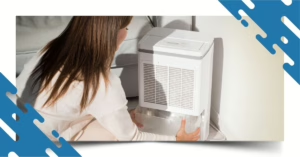
4. Consider a Whole-Home Dehumidifier
If your home’s humidity remains high even though your AC is operating correctly, a whole-home dehumidifier may be worth considering.
A dedicated dehumidifier removes moisture independently of the cooling cycle.
This can be especially helpful when:
- The temperature is comfortable but humidity remains high
- Your AC doesn’t need to run frequently
- Your home has persistent moisture problems
- Indoor humidity remains elevated during mild weather
An HVAC professional can determine whether a whole-home dehumidifier is appropriate for your home.
5. Seal Doors and Windows
Inspect doors and windows for visible gaps or damaged weatherstripping.
Sealing these areas can help prevent humid outdoor air from entering your home.
6. Use Bathroom Exhaust Fans
Run your bathroom exhaust fan while showering and afterward to remove excess moisture.
Without adequate ventilation, moisture from hot showers can spread throughout the house and contribute to higher indoor humidity.
7. Vent Your Kitchen Properly
Cooking produces a significant amount of heat and moisture.
Use your range hood or kitchen exhaust fan when cooking, especially when boiling water or preparing foods that create steam.
8. Check Your Ductwork
Leaky or poorly insulated ducts can negatively affect HVAC performance.
If certain rooms feel warmer, more humid, or less comfortable than others, have your ductwork inspected.
9. Improve Home Insulation and Air Sealing
Proper insulation helps your home maintain a more consistent indoor environment.
Air sealing is also important because insulation alone doesn’t necessarily stop humid outdoor air from entering.
An HVAC or home performance professional can help identify areas where improvements may be needed.
10. Have Your AC Professionally Inspected
If you’ve tried basic humidity-control steps and your Ocala home feels humid with AC running, it’s time to have the system inspected.
A professional can determine whether the issue is related to:
- AC sizing
- Refrigerant
- Airflow
- Evaporator coil condition
- Condensate drainage
- Ductwork
- Thermostat operation
- System age
- Excessive moisture entering the home
Finding the actual cause is more effective than simply turning the thermostat lower.
What Is the Best AC Temperature for Humidity Control?
For many homeowners in Ocala, keeping the thermostat around 72°F to 75°F can provide a comfortable balance between cooling and energy efficiency.
However, there isn’t one perfect temperature for every home.
Your ideal thermostat setting depends on factors such as:
- Home size
- Insulation
- Number of occupants
- HVAC system size
- Ductwork condition
- Outdoor temperature and humidity
- Personal comfort preferences
If your home feels humid at a normal thermostat setting, lowering the temperature isn’t always the best solution.
The underlying HVAC or moisture problem should be identified instead.
What Indoor Humidity Level Is Best for Your Home?
A generally comfortable indoor relative humidity level is around 30% to 50%.
In Florida, maintaining indoor humidity below excessive levels is particularly important because persistently high humidity can contribute to a clammy indoor environment and create conditions favorable to mold and mildew growth.
A simple digital hygrometer or indoor humidity monitor can help you determine whether your home actually has elevated humidity rather than relying only on how the air feels.
If your indoor humidity remains consistently high, an HVAC professional can evaluate your air conditioning and dehumidification needs.
Signs Your AC May Need Maintenance
Your AC may need professional attention if you notice:
- Your home feels humid even when the AC is running
- The AC runs continuously
- Some rooms are warmer or more humid than others
- Airflow from vents feels weak
- Your energy bills have increased unexpectedly
- The system turns on and off frequently
- You see ice on the indoor coil or refrigerant lines
- Water is leaking around the indoor unit
- Your home has unusual odors
- The AC struggles to maintain the thermostat setting
Don’t ignore persistent humidity problems. They can indicate an HVAC performance issue that needs attention.
Expert HVAC Help for Humidity Problems in Ocala, FL
If your Ocala home feels humid with AC running, don’t assume you simply need to turn the thermostat down.
The problem could be related to your AC’s sizing, airflow, refrigerant, evaporator coil, ductwork, insulation, ventilation, or another source of excess moisture.
At Iron Shield Heating & Air, our HVAC technicians can inspect your air conditioning system, identify potential causes of poor humidity control, and recommend practical solutions for your home.
Whether you need AC maintenance, AC repair, ductwork service, humidity control, or a new air conditioning system, we’re here to help keep your Ocala home comfortable.
Don’t let a cool but humid house ruin your comfort. Contact Iron Shield Heating & Air today to schedule an AC inspection or maintenance service in Ocala, FL.
Frequently Asked Questions About Humidity and AC
Your AC may be cooling your home without removing enough moisture. Common causes include an oversized AC, restricted airflow, dirty coils, refrigerant problems, duct leaks, poor insulation, air leaks, inadequate ventilation, or an aging system.
A home can reach the thermostat temperature before the AC has removed enough moisture. This is especially common with oversized air conditioners that cool the home quickly and shut off before completing enough dehumidification.
Not necessarily. Lowering the thermostat may make the home colder without addressing the source of the excess humidity. If humidity remains high, have your HVAC system inspected to determine the cause.
A commonly recommended indoor relative humidity range is approximately 30% to 50%. A humidity monitor can help you determine whether your indoor humidity is consistently too high.
A dirty filter can restrict airflow and reduce HVAC performance. If airflow becomes significantly restricted, your system may have more difficulty cooling and dehumidifying your home effectively.
Yes. An oversized AC can cool a home very quickly and shut off before it has enough run time to remove sufficient moisture. Proper HVAC sizing is important for both temperature and humidity control.
Not always. A properly sized and maintained AC system provides some dehumidification. However, a whole-home dehumidifier may be beneficial when indoor humidity remains high despite proper AC operation.
Your system may have an airflow problem, refrigerant issue, dirty coil, duct leak, improper sizing, or another issue affecting its ability to remove moisture. Excess moisture entering through the home’s envelope can also contribute.
Start by checking your AC filter, using bathroom and kitchen exhaust fans, sealing obvious air leaks, monitoring indoor humidity, and scheduling professional AC maintenance. If humidity remains high, an HVAC professional can evaluate your system and determine whether additional dehumidification is needed.
Yes. Regular maintenance helps keep important components operating properly and can identify issues such as restricted airflow, dirty coils, condensate drainage problems, or other conditions that may affect cooling and moisture removal.
If your home consistently feels humid despite normal AC operation, especially if the system runs constantly, has weak airflow, produces ice or water leaks, or your energy bills are increasing, schedule an HVAC inspection.
Related Blog Posts
Read more articles and expert advice related to this service.