
Are you considering a mini split heat pump but unsure whether it is the right choice for your home? You may have heard that mini splits are expensive, difficult to maintain, noisy, or only useful in certain climates.
The reality is very different.
A mini split heat pump, also called a ductless mini split heat pump, can provide efficient heating and cooling without traditional ductwork. Modern systems can deliver year-round comfort, room-by-room temperature control, and excellent energy efficiency when properly sized and installed.
The U.S. Department of Energy recognizes ductless mini-split heat pumps as an option for homes without ductwork, while ENERGY STAR notes that certified mini-split systems can provide efficient heating and cooling from a single system.
So, how much of what you have heard about mini-split heat pumps is actually true?
Let’s separate the myths from reality.
What Is a Mini Split Heat Pump?
Before looking at the common misconceptions, it helps to understand what a mini split heat pump actually does.
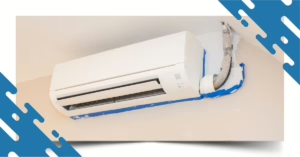
A mini split heat pump is a type of ductless HVAC system that can both heat and cool your home. Instead of using a network of air ducts, the system connects an outdoor heat pump unit to one or more indoor air-handling units.
During summer, the system moves heat from inside your home to the outdoors to provide air conditioning. During heating mode, it reverses the process and transfers heat from outdoor air into your home.
Because it transfers heat rather than creating it through combustion, a heat pump can provide heating efficiently.
Depending on the system, you can install a single indoor unit for one room or multiple indoor units to create several HVAC zones throughout the home.
7 Common Mini Split Heat Pump Myths
Before you dismiss mini split heat pumps as “just another HVAC trend,” let’s take a closer look at some of the most common misconceptions. These myths have kept many homeowners from experiencing the real benefits of these versatile systems. From doubts about performance in cold climates to concerns about cost and maintenance, there’s a lot to unpack.
Myth 1: "Mini Split Heat Pumps Are Only for New Homes"
Reality: Mini splits can work extremely well in existing homes.
A ductless mini split heat pump does not require the extensive ductwork used by many traditional central HVAC systems. This makes it a flexible option for both new construction and existing homes.
Mini split systems can be useful for:
- Older homes without existing ductwork
- Room additions
- Converted garages
- Home offices
- Bedrooms
- Workshops
- Sunrooms
- Finished attics or basements
- Areas that are difficult to keep comfortable with the existing HVAC system
- Supplemental heating and cooling for specific rooms
Because installation does not require a large ductwork network, a mini split can sometimes be installed with less disruption than adding or replacing an entire ducted HVAC system.
You do not need a brand-new home to benefit from a mini split heat pump.
Myth 2: "Mini Split Heat Pumps Only Work in Warm Climates"
Reality: Many modern systems are designed to operate in cold temperatures.
This myth comes from older generations of heat pump technology.
Today’s high-efficiency mini split heat pumps can be designed for significantly colder conditions. ENERGY STAR maintains a specific Cold Climate Heat Pump designation for qualifying systems that meet enhanced low-temperature performance requirements.
However, it is important not to assume that every mini split performs the same way in cold weather.
Heating capacity and efficiency can vary significantly by model, outdoor temperature, installation, and system design. If heating performance is important, homeowners should choose a model specifically designed for their climate and heating requirements.
Mini split heat pumps can perform well in cold climates, but choosing the right model is essential.
Myth 3: "Mini Split Heat Pumps Are Too Expensive"
Reality: The upfront cost is only part of the equation.
A mini split heat pump may have a higher initial installation cost than a basic window air conditioner or other simple cooling option.
However, evaluating HVAC equipment based only on the purchase price can be misleading.
A properly selected and installed mini split heat pump can provide:
- Heating and cooling from one system
- Zoned temperature control
- High energy efficiency
- Reduced reliance on ductwork
- Less energy wasted conditioning unused areas
- Quiet operation
- Flexible installation options
ENERGY STAR reports that certified ductless heat pumps can significantly reduce energy use compared with standard electric resistance heating, while providing both heating and cooling.
Actual energy savings vary depending on the existing HVAC system, electricity rates, climate, home insulation, equipment efficiency, thermostat settings, and how the system is operated.
That means there is no universal dollar amount that every homeowner will save.
Don’t judge a mini split heat pump solely by its upfront price. Consider installation cost, energy efficiency, comfort, zoning, and expected long-term use.
Myth 4: "Mini Split Heat Pumps Are Difficult to Maintain"
Reality: Routine maintenance is relatively straightforward.
Like any HVAC system, a mini split heat pump requires regular maintenance to maintain performance and efficiency.
Homeowners should generally:
- Clean indoor filters according to the manufacturer’s instructions
- Keep the outdoor unit clear of leaves and debris
- Keep the area around the outdoor unit unobstructed
- Check for unusual noises or performance changes
- Schedule professional HVAC maintenance as recommended
Dirty filters can restrict airflow and make the system work harder. Professional maintenance can also help identify issues before they become more expensive repairs.
Proper maintenance is particularly important in Florida, where HVAC systems may operate for long periods during hot and humid weather.
Mini split maintenance is not complicated, but it should not be ignored.
Myth 5: "Mini Split Heat Pumps Spread Allergens Around the Home"
Reality: Mini splits can provide filtration, but they are not a replacement for dedicated air purification.
Because mini split systems do not use traditional ductwork, there is no extensive duct network for dust and debris to accumulate in.
Many mini split systems also include built-in filters designed to capture certain airborne particles.
However, it is important to keep expectations realistic.
A standard mini split filter is not the same as a whole-home air purifier or medical-grade filtration system. Its ability to capture particles depends on the specific equipment and filter design.
Regular filter cleaning is important for both airflow and system performance.
If indoor air quality is a major concern, homeowners may want to consider additional solutions such as enhanced filtration, air purification, humidity control, or ventilation.
A mini split can contribute to cleaner indoor air, but proper filtration and regular maintenance are still important.
Myth 6: "Mini Split Heat Pumps Are Noisy"
Reality: Modern mini splits are designed for quiet operation.
Older HVAC equipment may have been noticeably loud when starting, running, or cycling. Modern variable-speed mini split systems are designed to provide comfort with relatively low operating noise.
The actual sound level depends on the equipment, fan speed, installation, and operating conditions. Some models also include quiet or low-noise operating modes.
This makes mini split systems particularly attractive for:
- Bedrooms
- Home offices
- Nurseries
- Living rooms
- Home theaters
- Other spaces where excessive HVAC noise is distracting
The indoor unit and outdoor unit will produce different levels of sound, so homeowners should consider both when selecting and installing a system.
A properly selected and installed mini split can provide comfortable heating and cooling without excessive noise.
Myth 7: "Mini Split Heat Pumps Cannot Provide Zoned Comfort"
Reality: Zoned comfort is one of their biggest advantages.
One of the primary benefits of a mini split heat pump is the ability to create individual comfort zones.
Instead of conditioning the entire house to one temperature, a multi-zone mini split system can use multiple indoor units to provide heating or cooling to different areas.
For example:
- Keep the bedroom comfortable while using less conditioning in an unused guest room.
- Cool a home office during working hours.
- Provide additional comfort in a room that is consistently warmer or colder.
- Adjust individual areas based on how your family uses the home.
Mini-splits are systems that can provide heating and cooling to individual spaces, while also emphasizing the importance of proper equipment sizing.
Proper sizing and system design are critical. An HVAC professional should evaluate the space and determine the appropriate capacity rather than simply choosing a system based on room size alone.
Zoned comfort is one of the strongest reasons homeowners choose ductless mini split systems.
Why Mini Split Heat Pumps Are a Smart Choice
Frequently Asked Questions About Mini Split Heat Pumps
A mini split heat pump is a ductless HVAC system that can provide both heating and cooling. It typically consists of an outdoor heat pump unit connected to one or more indoor air-handling units.
Yes. Many modern mini split heat pumps are designed for high energy efficiency. ENERGY STAR-certified models meet specific efficiency requirements and can provide significant energy savings compared with some conventional heating technologies.
Yes. A mini split heat pump can provide air conditioning during warm weather and reverse its operation to provide heating during cooler weather.
No. One of the main advantages of a ductless mini split is that it does not require traditional air ducts.
No. One of the main advantages of a ductless mini split is that it does not require traditional air ducts.
Yes. Many modern models are designed to operate in cold temperatures. However, performance varies by model, so homeowners should select equipment appropriate for their climate and heating requirements. ENERGY STAR also identifies qualifying models with a Cold Climate designation.
They can be an excellent option for older homes, especially homes without existing ductwork. They can also be used to provide heating and cooling to additions, converted spaces, and individual rooms.
Follow the manufacturer’s maintenance recommendations. Homeowners should regularly clean the filters and keep the outdoor unit clear of debris. Professional HVAC maintenance can help keep the system operating efficiently and identify developing problems.
It depends on the home’s layout, size, insulation, and system design. A single indoor unit may be appropriate for a specific open area, while a multi-zone mini split system may be better suited for multiple rooms.
Modern mini split systems are generally designed for quiet operation. Actual noise levels vary by equipment, fan speed, installation, and operating conditions.
For many homeowners, they can be. Their combination of heating, cooling, zoning, flexible installation, and energy efficiency makes them a practical HVAC option. Whether one is right for your home depends on your comfort needs, existing HVAC system, home layout, and installation requirements.
Related Blog Posts
Read more articles and expert advice related to this service.