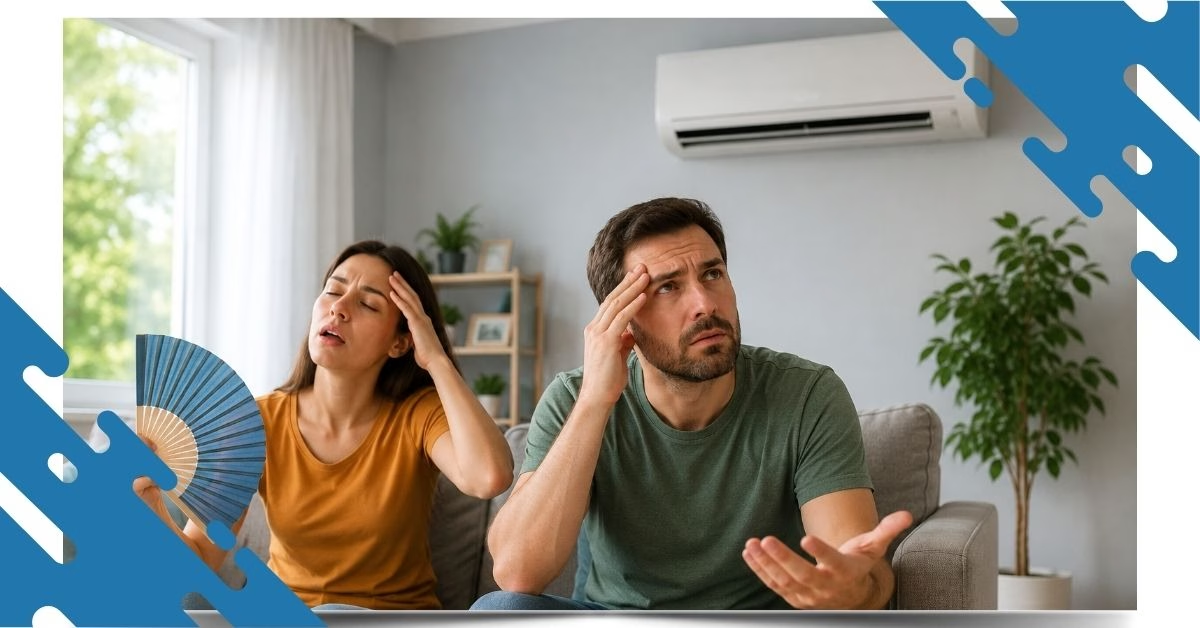
Have you ever noticed your AC running constantly but not cooling your home? Even with the thermostat set correctly and the system seemingly working, your house still feels warm and uncomfortable. As the AC struggles to keep up, your energy bills continue to rise—leaving you wondering what’s causing the problem.
This is one of the most common air conditioning problems homeowners face, especially during the hottest months of the year. While some causes can be fixed with simple measures, others may indicate a more serious issue that requires professional attention.
So, why is your AC running all day without properly cooling your home?
What Does It Mean When Your AC Is Running Constantly but Not Cooling Your Home?
Your air conditioner is designed to cycle on and off as it maintains your thermostat setting. During extremely hot weather, longer run times are normal—but your home should still gradually reach the desired temperature.
If your AC:
- Runs for hours without shutting off
- Blows weak, lukewarm, or warm air
- Never reaches the thermostat setting
- Struggles to cool certain rooms
- Causes unusually high electric bills
Then your HVAC system is likely experiencing an underlying problem affecting airflow, cooling performance, or refrigerant circulation.
Ignoring the issue can increase wear and tear, reduce system efficiency, and potentially lead to expensive repairs.
9 Common Reasons Your AC Is Running Constantly but Not Cooling Your Home
When your AC runs continuously, but your home never reaches the desired temperature, there’s often an underlying problem affecting its performance. In most cases, it’s not just “bad luck”—it’s a specific issue affecting airflow, cooling efficiency, or system performance.
Here are the most common causes HVAC technicians see in situations like this:
1. Dirty Air Filter Restricting Airflow
An air filter is a component of your HVAC system that traps dust, dirt, pollen, and other airborne particles before they enter your system and circulate through your home.
When airflow becomes restricted, your system must work much harder to move cooled air throughout your home.
Signs
- Weak airflow from vents
- Longer cooling cycles
- Higher utility bills
- Uneven temperatures
Solution: Replace the filter every 1–3 months, depending on filter type, pets, allergies, and household conditions.
2. Incorrect Thermostat Settings or Thermostat Problems
Sometimes the problem isn’t the AC—it’s the thermostat.
Your thermostat may:
- Be set incorrectly
- Need new batteries
- Be poorly calibrated
- Be installed near direct sunlight
- Misread indoor temperatures
A faulty thermostat can cause the system to run longer than necessary.
3. Low Refrigerant or Refrigerant Leak
Refrigerant removes heat from your home.
If refrigerant is low due to a leak, your AC cannot cool effectively—even if it continues running continuously.
Common symptoms
- Warm air from vents
- Ice on refrigerant lines
- Frozen evaporator coil
- Hissing sounds
- Longer cooling cycles
Because refrigerant systems are sealed, low refrigerant almost always indicates a leak that should be repaired by a licensed HVAC technician.
4. Dirty or Blocked Outdoor Unit
Your outdoor condenser releases heat outside.
If it’s covered with:
- Dirt
- Grass clippings
- Leaves
- Debris
- Shrubs blocking airflow, the system cannot release heat efficiently.
This causes your AC to run longer while cooling less.
5. Frozen Evaporator Coil
A frozen evaporator coil prevents your AC from absorbing heat inside your home.
Common causes include:
- Dirty air filters
- Blocked airflow
- Refrigerant leaks
- Dirty evaporator coils
- Blower motor issues
Although the fan may continue running, cooling performance drops dramatically until the ice melts and the root cause is corrected.
6. Leaky or Poorly Insulated Ductwork
Your ductwork distributes cooled air throughout your home.
If ducts are leaking or poorly insulated, cooled air escapes before reaching your living spaces.
Signs include:
- Hot and cold spots
- Weak airflow
- Rooms that never cool
- Higher cooling costs
7. Aging or Undersized Air Conditioner
Older systems naturally lose efficiency over time.
Likewise, an AC that’s too small for your home’s size may never keep up during peak summer temperatures.
If your system runs constantly every summer despite regular maintenance, it may no longer be properly sized or efficient enough for your home’s cooling needs.
8. Dirty Evaporator or Condenser Coils
Dust and dirt on the indoor evaporator coil or outdoor condenser coil reduce heat transfer.
This forces your AC to work much harder while providing less cooling.
Professional coil cleaning is often recommended during annual AC maintenance.
9. Compressor or Electrical Problems
The compressor is the heart of your air conditioning system.
If it begins failing, your AC may:
- Run continuously
- Blow warm air
- Short cycle
- Lose cooling capacity
Electrical problems involving capacitors, contactors, relays, or wiring can also prevent the system from operating properly.
These issues require professional diagnosis.
Why Is My AC Running Constantly but Not Cooling During Summer?
During peak summer heat, it’s normal for your system to work harder than usual. But there’s a clear difference between working harder and working without delivering results.
During extremely hot weather and extended heatwaves, your AC must work harder to offset the constant heat entering your home. As outdoor temperatures rise, the system may run longer to maintain comfort, but it should still eventually reach your thermostat setting.
Humidity also plays a major role, especially in Florida and similar climates. High moisture forces your AC to remove both heat and humidity, so if it can’t keep up, your home may still feel warm and sticky even while the system is running.
Long run times aren’t always a problem. On very hot days, an AC may run longer than usual. The concern is when it runs continuously but struggles to lower the indoor temperature or reach the thermostat setting. That often points to an underlying issue beyond normal summer demand.
Can I Fix an AC Running Constantly but Not Cooling My Home by Myself?
Before calling an HVAC technician, there are a few simple checks you can safely do at home that may resolve the issue quickly.
DIY Checks Homeowners Can Perform
- Replace the air filter if it is dirty or clogged, since restricted airflow can cause your AC to run constantly without properly cooling your home.
- Check thermostat settings to ensure it is set to “cool” mode, and the temperature is lower than the current room temperature.
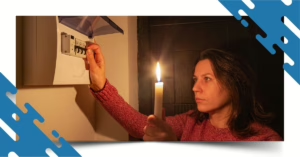
- Inspect circuit breakers to ensure none are in a partially tripped position, as this can reduce system performance even if the unit continues to run. A circuit breaker is a safety device that automatically shuts off electrical power when it detects an overload or short circuit, protecting the system from damage and preventing electrical hazards.
- Clear debris around the outdoor unit to allow proper airflow and prevent the system from overheating or losing efficiency.
When to Call an HVAC Professional
- Refrigerant problems, such as leaks or low charge levels, prevent your system from absorbing and removing heat properly—resulting in weak cooling or warm air from your vents.
- Frozen coils usually point to airflow restrictions or refrigerant problems, and they can seriously impact system performance by reducing cooling capacity, causing uneven temperatures, and potentially leading to compressor damage if not repaired promptly.
- Electrical problems, such as faulty wiring, failed capacitors, or malfunctioning control components, can disrupt normal system operation.
- A compressor is the heart of your HVAC system—it pressurizes and circulates refrigerant so it can absorb heat from inside your home and release it outside. When the compressor fails, this process stops, and the system can no longer cool your home effectively.
Why Choose a Professional HVAC Team You Can Trust
When your AC is running constantly but not cooling your home, fast and accurate service matters. The right HVAC technician doesn’t just treat the symptoms—they find the root cause and restore your system’s performance so your home stays comfortable even in the peak of summer.
At Iron Shield Heating & Air, we understand how frustrating it is when your cooling system can’t keep up. That’s why our team focuses on clear diagnostics, honest recommendations, and long-term solutions—not temporary fixes.
Whether it’s a refrigerant issue, an airflow problem, or a failing component, we’re here to help you get your comfort back quickly and efficiently.
Schedule Your AC Service Today
Don’t ignore early AC problems—small issues can quickly turn into a full system failure. If your unit isn’t cooling properly or is running nonstop, it’s time to have it inspected by a professional.
Contact us to schedule your AC inspection, repair, or maintenance service and restore comfort to your home before the next heatwave hits.
Frequently Asked Questions
The most common causes include a dirty air filter, low refrigerant, frozen evaporator coil, thermostat issues, blocked condenser, leaking ductwork, or compressor problems.
Yes. If your AC is running continuously without cooling, especially if you notice ice on the system, turn it off and contact an HVAC professional to help prevent additional damage.
Yes. A clogged air filter restricts airflow, forcing your air conditioner to work harder and run longer while reducing cooling performance.
Airflow alone doesn’t guarantee cooling. Refrigerant problems, frozen coils, dirty coils, compressor issues, or duct leaks can all prevent your system from removing heat effectively.
Most cooling cycles last between 15 and 20 minutes, depending on outdoor temperatures, indoor humidity, thermostat settings, insulation, and system size. During very hot weather, longer cycles are normal, but your AC should not run continuously without lowering the indoor temperature.
Yes. Low refrigerant reduces your system’s ability to remove heat, causing it to run much longer while producing little cooling.
Yes. Air conditioners remove both heat and humidity. During humid weather, your system may run longer to maintain indoor comfort.
If the filter is dirty, replacing it can immediately improve airflow, cooling performance, and energy efficiency.
Related Blog Posts
Read more articles and expert advice related to this service.