
Are you trying to decide between a single-zone vs multi-zone ductless system for your home? Ductless mini-split systems are a popular option for homeowners who want efficient heating and cooling without installing or extending traditional ductwork.
But which option is right for you?
A single-zone mini-split is designed to heat or cool one specific room, while a multi-zone ductless system can connect multiple indoor units to one outdoor unit. The best choice depends on your home’s layout, the number of rooms you want to condition, your comfort preferences, and your budget.
In this guide, we’ll compare single vs multi-zone ductless systems, including cost, energy efficiency, performance, installation, maintenance, and the situations where each option makes the most sense.
What Is a Ductless Mini-Split System?
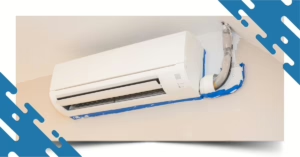
A ductless mini-split system is a heating and cooling system that does not require traditional air ducts.
Instead, it uses:
- An outdoor condenser or heat pump unit
- One or more indoor air-handling units
- Refrigerant lines connecting the indoor and outdoor components
- Individual controls for the conditioned spaces
Ductless systems can provide both air conditioning and heating, depending on the system. Because there is no ductwork, they can be particularly useful for room additions, garages, converted spaces, older homes without existing ducts, or areas that have persistent hot and cold spots.
ENERGY STAR notes that ductless heat pumps can also be used as a whole-home solution or to supplement an existing HVAC system. Proper equipment sizing and professional installation are important for achieving the expected comfort and efficiency.
Single vs Multi Zone Ductless: What’s the Key Difference?
The primary difference is the number of indoor units connected to the outdoor unit.
Feature | Single-Zone Ductless | Multi-Zone Ductless |
| Indoor units | 1 | Multiple |
| Outdoor units | 1 | Typically 1 |
| Best for | One room or space | Multiple rooms |
| Temperature control | One zone | Individual zones |
| Installation | Simpler | More complex |
| Initial investment | Usually lower | Usually higher |
| Flexibility | Excellent for targeted comfort | Excellent for whole-home or multi-room comfort |
Single-Zone Ductless System
A single-zone mini-split connects one indoor unit to one outdoor unit.
This setup is ideal when you only need heating or cooling in one area, such as:
- A bedroom
- Home office
- Garage
- Guest room
- Sunroom
- Home addition
- Converted space
- Room with persistent hot or cold spots
If one room is consistently uncomfortable while the rest of the home is adequately conditioned, a single-zone system can provide targeted comfort without requiring you to replace your entire HVAC system.
Multi-Zone Ductless System
A multi-zone mini-split connects multiple indoor units to a single outdoor unit. Each indoor unit can typically be controlled independently.
For example, you could have:
- One indoor unit in the living room
- One in the primary bedroom
- One in a home office
- One in another bedroom
Each zone can be adjusted according to how and when the space is being used.
Multi-zone systems are especially useful for homes with multiple rooms that need independent temperature control or homes where extending ductwork would be difficult or impractical.
Single vs Multi-Zone Ductless Cost
Cost is an important consideration when comparing ductless systems.
According to Carrier’s current 2026 installation guide, ductless mini-split installation can range broadly from about $2,500 to $10,500 or more, depending on system size, number of zones, efficiency, equipment, installation complexity, and other project-specific factors.
A single-zone system will generally have a lower total installation cost because it requires only one indoor unit and a simpler installation.
A multi-zone system typically costs more because it requires multiple indoor units, additional refrigerant lines, more installation labor, and potentially a larger or more sophisticated outdoor unit.
What affects the final price?
Your actual ductless installation cost can depend on:
- Number of zones
- System capacity and BTU requirements
- SEER2 and HSPF2 efficiency ratings
- Indoor unit style
- Line-set length
- Electrical requirements
- Wall, ceiling, or cassette installation
- Accessibility
- Permitting requirements
- Existing HVAC equipment
- Installation complexity
Important: Avoid choosing a system based solely on the lowest upfront price. Proper sizing, equipment quality, installation, and long-term operating costs all matter.
Energy Efficiency and Operating Costs
One of the biggest advantages of ductless systems is the ability to condition only the spaces that need it. Ductless mini-split heat pumps can provide efficient heating and cooling while avoiding the energy losses associated with some traditional ducted configurations.
Single-Zone Energy Efficiency
A single-zone system can be highly efficient when you’re conditioning one frequently used space.
For example, instead of cooling an entire home just to keep a home office comfortable during the workday, you can use a dedicated mini-split for that room.
This targeted approach can help avoid conditioning areas that aren’t being used.
Multi-Zone Energy Efficiency
Multi-zone systems provide similar zoning benefits across multiple rooms.
You can condition occupied rooms while reducing conditioning in spaces that aren’t being used.
For example:
During the day:
Keep the living area and home office comfortable.
At night:
Prioritize the bedrooms.
This flexibility can help reduce unnecessary energy use compared with conditioning the entire home at one temperature all the time.
However, it’s important not to assume that a multi-zone system will automatically be more efficient than a single-zone system. Actual efficiency depends on the equipment, system design, load, operating conditions, controls, and how the zones are used.
SEER2 and HSPF2: What Should You Look For?
When comparing ductless heat pumps and mini-split systems, you’ll likely see SEER2 and HSPF2 ratings.
SEER2
SEER2 (Seasonal Energy Efficiency Ratio 2) measures cooling efficiency over a representative cooling season.
Generally, a higher SEER2 rating indicates greater cooling efficiency.
HSPF2
HSPF2 (Heating Seasonal Performance Factor 2) measures seasonal heating efficiency for heat pumps.
If you’re purchasing a ductless heat pump that provides both heating and cooling, look at both ratings rather than focusing only on cooling efficiency.
ENERGY STAR’s current criteria for qualifying split-system heat pumps include minimum SEER2, EER2, and HSPF2 requirements, although exact requirements can vary by equipment category and certification criteria.
Tip: Don’t automatically choose the system with the highest rating. Your HVAC professional should consider equipment capacity, home size, climate, installation requirements, and expected usage to determine whether the additional efficiency is worth the investment.
Performance and Comfort
When comparing single vs multi-zone ductless systems, efficiency isn’t the only consideration. Comfort and system performance matter just as much.
Single-Zone Performance
Single-zone mini-splits are excellent for targeted comfort.
Because the system is dedicated to one space, it can provide:
- Precise temperature control
- Quiet operation
- Targeted heating and cooling
- Efficient operation
- Consistent comfort in the conditioned room
They’re a particularly good solution for rooms that don’t stay comfortable with your existing HVAC system.
Multi-Zone Performance
Multi-zone systems provide greater flexibility because multiple rooms can be conditioned independently.
For example, one bedroom can be maintained at a different temperature than a home office or living room.
This makes multi-zone systems a strong option for:
- Multi-room comfort
- Different sleeping preferences
- Multiple-story homes
- Homes with hot and cold spots
- Rooms with different schedules
- Homes without existing ductwork
However, a multi-zone system requires careful design. The outdoor unit and indoor units must be properly matched and sized for the home’s heating and cooling requirements.
Installation Considerations
The installation process is another major difference between single- and multi-zone ductless systems.
Single-Zone Installation
A single-zone system generally has a simpler installation because there is only one indoor unit and one refrigerant connection path.
Depending on the home and installation location, installation may involve:
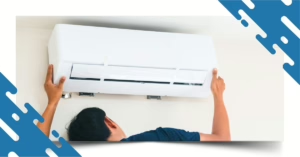
- Mounting the indoor unit
- Installing the outdoor unit
- Running refrigerant and electrical connections
- Connecting the condensate drain
- Testing and commissioning the system
Multi-Zone Installation
Multi-zone installations require more planning because several indoor units need to work with the same outdoor system.
Your HVAC professional must consider:
- Indoor unit locations
- Refrigerant line routing
- Total system capacity
- Individual room loads
- Electrical requirements
- Condensate drainage
- Outdoor unit placement
- Manufacturer specifications
Proper sizing is especially important. ENERGY STAR recommends that HVAC professionals use recognized load calculations, such as Manual J, to determine the heating and cooling requirements of the home or space.
Expert Tip: Don’t size a ductless system simply by square footage. Room orientation, windows, insulation, ceiling height, occupancy, and other factors can affect the required capacity.
Maintenance and Reliability
Ductless systems still require regular maintenance even though they don’t use traditional ductwork.
Single-Zone Maintenance
Maintenance is relatively straightforward because there is only one indoor unit.
Regular maintenance may include:
- Cleaning or replacing filters
- Cleaning the indoor coil
- Checking the condensate drain
- Inspecting refrigerant connections
- Cleaning the outdoor unit
- Checking system operation
Multi-Zone Maintenance
Multi-zone systems require attention to each indoor unit.
Every indoor unit should be inspected and maintained because dirt, restricted airflow, or drainage problems in one zone can affect comfort in that area.
Regular professional maintenance can help:
- Maintain system efficiency
- Improve comfort
- Reduce unexpected breakdowns
- Identify developing problems
- Extend equipment life
Pro Tip: Follow the manufacturer’s maintenance recommendations and schedule professional HVAC service regularly.
Single vs Multi-Zone Ductless: Frequently Asked Questions
Neither is automatically more efficient in every situation. A properly sized single-zone system can be extremely efficient for one room, while a properly designed multi-zone system can efficiently condition multiple spaces. Actual energy use depends on equipment efficiency, system sizing, operating conditions, and how the zones are used.
A multi-zone system can be worth considering when you need heating and cooling in several rooms and want independent temperature control. The higher upfront cost may make sense when compared with installing multiple separate systems or extending ductwork.
A standard single-zone mini-split is designed to condition one primary zone. A multi-zone mini-split can connect multiple indoor units to one outdoor unit, allowing several rooms to be conditioned independently.
It depends on the equipment. A standard single-zone system may not be designed to support additional indoor units. If you expect to add zones later, discuss your long-term plans with an HVAC professional before choosing your system.
A multi-zone system may use more electricity when more rooms are being conditioned because it is serving a larger total load. However, zoning allows you to condition only the spaces that need it, which can reduce unnecessary energy use compared with conditioning an entire home continuously.
Yes. Ductless systems can be useful in Florida homes for targeted cooling, room additions, garages, home offices, bedrooms, and spaces with uneven temperatures. The correct system must be properly sized for Florida’s cooling demands and installed according to manufacturer specifications.
Many ductless systems are heat pumps that provide both heating and cooling. However, not every ductless system is configured the same way, so homeowners should verify whether the system is designed for both functions.
The lifespan of a ductless system depends on equipment quality, installation, operating conditions, maintenance, and usage. Regular professional maintenance and proper installation can help maximize system performance and service life.
Not necessarily. The right system depends on the home. Central HVAC can be an excellent choice when a home already has properly designed ductwork, while ductless mini-splits can be especially useful for homes without ducts, additions, individual rooms, or areas with persistent comfort problems.
Yes. Ductless systems require regular filter cleaning and inspection, along with professional maintenance to check the indoor and outdoor components, drainage, electrical connections, refrigerant circuit, and overall performance.
Which One Is Right for You?
Choosing a single- or multi-zone ductless system depends on your home, lifestyle, and comfort needs. A single-zone system efficiently heats or cools one room, offering a simple and cost-effective solution. If you need flexible temperature control across multiple rooms, a multi-zone system gives you long-term comfort and convenience.
Not sure what fits your home best? Iron Shield Heating & Air can help. Our experts will assess your space, discuss your comfort goals, and recommend the perfect ductless system for your needs.
Contact us today for a free consultation and quote — and start enjoying efficient, reliable comfort in every room. Whether you choose a single-zone or multi-zone system, you’ll benefit from tailored comfort and energy savings that fit your lifestyle. The right ductless solution helps create the perfect home environment for you and your family, season after season.
Related Blog Posts
Read more articles and expert advice related to this service.