
Changing your air filter is one of the simplest—and most important—things you can do to keep your HVAC system running efficiently. A clean air filter helps maintain proper airflow, improve indoor air quality, reduce unnecessary strain on your air conditioner, and keep your home comfortable.
But how often should you change your air filter? What happens if you forget? And how do you know when your filter needs to be replaced?
What Does an Air Filter Do?
Your HVAC air filter is your system’s first line of defense against airborne particles.
As your heating or cooling system circulates air throughout your home, the filter captures particles such as:
- Dust
- Dirt
- Pollen
- Pet dander
- Lint
- Mold spores
- Other airborne particles
Without a properly maintained filter, these particles can circulate throughout your home and may accumulate inside your HVAC system.
The right filter can also help improve indoor air quality, especially in homes with pets, children, or people who are sensitive to airborne allergens.
What Is a MERV Rating?
You may have noticed a MERV rating on your air filter. MERV stands for Minimum Efficiency Reporting Value and indicates how effectively a filter captures certain airborne particles.
A higher MERV rating generally means the filter can capture smaller particles. However, using a filter that is too restrictive for your HVAC system can reduce airflow.
That’s why it’s important to use the correct air filter size and type recommended for your HVAC system rather than simply choosing the highest MERV rating available.
5 Important Benefits of Changing Your Air Filter
Regular air filter replacement may seem like a small maintenance task, but it can make a noticeable difference in your home’s comfort and HVAC performance.
1. Improve Indoor Air Quality
One of the biggest benefits of changing your air filter is helping maintain cleaner indoor air.
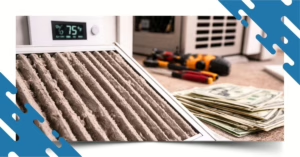
A dirty filter can become loaded with dust, pollen, pet dander, and other particles. Once the filter becomes excessively dirty, it may not perform as effectively and can also restrict airflow.
Replacing the filter regularly helps your HVAC system properly capture airborne particles as air moves through the system.
This can be especially important for households with:
- Pets
- Children
- Allergy-sensitive occupants
- High levels of household dust
- Frequent HVAC use
A cleaner filter is one simple step toward maintaining better indoor air quality.
2. Help Your HVAC System Run Efficiently
One of the biggest benefits of changing your air filter is helping maintain cleaner indoor air.
A dirty filter can become loaded with dust, pollen, pet dander, and other particles. Once the filter becomes excessively dirty, it may not perform as effectively and can also restrict airflow.
Replacing the filter regularly helps your HVAC system properly capture airborne particles as air moves through the system.
This can be especially important for households with:
- Pets
- Children
- Allergy-sensitive occupants
- High levels of household dust
- Frequent HVAC use
A cleaner filter is one simple step toward maintaining better indoor air quality.
3. Protect Your HVAC System
Your HVAC system is a significant investment, so routine maintenance matters.
A severely dirty filter can contribute to airflow problems and put additional strain on components such as the blower motor and evaporator coil.
In some situations, restricted airflow can contribute to an evaporator coil freezing, which can lead to additional HVAC problems.
Regular filter replacement is a simple form of preventative HVAC maintenance that can help protect your equipment and support reliable operation.
4. Reduce the Risk of Expensive HVAC Repairs
A filter change costs far less than many HVAC repairs.
When airflow problems are ignored, your system may experience unnecessary stress. Over time, this can contribute to performance issues and component problems.
Changing your air filter doesn’t prevent every HVAC breakdown, but it is an easy maintenance step that can help reduce problems caused by poor airflow.
Think of it as inexpensive preventative maintenance for your heating and cooling system.
5. Maintain Better Comfort and Airflow
Do some rooms in your home feel warmer or cooler than others?
A dirty air filter can contribute to restricted airflow, which may affect how effectively conditioned air moves throughout your home.
Regular filter replacement helps your HVAC system maintain better airflow, allowing it to heat or cool your home more consistently.
For Florida homeowners who rely heavily on their air conditioner during hot weather, maintaining good airflow is especially important.
How Often Should You Change Your Air Filter?
There isn’t one replacement schedule that works for every home.
As a general guideline, check your HVAC air filter every month and replace it when it becomes dirty. Many standard filters need to be replaced approximately every 1–3 months, but your specific schedule can vary.
You may need to change your air filter more frequently if:
- You have pets
- Your home has significant dust
- Someone in the household is sensitive to allergens
- Your HVAC system runs frequently
- You have several people living in the home
- You use a higher-efficiency filter
The best approach is simple: check your filter regularly instead of relying only on a calendar.
Signs You Need to Change Your Air Filter
Not sure whether your filter needs to be replaced?
Look for these common warning signs:
- If your filter is covered in dust, dirt, or debris, it’s time to replace it.
- If the air coming from your vents feels weaker than normal, a clogged filter could be contributing to restricted airflow.
- Excessive dust around your home may indicate that your HVAC filter needs attention.
- If your air conditioner seems to run continuously or takes longer to reach the desired temperature, restricted airflow may be one possible cause.
- Hot or cold spots throughout your home can have several causes, but a dirty filter is one simple thing to check first.
- If your HVAC system isn’t maintaining the comfort level you’re used to, start with the basics—including checking your air filter.
How to Check Your Air Filter
Checking your filter takes only a few minutes.
- Turn off your HVAC system if necessary.
- Locate the air filter.
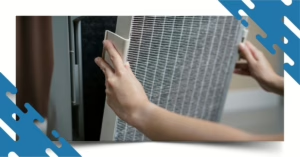
- Remove the filter carefully.
- Check for visible dust and debris.
- Compare the filter to a new one.
- Replace it if it is dirty or clogged.
- Make sure the new filter is installed in the correct direction according to the airflow arrow.
Tip: Keep a spare filter on hand so you’re not stuck with a dirty filter when it’s time for a replacement.
Frequently Asked Questions About Changing Your Air Filter
Most standard HVAC filters should be checked monthly and replaced approximately every 1–3 months, depending on the filter and household conditions. Homes with pets, high dust levels, or allergy-sensitive occupants may require more frequent replacement.
A severely clogged filter can restrict airflow and contribute to HVAC problems. In some situations, restricted airflow can cause an evaporator coil to freeze and may affect system performance. If your AC stops cooling, it’s best to have the system inspected by an HVAC professional.
A clean filter helps maintain proper airflow and allows the HVAC system to operate without unnecessary airflow restriction. This can support efficient operation and may help reduce energy waste caused by a severely clogged filter.
A higher MERV rating can provide greater particle filtration, but a filter that is too restrictive for your HVAC system may reduce airflow. Always choose a filter that is compatible with your equipment and follow the manufacturer’s recommendations.
Not necessarily. You should check your filter every month, but the replacement interval depends on your filter type, home conditions, HVAC usage, pets, and other factors. Some filters need to be replaced monthly, while others can last longer.
Yes. A properly sized and maintained HVAC filter helps capture airborne particles such as dust, pollen, and pet dander as air passes through the system. Regular replacement helps the filter continue working effectively.
The filter size is usually printed on the existing filter. Check the length, width, and thickness before purchasing a replacement. If you’re unsure, an HVAC professional can help identify the correct filter.
In many homes, yes. Replacing an air filter is generally a simple maintenance task. Make sure you purchase the correct size and install it according to the airflow direction marked on the filter.
Related Blog Posts
Read more articles and expert advice related to this service.