
Is your AC running constantly and never shutting off? If your AC won’t turn off, even after reaching the temperature set on your thermostat, there may be an underlying problem.
Homeowners in The Villages, FL know how hard an air conditioner has to work during Florida’s long, hot cooling season. High temperatures and humidity can increase AC run times—but your system should still cycle off once your home reaches the desired temperature.
A constantly running air conditioner can increase your energy bills, put unnecessary strain on HVAC components, reduce comfort, and potentially lead to costly repairs.
So, why won’t your AC turn off? Let’s look at the most common causes and what you can do about them.
Why Does My AC Keep Running in The Villages?
Florida’s heat and humidity naturally make your air conditioner work harder. However, if your AC runs constantly without reaching the thermostat setting, it could indicate a problem with your HVAC system.
A properly functioning air conditioner typically:
- Turns on when your home needs cooling
- Removes heat and humidity from the indoor air
- Reaches the thermostat’s set temperature
- Cycles off until cooling is needed again
If your AC won’t turn off, something may be preventing the system from reaching the desired temperature or telling it to stop.
Common causes include:
- Incorrect thermostat settings
- A malfunctioning thermostat
- A dirty or clogged air filter
- Low refrigerant or a refrigerant leak
- Dirty evaporator or condenser coils
- Electrical problems or a stuck contactor
- An undersized, aging, or inefficient AC system
Let’s take a closer look.
1. Your Thermostat Settings May Be the Problem
Before assuming you need an AC repair, check your thermostat.
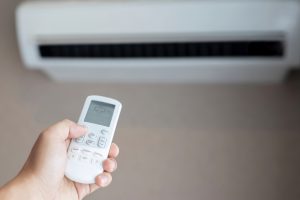
If the thermostat fan is set to ON instead of AUTO, the indoor blower fan may continue running even after the cooling cycle ends. This can make it seem like your air conditioner never shuts off.
Also, setting your thermostat extremely low during a hot Florida afternoon can cause your AC to run for extended periods.
For example, asking your system to cool your home to 68°F when outdoor temperatures are in the 90s can put significant demand on the equipment.
What to check:
- Make sure the system is set to COOL
- Set the fan to AUTO
- Check that the thermostat temperature is reasonable
- Make sure the thermostat isn’t accidentally set to an unusual schedule
If your AC still won’t shut off, continue troubleshooting.
2. Your Thermostat May Not Be Reading the Temperature Correctly
Your thermostat tells your HVAC system when to turn on and off. If it isn’t accurately detecting the indoor temperature, your AC may continue running.
A thermostat can have trouble reading the room correctly if it is:
- Located in direct sunlight
- Near a kitchen or heat-producing appliance
- Near a drafty door or window
- Installed in an area with unusual temperature fluctuations
- Malfunctioning or outdated
For example, if the thermostat thinks your home is warmer than it actually is, it may continue calling for cooling.
If some areas of your home feel comfortable while the thermostat reading seems inaccurate, the thermostat could be part of the problem.
3. A Dirty Air Filter Can Restrict Airflow
A dirty HVAC air filter is one of the easiest problems to overlook—and one of the most common reasons an AC may run longer than normal.
When a filter becomes clogged with dust, dirt, pollen, and other particles, it restricts airflow through the HVAC system.
Reduced airflow can make it harder for your air conditioner to distribute cool air throughout your home. Your system may then run longer as it tries to reach the thermostat setting.
In Florida, where air conditioners operate frequently, checking your filter regularly is especially important.
Check your air filter if:
- Your AC is running constantly
- Airflow from the vents seems weak
- Some rooms are warmer than others
- The filter looks visibly dirty
- Your energy bill has increased unexpectedly
If the filter is dirty, replace it with the correct size and type recommended for your system.
4. Low Refrigerant Can Cause Your AC to Run Constantly
Your air conditioner uses refrigerant to transfer heat from inside your home to the outdoor unit.
If the system has low refrigerant, usually because of a leak or another issue, it may not be able to cool your home effectively.
Instead of reaching the thermostat setting and shutting off, your AC may continue running without providing the expected cooling.
Possible signs of low refrigerant include:
- AC running continuously
- Warm or less-cool air coming from vents
- Ice on the indoor coil or refrigerant lines
- Longer cooling cycles
- Hissing or bubbling sounds
- Poor overall cooling performance
Refrigerant issues require professional diagnosis. Simply adding refrigerant without finding the underlying cause may not solve the problem.
5. Dirty Evaporator or Condenser Coils
Your AC depends on clean coils to transfer heat efficiently.
The evaporator coil inside your home absorbs heat from indoor air, while the condenser coil in the outdoor unit releases that heat outside.
Over time, coils can become covered with dirt, dust, grass clippings, and other debris.
When coils become dirty, heat transfer becomes less efficient. Your air conditioner may then have to run longer to cool your home.
Regular AC maintenance in The Villages can help identify and address coil buildup before it contributes to larger HVAC problems.
6. A Stuck Contactor or Other Electrical Problem
Sometimes the reason your AC won’t turn off has nothing to do with airflow or refrigerant.
Your outdoor AC unit contains electrical components, including a contactor, that help control when the system receives power.
If a contactor becomes stuck, the outdoor unit may continue running even when the thermostat is no longer calling for cooling.
Electrical problems can be dangerous and should be inspected by a qualified HVAC technician.
Do not attempt to repair or bypass electrical components yourself.
7. Your AC May Be Undersized, Aging, or Losing Efficiency
Sometimes the problem is the system itself.
An improperly sized air conditioner may struggle to cool your home during Florida’s hottest days. An older system can also become less efficient as components wear down.
If your AC is 10–15 years old, requires frequent repairs, or seems to work harder every summer, constant operation may indicate that the system is losing its ability to keep up.
Signs your AC may be nearing replacement include:
- Frequent AC repairs
- Increasing energy bills
- Inconsistent indoor temperatures
- Frequent or constant operation
- Declining cooling performance
- An aging air conditioner
- Expensive component failures
In some cases, AC replacement in The Villages may be more cost-effective than continuing to repair an inefficient system.
Learn More: 4 Warning Signs It’s Time for AC Replacement
What to Do If Your AC Won't Turn Off
Before calling an HVAC professional, you can safely check a few basic things.
1. Check the thermostat
Make sure:
- The system is set to COOL
- The fan is set to AUTO
- The temperature setting is reasonable
- The thermostat display appears normal
2. Check the air filter
If the filter is visibly dirty or clogged, replace it with the correct replacement filter.
3. Check your vents
Make sure furniture, curtains, rugs, or other objects aren’t blocking your supply or return vents.
4. Look at the outdoor unit
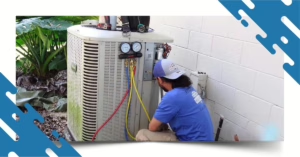
Remove leaves, grass clippings, and loose debris from around the outdoor unit. Keep the area around the condenser clear so it can properly release heat.
Do not remove electrical panels or attempt to repair electrical components yourself.
5. See if the system cycles normally
After making these basic checks, monitor your AC.
If your AC still won’t turn off, especially if your home isn’t reaching the thermostat setting, it’s time to have the system professionally inspected.
When Should You Call an HVAC Professional?
Call an HVAC technician if your AC:
- Runs constantly
- Isn’t cooling your home properly
- Blows warm air
- Has ice buildup
- Makes unusual noises
- Has weak airflow
- Causes unusually high energy bills
- Has electrical problems
- Continues running after basic thermostat and filter checks
A professional AC repair technician in The Villages can test the system and determine whether the problem is related to refrigerant, airflow, electrical components, the thermostat, coils, or the condition and size of the system.
The sooner you identify the cause, the better your chances of preventing additional damage and unnecessary operating costs.
Our experienced HVAC technicians serve homeowners throughout The Villages and surrounding Central Florida communities, providing AC repair, AC maintenance, air conditioning replacement, heat pump service, and other HVAC services.
Whether you need a simple adjustment or a more involved repair, we’ll help you understand what’s happening with your system and what your options are.
Don’t let a constantly running AC drive up your energy bill or put unnecessary strain on your system.
Frequently Asked Questions About an AC That Won't Turn Off
If your AC continues running after reaching the thermostat setting, the cause could be a thermostat problem, restricted airflow, low refrigerant, dirty coils, an electrical issue, or another HVAC problem. If the system doesn’t cycle off normally, professional diagnosis may be needed.
An AC may run for extended periods during extremely hot weather, especially in The Villages. However, continuous operation without reaching the thermostat setting isn’t something to ignore. It can indicate that the system is struggling or has an underlying problem.
For normal cooling operation, AUTO is generally preferred if you want the indoor fan to run only during cooling cycles. Setting the fan to ON keeps the blower running continuously, even when the compressor isn’t cooling.
Yes. A clogged air filter can restrict airflow and make your AC work harder and run longer. Check your filter regularly and replace it when it becomes dirty.
Yes. Low refrigerant can reduce an air conditioner’s ability to remove heat from your home, causing longer cooling cycles or continuous operation. A qualified HVAC technician should diagnose and repair the underlying refrigerant problem.
This can happen because of restricted airflow, low refrigerant, dirty coils, ductwork problems, an undersized system, thermostat issues, or an aging AC. A professional HVAC inspection can help determine the cause.
An air conditioner should help remove humidity while it cools your home. If your system is running constantly but the house still feels humid or sticky, there may be a cooling, airflow, sizing, or system-performance issue.
The replacement schedule depends on the filter, household conditions, pets, indoor air quality, and HVAC usage. Checking the filter monthly is a good starting point. Replace it when it becomes dirty or according to the manufacturer’s recommendations.
If your system is relatively new and the issue is isolated, an AC repair may be the best option. If your system is older, frequently needs repairs, has declining efficiency, or struggles to cool your home, AC replacement may make more sense. An HVAC professional can evaluate the system and explain your options.
AC repair costs vary depending on the cause of the problem, the parts required, the system, and the complexity of the repair. The best way to determine the cost is to have an HVAC technician diagnose the problem first.
Related Blog Posts
Read more articles and expert advice related to this service.