
Is your heat pump blowing cold air when your home should be warm and comfortable? While a heat pump can produce air that feels cooler than furnace-heated air, consistently cold air—especially when your home isn’t reaching the thermostat setting—can indicate a problem.
The good news is that some causes are simple to fix. A thermostat setting, dirty air filter, restricted airflow, or normal defrost cycle may be all that’s happening. However, issues such as low refrigerant, frozen coils, electrical problems, or a failing component require professional HVAC service.
In this guide, we’ll explain why your heat pump is blowing cold air, what you can safely check yourself, and when it’s time to call an HVAC professional.
Is It Normal for a Heat Pump to Blow Cool Air?
Before assuming something is wrong, it’s important to understand how a heat pump works.
Unlike a traditional furnace that generates heat by burning fuel or using electric resistance, a heat pump transfers heat from one place to another.
During winter, your heat pump extracts available heat from the outdoor air and transfers it inside your home. Because heat pumps move heat rather than create it, the air coming from your vents may not feel as hot as air produced by a furnace.
However, your heat pump should still gradually warm your home and maintain the temperature selected on your thermostat.
If the air feels genuinely cold, your indoor temperature keeps dropping, or the system runs continuously without heating your home, there may be an underlying problem.
How Does a Heat Pump Work?
A heat pump uses a refrigeration cycle to move heat between the inside and outside of your home.
During heating mode:
- The outdoor coil absorbs heat from the outside air.
- Refrigerant carries that heat through the system.
- The compressor increases the refrigerant’s pressure and temperature.
- The indoor coil releases heat into your home.
- The blower distributes warm air through your ductwork.
In cooling mode, the process reverses, and the heat pump removes heat from your home.
Key components include:
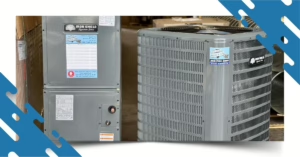
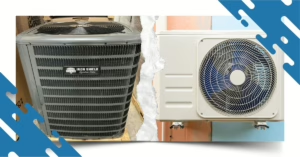
- Outdoor unit: Transfers heat between the system and outdoor air.
- Indoor air handler: Circulates conditioned air throughout your home.
- Refrigerant: Transfers heat between the indoor and outdoor coils.
- Compressor: Moves and pressurizes refrigerant.
- Indoor and outdoor coils: Transfer heat.
- Thermostat: Controls the desired temperature and operating mode.
- Reversing valve: Changes the direction of refrigerant flow between heating and cooling.
When these components work properly, a heat pump can provide efficient heating and cooling throughout the year.
Why Is My Heat Pump Blowing Cold Air?
There are several possible reasons your heat pump is blowing cold air. Some are easy to troubleshoot, while others require professional diagnosis.
1. Your Thermostat Is Set Incorrectly
One of the first things to check when your heat pump is blowing cold air is the thermostat.
Your thermostat may accidentally be set to Cool, Fan Only, or another incorrect mode. The fan setting can also affect how the system operates.
What to check:
- Is the thermostat set to Heat?
- Is the desired temperature higher than the current room temperature?
- Is the fan set to Auto rather than On?
- Does the thermostat display a low-battery warning?
- Is the thermostat responding normally?
Easy fix:
Set the thermostat to Heat, make sure the temperature is set appropriately, and replace the batteries if necessary.
If your thermostat is correctly configured but the heat pump still blows cold air, continue troubleshooting.
2. Your Air Filter Is Dirty
A dirty HVAC air filter is one of the simplest problems that can affect heat pump performance.
When a filter becomes clogged with dust and debris, it restricts airflow. Reduced airflow can make your heat pump work harder and may contribute to poor heating performance, coil freezing, and increased energy consumption.
Check your filter:
- Does it look gray, dusty, or clogged?
- Has it been several months since you replaced it?
- Does your home have pets, construction dust, or unusually high dust levels?
Easy fix:
Replace a disposable filter with the correct size and rating, or clean a reusable filter according to the manufacturer’s instructions.
Tip: Check your filter regularly. Many homes benefit from monthly inspections, although the appropriate replacement schedule depends on the filter, system, household conditions, and manufacturer’s recommendations.
3. The Heat Pump Is in Defrost Mode
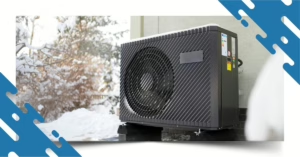
If your outdoor heat pump develops frost or ice during cold weather, the system may temporarily enter defrost mode.
During a defrost cycle, the heat pump temporarily changes its operation to remove frost from the outdoor coil. You may notice cooler air from the vents during this brief period.
You may also see:
- Steam or vapor around the outdoor unit
- The outdoor fan temporarily stopping
- A change in the sound of the system
- A temporary shift in heating performance
This can be normal.
When is defrosting a problem?
If your heat pump remains covered in ice, repeatedly enters defrost mode, or never returns to normal heating, there could be an issue with airflow, refrigerant, sensors, controls, or another component.
That’s when professional HVAC diagnosis is recommended.
4. The Outdoor Unit Is Blocked
Your heat pump needs adequate airflow around the outdoor unit to transfer heat efficiently.
Leaves, grass, dirt, debris, snow, or other obstructions can restrict airflow and reduce system performance.
What you can safely do:
Keep the area around the outdoor unit clear of obvious debris and vegetation.
Avoid blocking the unit with:
- Storage items
- Furniture
- Landscaping
- Covers that restrict airflow
- Other outdoor objects
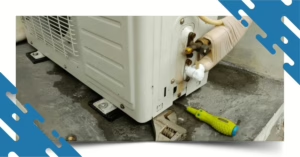
Never attempt to disassemble the unit or work on electrical components yourself.
5. The Airflow Through Your Home Is Restricted
Sometimes the heat pump itself isn’t the problem. Restricted airflow through the home’s ductwork can prevent heated air from reaching the rooms effectively.
Potential causes include:
- Dirty air filters
- Blocked or closed vents
- Damaged ductwork
- Leaking ducts
- Improperly sized ductwork
- Blower problems
Check that your supply vents and return vents are open and unobstructed.
If some rooms receive little or no airflow while others remain comfortable, your HVAC system may need an airflow or ductwork inspection.
6. The Heat Pump Has Low Refrigerant
Refrigerant is essential for transferring heat.
If your heat pump has a refrigerant leak or an incorrect refrigerant charge, the system may struggle to extract and transfer heat effectively. This can result in cold air from your vents, longer run times, reduced comfort, or ice buildup.
Possible warning signs include:
- Ice or frost on components
- Long or continuous run times
- Poor heating performance
- Hissing or bubbling sounds
- Higher-than-normal energy consumption
Important:
Do not attempt to add refrigerant yourself.
Refrigerant service requires specialized equipment and qualified HVAC professionals. If refrigerant is low, a technician should determine why before charging the system.
7. The Coils Are Frozen
Frozen coils can interfere with the heat transfer process and cause your heat pump to perform poorly.
Several problems can contribute to freezing, including:
- Restricted airflow
- Dirty filters
- Refrigerant problems
- Mechanical issues
- Control problems
What should you do?
If you notice significant ice buildup, turn the system off and allow it to thaw naturally. Make sure airflow isn’t blocked.
Do not use sharp objects, tools, or excessive heat to remove ice. You could damage the coils or other components.
If the coils repeatedly freeze, the underlying problem needs to be diagnosed by an HVAC professional.
8. The Reversing Valve May Have a Problem
The reversing valve is a critical component in a heat pump. It changes the direction of refrigerant flow so the system can switch between heating and cooling.
If the reversing valve is stuck, damaged, or malfunctioning, the heat pump may not operate correctly in heating mode.
This isn’t a DIY repair. A technician should inspect the valve and related controls to determine whether it needs repair or replacement.
9. Electrical or Mechanical Problems
If basic troubleshooting doesn’t solve the problem, your heat pump may have an electrical or mechanical issue.
Potential problems include:
- Tripped breakers
- Faulty capacitors
- Blower motor problems
- Compressor issues
- Faulty sensors
- Control board problems
- Wiring issues
- Reversing valve problems
Signs of a more serious problem:
- Grinding, buzzing, or unusual noises
- Burning or unusual odors
- Frequent short cycling
- The outdoor unit isn’t operating properly
- The system won’t maintain the thermostat setting
- The breaker repeatedly trips
- The heat pump blows cold air continuously
These problems should be diagnosed by a qualified HVAC technician.
When Should You Call an HVAC Professional?
It’s time to schedule professional heat pump repair if:
- Your heat pump continuously blows cold air.
- Your home won’t reach the thermostat setting.
- The outdoor unit is heavily iced over.
- Ice returns repeatedly after thawing.
- You hear unusual noises.
- You smell burning or unusual odors.
- Your circuit breaker repeatedly trips.
- The system turns on and off frequently.
- Your heat pump runs continuously without adequately heating your home.
- You suspect a refrigerant leak.
- The system is older and hasn’t received professional maintenance.
Some HVAC problems can become more expensive when ignored. Early diagnosis can help prevent additional damage and restore reliable heating performance.
Heat Pump Repair in Ocala, FL
If your heat pump is blowing cold air and basic troubleshooting hasn’t solved the problem, Iron Shield Heating & Air can help.
Our experienced HVAC technicians provide heat pump repair, maintenance, replacement, and heating services for homeowners in Ocala, Belleview, The Villages, Summerfield, Lady Lake, Marion Oaks, Citrus Springs, Wildwood, Dunnellon, and Leesburg.
We’ll diagnose the problem, explain your options, and help you get your home’s heating system back to dependable operation.
Don’t ignore a heat pump that’s consistently blowing cold air. Contact Iron Shield Heating & Air to schedule professional heat pump service in Ocala and surrounding communities.
Frequently Asked Questions About Heat Pumps Blowing Cold Air
Your heat pump may be blowing cold air because of an incorrect thermostat setting, dirty filter, restricted airflow, normal defrost operation, frozen coils, low refrigerant, or a mechanical or electrical problem. If the issue continues, have the system professionally inspected.
Yes, the air from a heat pump can feel less hot than air from a traditional furnace. However, the system should still warm your home and maintain the thermostat setting. Consistently cold air or a falling indoor temperature can indicate a problem.
Outdoor temperatures can affect heat pump performance, but a properly functioning system should still provide heating. If your home becomes noticeably colder at night or the system runs continuously without reaching the set temperature, an HVAC inspection may be necessary.
A power interruption can cause a thermostat, breaker, control, or other system issue. Check that the thermostat is set correctly and that the appropriate breaker hasn’t tripped. If the system still doesn’t heat properly, contact an HVAC professional.
Possible signs include poor heating or cooling performance, unusually long run times, ice buildup, or hissing and bubbling sounds. However, these symptoms can have other causes. A qualified technician should test the system and identify the underlying problem.
If the system is continuously blowing cold air, heavily iced over, making unusual noises, producing unusual odors, or showing signs of a serious malfunction, turn it off and contact an HVAC professional. Avoid repeatedly restarting a malfunctioning system.
Yes. A severely dirty filter can restrict airflow and reduce heating performance. Check your filter regularly and replace or clean it according to the manufacturer’s recommendations.
Some frost can be normal, particularly during cold or damp conditions, because the system periodically enters defrost mode. Heavy or persistent ice buildup can indicate an airflow, refrigerant, defrost control, or other system problem.
Regular professional maintenance is recommended to help maintain performance and identify potential problems early. Your HVAC manufacturer’s recommendations and your home’s operating conditions should guide the maintenance schedule.
Heat pump lifespan varies depending on equipment quality, installation, usage, climate, maintenance, and other factors. Regular professional maintenance can help maximize system performance and service life.
Related Blog Posts
Read more articles and expert advice related to this service.