
Indoor air quality can have a major impact on the comfort of your home. In fact, EPA research has found that concentrations of some indoor pollutants can be 2 to 5 times higher indoors than outdoors. In a tightly closed home with limited ventilation, pollutants, odors, moisture, and airborne particles can build up over time.
For homeowners in The Villages, FL, air ventilation is especially important. Florida’s warm, humid climate means homes rely heavily on air conditioning, while closed windows and doors can limit the amount of fresh outdoor air entering the home.
Proper air ventilation, HVAC maintenance, humidity control, filtration, and source control can all work together to create a fresher and more comfortable indoor environment.
What Is Air Ventilation?
Air ventilation is the process of bringing outdoor air into your home while removing stale indoor air, moisture, odors, and certain pollutants.
Ventilation can occur naturally through doors and windows or mechanically through systems such as:
- Bathroom and kitchen exhaust fans
- Fresh-air ventilation systems
- Energy Recovery Ventilators (ERVs)
- Heat Recovery Ventilators (HRVs)
- HVAC ventilation components
- Whole-home air quality systems
Modern residential ventilation guidance is addressed by ANSI/ASHRAE Standard 62.2-2025, which establishes requirements for ventilation and acceptable indoor air quality in residential buildings.
It’s important to remember that your standard HVAC system is primarily designed to heat, cool, filter, and dehumidify your home. Many forced-air HVAC systems do not automatically bring outdoor air into the home.
Common Indoor Air Quality Problems in The Villages
Homes in The Villages can experience several indoor air quality challenges. Florida’s humidity, frequent air-conditioning use, outdoor allergens, and tightly closed homes can all contribute to stale or uncomfortable indoor air.
1. High Humidity and Moisture
Humidity is one of the biggest indoor air-quality concerns in Florida.
Excess indoor moisture can encourage mold growth and create favorable conditions for dust mites. EPA recommends keeping indoor relative humidity below 60%, ideally between 30% and 50%.
Common signs of excessive indoor humidity include:
- Musty odors
- Condensation on windows
- Damp rooms
- Mold or mildew growth
- A sticky or muggy feeling
- Increased dust-mite activity
Bathrooms, kitchens, laundry rooms, closets, and poorly ventilated areas can be particularly vulnerable.
2. Dust, Pollen, Pet Dander, and Other Allergens
Indoor air can contain pollen, dust, dust mites, pet dander, mold spores, and other biological contaminants. Poor ventilation and inadequate filtration can allow these particles to accumulate or circulate throughout the home.
Florida homes may also receive outdoor pollen and other particles through doors, windows, gaps, and HVAC systems.
3. Stale or Uneven Airflow
A home can feel stuffy even when the thermostat shows the correct temperature.
Restricted airflow may result from:
- Dirty HVAC filters
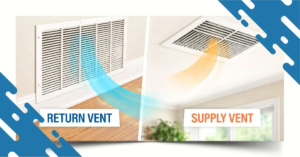
- Blocked supply vents
- Obstructed return grilles
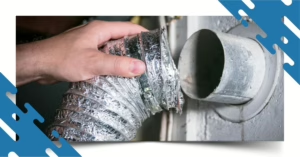
- Dirty ductwork
- Improperly balanced airflow
- Undersized or poorly designed ductwork
- Closed interior doors
- HVAC equipment that needs maintenance
If one room is consistently hot while another is too cold, your HVAC system may need an airflow assessment.
4. Household Chemicals and VOCs
Cleaning products, paints, aerosol sprays, solvents, air fresheners, furnishings, and other household products can release volatile organic compounds (VOCs) and other pollutants. EPA recommends ventilation when using products that can release pollutants.
Whenever outdoor conditions permit, increasing ventilation while using these products can help reduce indoor pollutant concentrations.
5. Poor Moisture Ventilation
Cooking, showering, washing dishes, and doing laundry can introduce moisture into your home.
If moisture is not properly exhausted, it can contribute to condensation, elevated humidity, and mold problems.
Use exhaust fans that vent outdoors in kitchens and bathrooms and venting clothes dryers outdoors.
7 Air Ventilation Tips for Better Indoor Air Quality
Good air ventilation isn’t simply about opening windows. Effective indoor air quality management combines ventilation, moisture control, source control, filtration, and HVAC maintenance.
Here are practical ways to improve ventilation in your The Villages home.
1. Use Kitchen and Bathroom Exhaust Fans
Kitchen and bathroom exhaust fans are among the simplest ways to remove moisture, odors, and pollutants at their source.
Use the bathroom exhaust fan while showering and continue running it afterward to help remove excess moisture.
In the kitchen, use the range hood or exhaust fan while cooking to help remove moisture, odors, smoke, and cooking-related pollutants.
Make sure exhaust fans actually vent outdoors rather than simply moving air into an attic or another enclosed space.
2. Open Windows When Outdoor Conditions Are Suitable
Opening windows can increase natural ventilation when outdoor weather and air quality are favorable. EPA specifically recommends ventilating with open doors and windows when outdoor air quality and weather permit.
However, this strategy isn’t ideal all the time in Florida.
Avoid relying on open windows when:
- Outdoor humidity is very high
- Outdoor air quality is poor
- Pollen levels are causing problems
- Your AC is running heavily
- You are trying to control indoor humidity
In hot, humid weather, bringing large amounts of humid outdoor air inside can actually make moisture control more difficult.
3. Replace and Maintain Your HVAC Filter
Your HVAC filter plays an important role in capturing airborne particles before they circulate through your home.
Check your filter regularly and replace it according to the manufacturer’s recommendations and your home’s conditions.
Homes with pets, higher dust levels, or other indoor-air-quality concerns may require more frequent filter changes.
Also:
- Keep supply vents unobstructed
- Keep return-air grilles clean
- Don’t cover vents with furniture
- Make sure the HVAC system receives regular maintenance
The right filter should also be compatible with your HVAC system. A higher-efficiency filter is not automatically better if the system is not designed to handle the added airflow resistance.
4. Keep Indoor Humidity Between 30% and 50%
Humidity control is a major part of indoor air quality in Florida.
EPA recommends keeping indoor relative humidity between 30% and 50% when possible and below 60% to help reduce moisture-related problems.
A simple digital hygrometer can help you monitor humidity levels.
If humidity remains high, possible solutions include:
- Improving bathroom and kitchen exhaust
- Checking HVAC performance
- Using a properly sized dehumidifier
- Considering a whole-home dehumidifier
- Addressing duct or building-envelope issues
- Fixing plumbing or water leaks
If your home stays humid even while the AC is running, it’s worth having the HVAC system evaluated.
5. Improve Airflow Throughout the Home
Every room needs appropriate airflow.
Check for:
- Blocked supply vents
- Dirty return grilles
- Furniture covering vents
- Closed doors restricting return airflow
- Damaged or disconnected ductwork
- Rooms that consistently feel warmer or colder
If certain rooms remain uncomfortable despite normal HVAC operation, an HVAC professional can evaluate ductwork, airflow, equipment performance, and system balance.
6. Consider Whole-Home Ventilation
If your home feels consistently stale or poorly ventilated, a dedicated whole-home ventilation solution may be worth considering.
Depending on the home’s design and needs, options may include:
Energy Recovery Ventilator (ERV)
An ERV can exchange stale indoor air with outdoor air while recovering energy from the outgoing air stream.
Heat Recovery Ventilator (HRV)
An HRV transfers heat between incoming and outgoing air while providing mechanical ventilation.
For Florida homes, an ERV may be particularly relevant when managing outdoor humidity, but the appropriate system depends on the home’s design, climate loads, existing HVAC system, and ventilation requirements.
A professional evaluation should determine whether mechanical ventilation is appropriate and what type of system makes sense.
7. Combine Ventilation With Air Filtration and Source Control
Ventilation is only one part of indoor air quality.
EPA identifies three important strategies:
- Control pollution sources
- Provide adequate ventilation
- Use filtration or air cleaning when appropriate
For example, if you have a source of moisture causing mold, simply increasing ventilation may not solve the underlying problem.
Likewise, air purification cannot replace proper moisture control or adequate ventilation.
The best approach is to identify the source of the problem first and then select the appropriate solution.
Do You Need Better Air Ventilation?
Your home may benefit from an air ventilation or indoor air quality assessment if you notice:
- Persistent musty odors
- Excess humidity
- Condensation on windows
- Mold or mildew
- Rooms that feel stuffy
- Uneven temperatures
- Excessive dust
- Poor airflow
- Lingering cooking odors
- Increased indoor allergens
- High humidity despite running the AC
- Rooms that never seem comfortable
These symptoms don’t automatically mean you need a new ventilation system. They can also indicate problems with HVAC performance, ductwork, insulation, moisture intrusion, filtration, or other sources.
A professional assessment can help identify the actual cause before recommending equipment.
Professional Air Ventilation and Indoor Air Quality Services in The Villages, FL
At Iron Shield Heating & Air, we help homeowners address HVAC and indoor air quality concerns throughout The Villages and surrounding communities.
Depending on your home’s needs, our team can evaluate:
HVAC System Performance
We can inspect your heating and cooling system to identify issues affecting airflow, comfort, efficiency, and humidity control.
Ductwork and Airflow
Damaged, disconnected, restricted, or poorly designed ductwork can affect how air moves throughout your home. An inspection can help identify airflow problems.
Air Filtration
We can help determine whether your existing HVAC filter is appropriate for your system and indoor air quality needs.
Whole-Home Air Purification
Air cleaners and purification systems may provide additional filtration for certain airborne particles. The appropriate solution depends on the pollutants and concerns present in your home.
Humidity Control
If your home remains humid even when the AC is operating, we can evaluate the HVAC system and discuss appropriate humidity-control options.
Ventilation Solutions
For homes that need more outdoor-air ventilation, we can evaluate whether a dedicated mechanical ventilation system, such as an ERV, is appropriate.
Air Ventilation FAQs
Air ventilation is the process of bringing outdoor air into a home while removing stale indoor air, moisture, odors, and certain pollutants. Ventilation can be natural, such as opening windows, or mechanical through exhaust fans and dedicated ventilation systems.
Not necessarily. Many residential forced-air heating and cooling systems primarily recirculate indoor air rather than mechanically bringing outdoor air into the home. A dedicated ventilation system may be needed when a home requires additional outdoor-air ventilation.
EPA recommends keeping indoor relative humidity between 30% and 50% when possible and below 60%. Monitoring humidity with a hygrometer can help you determine whether your home needs additional moisture control.
You can open windows when outdoor weather and air quality are favorable. However, opening windows during Florida’s hot, humid conditions can introduce additional moisture into your home. EPA recommends using natural ventilation when outdoor air quality and weather permit.
There isn’t one universal replacement schedule. Follow your filter and HVAC manufacturer’s recommendations and check the filter regularly. Homes with pets, dust, or other indoor air quality concerns may require more frequent replacement.
Poor ventilation can contribute to moisture buildup, and excessive moisture can create conditions favorable to mold growth. However, mold problems require moisture control and addressing the underlying water or humidity source—not simply increasing ventilation.
No. An air purifier or air cleaner is designed to remove certain pollutants from air, while ventilation brings outdoor air into a building and removes indoor air. They serve different purposes and can sometimes be used together.
An Energy Recovery Ventilator (ERV) is a mechanical ventilation system designed to exchange indoor and outdoor air while recovering energy between the outgoing and incoming air streams. Whether an ERV is appropriate depends on the home’s ventilation and humidity-control requirements.
A professional assessment is the best way to determine whether your home needs dedicated ventilation. Persistent stuffiness, high humidity, odors, condensation, or inadequate outdoor-air exchange can indicate that further evaluation is needed.
Breathe Easier With Better Air Ventilation
Your home should feel comfortable, fresh, and properly ventilated—not humid, stale, or stuffy.
For homeowners in The Villages, FL, effective indoor air quality management starts with the basics: control moisture, address pollution sources, maintain your HVAC system, use appropriate filtration, and provide adequate ventilation.
If you’re experiencing high humidity, poor airflow, musty odors, excessive dust, or stale indoor air, don’t wait until the problem becomes more serious.
Iron Shield Heating & Air can evaluate your HVAC system, airflow, ductwork, humidity control, filtration, and ventilation needs and help you determine the right solution for your home.
Ready for cleaner, fresher indoor air in The Villages? Contact Iron Shield Heating & Air to schedule an HVAC and indoor air quality assessment today.
Related Blog Posts
Read more articles and expert advice related to this service.