
Your air conditioner can be one of the most important systems in your Florida home—especially during the hot and humid Ocala summer. But even a high-efficiency, brand-new AC system can struggle if it is improperly sized, installed, serviced, or maintained.
Poor HVAC workmanship can lead to uneven cooling, high energy bills, frequent AC repairs, poor indoor humidity control, short cycling, premature system failure, and reduced comfort.
The good news? Most of these problems can be prevented by choosing a qualified HVAC contractor and making sure important installation and service steps are not skipped.
Here are five common contractor mistakes that can hurt your AC system—and what homeowners should look for instead.
5 Contractor Mistakes That Can Ruin Your AC Life
Even the best AC system can underperform if it’s installed or serviced incorrectly. Many homeowners don’t realize that what seems like a minor oversight can quickly turn into higher bills, uneven cooling, or expensive repairs. Here are five contractor mistakes that can quietly sabotage your comfort and cost you more than you expect.
1. Installing the Wrong AC System Size
One of the biggest HVAC installation mistakes is installing an air conditioner that is too large or too small for the home.
It may seem logical that a larger AC unit would cool your home better. However, an oversized air conditioner can cool the temperature quickly without running long enough to remove enough humidity. In Florida, where humidity is a major concern, this can leave your home feeling cool but damp or uncomfortable.
An undersized AC system, on the other hand, may run for extended periods trying to reach the thermostat setting. This can increase energy consumption, put additional strain on components, and make it difficult to maintain consistent indoor temperatures.
What should a contractor do?
A professional HVAC contractor should evaluate the home’s cooling requirements rather than simply replacing an old unit with the same size.
This can include a Manual J load calculation, which considers factors such as:
- Home size and layout
- Insulation levels
- Windows and doors
- Sun exposure
- Number of occupants
- Local climate
- Building construction
- Air infiltration
Florida’s mechanical code includes requirements related to heating and cooling load calculations, reinforcing the importance of properly designed HVAC systems.
Homeowner tip:
Ask your HVAC contractor how they determined the recommended AC size.
If the answer is simply, “That’s the size you already have,” ask for a more detailed explanation.
2. Poor Ductwork and Airflow Problems
A new air conditioner cannot perform properly if the ductwork is poorly designed, damaged, or leaking.
Your duct system is responsible for delivering conditioned air throughout your home. When ducts are improperly sized, disconnected, poorly sealed, or inadequately insulated, conditioned air can be lost before it reaches your living spaces.
According to the U.S. Department of Energy, a typical home can lose approximately 20%–30% of the air moving through its duct system because of leaks, holes, and poorly connected ducts.
Poor ductwork can contribute to:
- Hot and cold spots
- Weak airflow from vents
- Rooms that never reach the desired temperature
- Higher energy bills
- Longer AC run times
- Increased system strain
- Poor overall comfort
Common ductwork mistakes include:
- Undersized or oversized ducts
- Loose duct connections
- Unsealed joints
- Damaged flexible ducts
- Excessive bends or kinks
- Poor duct insulation
- Improperly designed return-air systems
- Restricted airflow
What should a contractor do?
During an AC installation or major HVAC service, a qualified contractor should evaluate the ductwork and airflow—not just install the equipment and leave.
Depending on the system and project, this may include checking:
- Supply and return airflow
- Duct condition
- Duct connections
- Insulation
- Air leaks
- Filter restrictions
- Static pressure
- Register and grille performance
Homeowner tip:
If certain rooms are always hotter or colder than others, don’t automatically assume you need a bigger AC unit.
The problem may be airflow or ductwork.
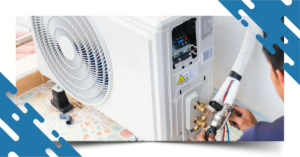
3. Incorrect Refrigerant Charge or Failure to Follow Manufacturer Specifications
Refrigerant is an essential part of your air conditioner’s cooling process. However, adding refrigerant is not simply a matter of putting in “more Freon.”
The system needs to be properly charged according to the equipment manufacturer’s requirements and the specific installation conditions.
An improperly charged system can experience:
- Reduced cooling performance
- Longer run times
- Higher energy consumption
- Poor temperature control
- Compressor stress
- Potential equipment damage
A contractor should also investigate why refrigerant is low rather than repeatedly adding refrigerant without addressing the underlying problem.
A refrigerant leak can indicate a problem with a connection, coil, line set, or another component.
The EPA requires technicians who handle refrigerants in stationary air-conditioning equipment to meet Section 608 certification requirements, and EPA advises homeowners to work with dealers whose technicians are EPA-certified.
EPA regulations also prohibit intentional venting of refrigerants during servicing and repair.
What should a contractor do?
A qualified HVAC technician should:
- Follow the manufacturer’s specifications
- Use the correct refrigerant for the system
- Check for potential leaks when appropriate
- Use proper recovery and charging procedures
- Verify system operation after service
- Document important service information when applicable
Homeowner tip:
If a technician tells you that your AC is “low on refrigerant,” ask:
“Why is the refrigerant low, and did you check for a leak?”
Simply adding refrigerant may provide temporary cooling without fixing the underlying problem.
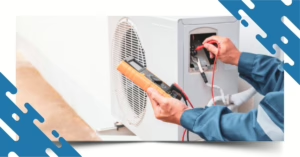
4. Poor Electrical Work and Safety Oversights
Your air conditioner relies on electrical components to operate safely and reliably. Improper electrical work can cause performance problems and create serious safety concerns.
Common HVAC electrical mistakes include:
- Loose electrical connections
- Incorrect wiring
- Improper grounding
- Incorrect circuit protection
- Damaged wiring
- Poor disconnect installation
- Improperly sized electrical components
Electrical problems can contribute to nuisance breaker trips, equipment failures, component damage, and unsafe operating conditions.
What should a contractor do?
A qualified HVAC professional should verify that electrical components and connections are installed according to applicable requirements and the equipment manufacturer’s specifications.
During an AC installation or repair, the contractor should pay attention to:
- Wiring
- Disconnects
- Electrical connections
- Circuit protection
- Grounding
- Equipment requirements
- Applicable electrical and mechanical codes
Florida’s building requirements regulate mechanical and electrical work, and regulated installations generally require the appropriate permitting and approval.
Homeowner tip:
Don’t choose an HVAC contractor based solely on the lowest installation price.
A lower upfront price can become much more expensive if shortcuts result in electrical problems, equipment damage, or repeated service calls.
5. Skipping System Testing, Inspection, and Code Compliance
Installing the equipment is not the final step of an AC replacement.
A professional HVAC installation should be properly checked and commissioned so the system can operate as intended.
Skipping testing can allow problems to go unnoticed until the homeowner starts experiencing:
- Poor cooling
- Weak airflow
- High energy bills
- Water leaks
- Short cycling
- Excessive noise
- Uneven temperatures
- Premature component failure
Depending on the installation, important checks can include:
- System operation
- Airflow
- Electrical connections
- Refrigerant-related measurements
- Thermostat operation
- Drainage
- Temperature performance
- Ductwork connections
- Equipment installation
- Safety controls
- Applicable permits and code requirements
The Florida Building Code Mechanical provisions cover HVAC system design and installation, including heating and cooling load calculations and duct systems.
Homeowner tip:
Before your contractor leaves, ask:
“Has the system been fully tested and verified?”
A professional contractor should be able to explain what was checked and identify any remaining concerns.
Frequently Asked Questions About AC Installation Mistakes
One of the most important mistakes is incorrect system sizing. An oversized or undersized air conditioner can affect comfort, humidity control, efficiency, and equipment life.
However, AC performance also depends heavily on proper ductwork, airflow, refrigerant setup, electrical installation, and system commissioning.
Yes. An oversized AC may satisfy the thermostat quickly and shut off before it has enough runtime to adequately remove humidity. This can be especially noticeable in Florida’s hot, humid climate.
Common signs can include frequent short cycling, difficulty controlling humidity, uneven temperatures, excessive run times, or poor overall comfort. A professional HVAC contractor can evaluate the system and determine whether sizing or another issue is responsible.
The U.S. Department of Energy states that a typical home can lose approximately 20%–30% of the air moving through duct systems because of leaks, holes, and poorly connected ducts.
Actual losses vary from home to home, so an HVAC professional should evaluate the specific duct system.
Not necessarily. Low refrigerant can indicate a leak or another system problem. A qualified technician should determine why the refrigerant level is low rather than simply adding refrigerant without investigating the cause.
EPA recommends homeowners work with technicians who are certified to handle refrigerants under Section 608.
Yes. It is worth evaluating the condition, sizing, insulation, connections, and airflow of the duct system when replacing an AC. A new high-efficiency system may not deliver the expected comfort or efficiency if the ductwork has significant problems.
Look for an established HVAC company that can clearly explain the recommended system size, installation process, warranty, refrigerant procedures, ductwork considerations, testing, and applicable permits.
Also consider the contractor’s licensing, qualifications, reviews, experience, and reputation—not just the lowest price.
Yes. Proper testing helps verify that the equipment, airflow, controls, electrical components, drainage, and other installation details are functioning as intended.
A professional installation should not simply end when the equipment is turned on.
Regular HVAC maintenance can help identify developing problems before they become major repairs. Your specific maintenance schedule depends on your equipment, home, usage, and manufacturer’s recommendations.
For Florida homeowners, professional AC maintenance is particularly important because cooling systems may operate for much of the year.
Ready to Protect Your Home from Contractor Mistakes?
Your AC system is one of the biggest investments in your home—and small contractor mistakes can cost you comfort, efficiency, and money. From the wrong system size to skipped inspections, these errors are more common than you might think—but they are completely avoidable with the right team.
You don’t have to worry about these problems if you work with professionals who prioritize quality, safety, and industry standards. Don’t let contractor mistakes ruin your AC life. At Iron Shield Heating & Air, we adhere to manufacturer guidelines, conduct thorough inspections, and ensure every installation and service is completed the first time.
Contact us today for reliable, expert service and enjoy a cool, worry-free home all year long.
Related Blog Posts
Read more articles and expert advice related to this service.