
A furnace that suddenly stops working can leave your home uncomfortable when you need heat the most. Even though Ocala, FL, has relatively mild winters, temperatures can still drop enough to make a reliable heating system essential.
If your furnace fails, the problem could be something simple, such as a clogged air filter, or something more serious, such as an ignition or gas-related issue. Understanding the common causes of furnace failure can help you identify warning signs early and know when to call an HVAC professional.
Common Reasons Your Furnace Fails in Ocala, FL
A furnace can fail for many different reasons. Here are some of the most common furnace problems Ocala homeowners may encounter.
1. A Dirty or Clogged Air Filter
A dirty furnace filter is one of the simplest—and most common—causes of heating problems.
Your furnace needs adequate airflow to operate properly. When the air filter becomes clogged with dust, pet hair, dander, and other particles, airflow becomes restricted. Your furnace then has to work harder, which can cause overheating and trigger the system’s safety shutoff.
A clogged filter can also:
- Reduce heating efficiency
- Increase energy consumption
- Cause uneven heating
- Put additional strain on the blower motor
- Contribute to poor indoor air quality
- Cause the furnace to shut down unexpectedly
What to do: Check your air filter regularly and replace it according to the manufacturer’s recommendations. Many homes need a filter change every 30–90 days, while homes with pets, allergies, or heavier dust may require more frequent replacement.
2. A Faulty Thermostat or Temperature Sensor
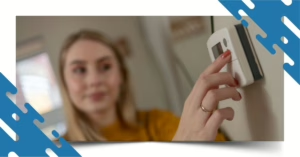
Your thermostat controls when your heating system turns on and off. If the thermostat is outdated, incorrectly calibrated, has dead batteries, or develops an electrical problem, your furnace may not receive the correct signals.
A faulty thermostat can cause:
- Inconsistent temperatures
- Short cycling
- A furnace that won’t turn on
- A system that runs continuously
- Rooms that don’t reach the desired temperature
The problem may also be with a temperature sensor inside the heating system rather than the thermostat itself.
If your furnace is behaving strangely, checking the thermostat settings and batteries is a good first step. If the problem continues, a professional HVAC inspection can determine whether the thermostat or another component is causing the issue.
Learn More: What Are the Signs of a Bad or Broken Thermostat?
3. A Dirty or Worn Flame Sensor
The flame sensor is an important furnace safety component. It detects whether the burner has successfully produced a flame. If the sensor doesn’t detect a flame, it can shut off the gas supply to prevent unsafe gas buildup.
Over time, a flame sensor can become dirty or worn. This may cause the furnace to ignite briefly and then shut down.
Common symptoms include:
- Furnace starts but quickly shuts off
- Repeated ignition attempts
- Short cycling
- No heat
- Frequent furnace shutdowns
A professional can inspect and clean the flame sensor or replace it if necessary.
4. Gas Supply or Gas Leak Problems
Gas furnaces require a safe and reliable gas supply. Problems with gas valves, connections, burners, or gas lines can prevent a furnace from operating correctly.
If you smell gas or notice a rotten-egg/sulfur smell, treat it as an emergency. Do not attempt to repair the furnace yourself. Leave the area and contact your gas utility or emergency services as appropriate.
For suspected gas leaks, do not operate electrical switches, use an open flame, or attempt to troubleshoot the gas system yourself.
5. Pilot Light or Ignition Problems
Older furnaces may use a standing pilot light, while many modern furnaces use electronic ignition.
If the pilot light goes out or the ignition system fails, the furnace may not produce heat. Dirt, worn components, electrical problems, or a faulty thermocouple can contribute to ignition issues on applicable systems.
Possible signs include:
- Furnace won’t ignite
- Pilot light repeatedly goes out
- Furnace starts and shuts down
- Clicking without ignition
- No warm air from the vents
Because gas and ignition components can present safety risks, it’s best to have a licensed HVAC technician diagnose persistent ignition problems.
6. An Aging Furnace May Be Ready for Replacement
Sometimes the reason a furnace fails is simply age.
Many furnaces have an expected service life of roughly 15–20 years, depending on the equipment, installation quality, maintenance, operating conditions, and other factors.
If your furnace is older and you’re dealing with frequent repairs, rising energy bills, uneven heating, or declining performance, replacing it with a newer, more efficient system may make more financial sense than continuing to repair an aging unit.
How to Fix a Furnace That Fails
Not every furnace failure requires a replacement. Some problems can be addressed with simple troubleshooting, while others require professional furnace repair.
Quick Furnace Checks You Can Do Safely
Before calling for service, you can check a few basic things:
Check the thermostat.
Make sure it’s set to heat and the temperature is set higher than the current room temperature. If it uses batteries, check whether they need to be replaced.
Check the air filter.
If the filter is visibly dirty or clogged, replace it with the correct size and type recommended for your system.
Check your vents and registers.
Make sure supply vents aren’t blocked by furniture, rugs, curtains, or other objects.
Check the furnace power.
If you know where the furnace switch and electrical panel are located, make sure the appropriate switch or breaker hasn’t been accidentally turned off or tripped. Do not repeatedly reset a breaker that keeps tripping.
If these basic checks don’t solve the problem, professional furnace diagnostics may be necessary.
Don't Wait Until Your Furnace Fails Completely
A furnace problem doesn’t always start with a complete breakdown. Strange noises, short cycling, uneven heating, rising energy bills, and repeated shutdowns can all be warning signs that your heating system needs attention.
At Iron Shield Heating & Air, we help homeowners in Ocala, FL, and surrounding areas with furnace repair, heating maintenance, HVAC diagnostics, and furnace replacement.
If your furnace isn’t heating properly or keeps failing, our licensed HVAC technicians can help identify the problem and recommend the right solution.
Don’t wait for a small furnace problem to become a major breakdown. Contact Iron Shield Heating & Air today to schedule furnace service in Ocala, FL.
Frequently Asked Questions About Furnace Failures
Frequent cycling can be caused by a dirty air filter, thermostat problems, restricted airflow, overheating, improper system sizing, or another mechanical issue. If your furnace repeatedly turns on and off, have it professionally inspected.
Start with the thermostat, air filter, vents, and furnace power supply. If everything appears normal and the furnace still won’t operate, contact an HVAC professional.
The correct replacement schedule depends on your filter type, home, pets, allergies, and indoor air quality needs. Check the filter regularly and follow the manufacturer’s recommendations.
Many furnaces can operate for approximately 15–20 years with proper installation and maintenance, although actual lifespan varies. An older furnace with frequent breakdowns may be a candidate for replacement.
Yes. A severely clogged filter can restrict airflow, cause the furnace to overheat, and trigger safety controls that shut the system down.
A dirty flame sensor, ignition problem, restricted airflow, overheating, thermostat issue, or another faulty component may cause a furnace to start and then shut down.
Consider the furnace’s age, repair costs, efficiency, condition, and frequency of breakdowns. An HVAC professional can inspect the system and explain whether repair or replacement is the more practical option.
It depends on the problem. A furnace that simply isn’t producing heat may require prompt repair, while a suspected gas leak, electrical hazard, or other safety issue should be treated as an emergency.
Related Blog Posts
Read more articles and expert advice related to this service.