
If you live in Florida, you already know your air conditioner works hard. With long stretches of hot weather, high humidity, and frequent temperature changes, your HVAC system may run for much of the year.
That’s why an HVAC maintenance plan can be a smart way to protect your comfort, improve system reliability, and catch developing problems before they turn into expensive emergency repairs.
But when was the last time your AC received a professional tune-up?
If you’re not sure, it may be time to take a closer look.
Regular HVAC maintenance helps identify issues such as restricted airflow, dirty coils, electrical problems, clogged condensate drains, and refrigerant leaks before they can lead to a major breakdown. Proper maintenance can also help your system operate as efficiently as possible. The U.S. Department of Energy recommends regular maintenance to help maintain peak performance.
For Florida homeowners, maintenance isn’t just about keeping the air conditioner running. It’s about staying comfortable, managing humidity, protecting your investment, and reducing the chances of an unexpected breakdown during the hottest part of the year.
What’s Included in a Professional HVAC Maintenance Plan
So, what exactly happens during an HVAC maintenance visit — and why is it so important? A professional Florida HVAC maintenance plan goes far beyond just “checking the unit.” It’s a full system inspection, cleaning, and performance tune-up that ensures every part of your air conditioner and air handler is operating at peak efficiency.
Here’s what a professional HVAC maintenance plan should include:
Seasonal Tune-Ups (Twice a Year)
In Florida, your air conditioner isn’t just a convenience — it’s a necessity. Because your system works nearly year-round, two seasonal tune-ups (one before summer, one before winter) are essential for keeping everything running smoothly.
During these tune-ups, a technician checks for early signs of trouble:
Worn belts
Weak or failing capacitors
Refrigerant leaks
Airflow restrictions
Loose electrical connections
Catching these issues early prevents them from becoming major emergencies.
Air Filter Replacement & Coil Cleaning
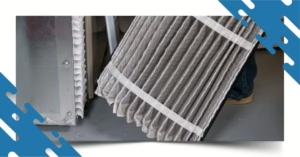
Clean air filters and coils are two of the biggest factors in overall HVAC performance. When they’re dirty, your system has to work much harder to push cold air through your home.
Here’s what clean filters and coils do for you:
Improve indoor air quality
Reduce monthly energy bills
Protect your system from overheating
Prevent mold growth inside your unit
Increase airflow and cooling performance
Thermostat Calibration
If your thermostat isn’t reading the correct temperature, your AC may:
Run longer than necessary
Short cycle
Waste energy
Fail to keep your home truly comfortable
During maintenance, the technician checks your thermostat’s accuracy and makes sure it’s communicating properly with your HVAC system. A simple calibration can prevent a lot of unnecessary wear and tear — and save you money on your utility bill.
Electrical System Inspection
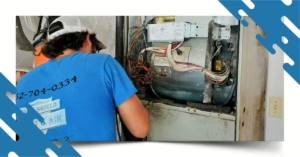
Electrical issues are one of the leading causes of HVAC breakdowns, especially in hot climates where systems run continuously. Loose wires, burnt contacts, and weak capacitors can silently reduce efficiency and even create fire risks.
A professional electrical inspection includes:
Checking all connections
Testing capacitors
Inspecting relays and contactors
Ensuring safe, stable voltage
This step protects your system and your home.
Refrigerant Check & Performance Testing
Your AC can’t cool your home without the correct amount of refrigerant. Too little — or a slow leak — will force your system to run longer, strain the compressor, and lead to warm or inconsistent airflow.
Technicians will:
Measure refrigerant levels
Check for leaks
Test system pressures
Inspect the compressor’s performance
Ensure the system is cooling efficiently
Keeping refrigerant levels balanced ensures your AC can deliver crisp, cold air even on triple-digit summer days.
Drain Line Clearing & Cleaning
Florida’s humidity makes your AC work overtime to remove moisture from the air. All that moisture drains through a small line — and when that drain line clogs, you can end up with water leaks, foul odors, mold growth, or even complete system shut-offs.
Professional maintenance includes:
Clearing blockages
Flushing the drain line
Cleaning the drain pan
Treating for algae or bacteria growth
This simple step prevents water damage and expensive service calls.
At Iron Shield Heating & Air, our Iron Maintenance Club has you covered — keeping your system running strong, efficient, and worry-free all year long. Skip the stress of surprise breakdowns and stay cool no matter how hot Florida gets. Learn more and join the Iron Maintenance Club today!
How Often Should You Schedule Maintenance in Florida?
Living in Florida means dealing with heat, humidity, and sudden weather changes all year long. And because of that, your HVAC system works overtime—far more than systems in other states. If you’ve ever wondered why your energy bills spike or why your AC feels tired by mid-summer, you’re not alone. Florida homeowners face unique HVAC challenges, and routine maintenance is one of the best ways to keep your system efficient, reliable, and long-lasting.
To protect your comfort (and your budget), HVAC experts strongly recommend scheduling two tune-ups per year:
- One in the spring
- One in the fall
This ensures your system is prepared for Florida’s intense seasonal transitions and keeps small issues from turning into costly repairs.
Florida isn’t just warm—it’s humid, salty, and unpredictable. Your system has to handle months of high temperatures, sudden storms, and heavy moisture that can easily wear down components if they’re not cared for regularly. These biannual tune-ups give your HVAC system the “reset” it needs to stay healthy and efficient year-round.
Spring Tune-Up: Preparing for Peak Summer Heat
When spring rolls in, it’s your HVAC system’s cue to gear up for Florida’s long, demanding summer season. A spring tune-up focuses on:
Checking refrigerant levels to ensure your AC can handle the upcoming heat
Cleaning evaporator and condenser coils so your system cools properly
Inspecting and replacing filters to improve airflow and indoor air quality
Testing electrical components and safety controls
Making sure every moving part is clean, lubricated, and ready to perform
This visit is all about prevention—catching issues early so you’re not stuck sweating on a 95° day with an AC that suddenly quits.
Fall Tune-Up: Recovering From Summer & Preparing for Cooler Nights
By fall, your AC has survived months of nonstop work. A tune-up at this time helps restore performance, reduce wear and tear, and prepare your heating system or heat pump for Florida’s occasional chilly nights.
A fall visit includes:
Deep system cleaning after intense summer usage
Inspecting your heater or heat pump to ensure it’s safe and ready
Checking blower components and airflow
Verifying thermostat accuracy
Tightening electrical connections for reliability
Even if you don’t rely heavily on heat, this tune-up keeps your whole system balanced and ready for the next year.
Signs It’s Time to Service Your HVAC System
- Weird noises or smells? Grinding, hissing, or musty odors mean something’s off — from loose parts to mold buildup.
- Weak airflow or uneven temps? Your system’s struggling — could be a dirty filter or duct leak.
- Energy bill climbing? That’s your system working harder than it should.
- Constant on-and-off cycling? Often a sign of refrigerant or sensor issues.
- Ice or moisture around the unit? Hello, Florida humidity — but also a possible leak or clogged drain.
- Sticky air or reduced comfort? Your HVAC isn’t dehumidifying like it should.
Florida HVAC Maintenance FAQs
Many homeowners benefit from scheduling professional HVAC maintenance twice a year—typically in spring and fall. Your ideal schedule may vary depending on system age, usage, manufacturer recommendations, and equipment type.
Yes. Florida’s long cooling season and high humidity can put substantial demand on HVAC systems. Regular maintenance helps identify problems early and keeps the system operating as intended.
Proper maintenance can help your HVAC system operate efficiently, but there is no guaranteed percentage of savings for every home. Energy costs also depend on weather, thermostat settings, insulation, equipment efficiency, ductwork, home size, and other factors.
Not necessarily. Every maintenance agreement is different. Routine maintenance should include evaluating system performance and looking for signs of refrigerant problems, but refrigerant replacement or leak repair may be an additional service.
If refrigerant is low, the cause should be investigated instead of repeatedly adding refrigerant without addressing a potential leak.
Maintenance cannot guarantee that an HVAC system will never break down. However, it can help identify worn components, electrical problems, airflow restrictions, drainage issues, and other developing concerns before they become larger problems.
There is no single replacement schedule that works for every home. Filter type, household conditions, pets, indoor air quality needs, and system requirements all matter. Check your filter regularly and follow the filter and HVAC manufacturer’s recommendations.
Yes. Spring is an excellent time to have your AC inspected before Florida’s hottest weather arrives.
Skipping maintenance doesn’t necessarily mean your system will immediately fail. However, problems can go unnoticed, and dirt, restricted airflow, drainage issues, electrical wear, or other developing problems may eventually affect system performance and reliability.
The time varies based on the equipment, system condition, and services included in the maintenance plan. A thorough inspection should allow enough time for the technician to properly evaluate the major components rather than simply performing a quick visual check.
No. An HVAC maintenance plan and manufacturer warranty are different. A maintenance plan provides scheduled service and inspections, while a warranty generally covers qualifying equipment or parts according to the manufacturer’s terms.
Always review the specific terms of both.
That depends on the system’s age, repair history, efficiency, condition, refrigerant situation, and expected remaining service life.
A professional HVAC technician can evaluate the system and help you compare the cost of continued repairs with replacement options.
Ready to take control of your comfort?
At Iron Shield Heating & Air, we believe maintenance shouldn’t be stressful or complicated — just smart. Our experts keep your system running strong so you can focus on what matters most: enjoying your home, not worrying about it.
Don’t wait for your next breakdown — join the Iron Maintenance Club today and stay cool with Florida’s trusted HVAC team.
Related Blog Posts
Read more articles and expert advice related to this service.